Goal
Provide a compact, high-torque, low-vibration rotary engine capable of continuous combustion and operation with multiple fuels.
Problem
Vibration, dead-time, low torque at low RPM, and inefficiencies of conventional piston and Wankel engines.
Concept Summary
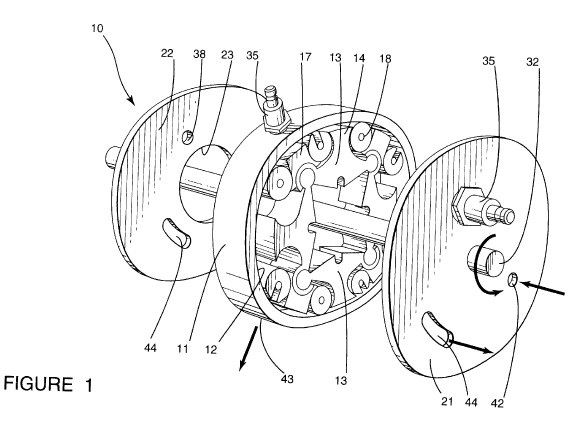
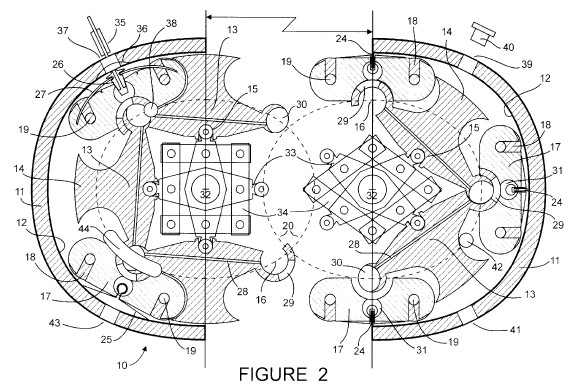
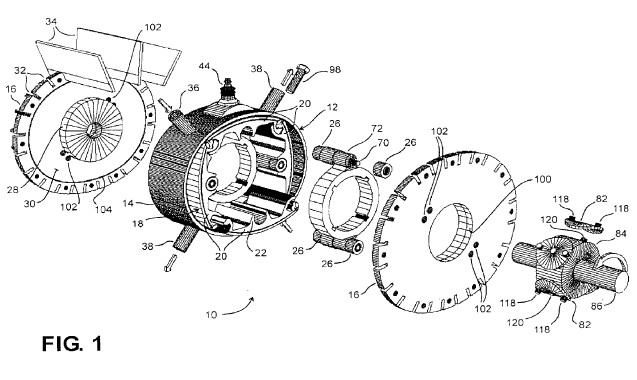
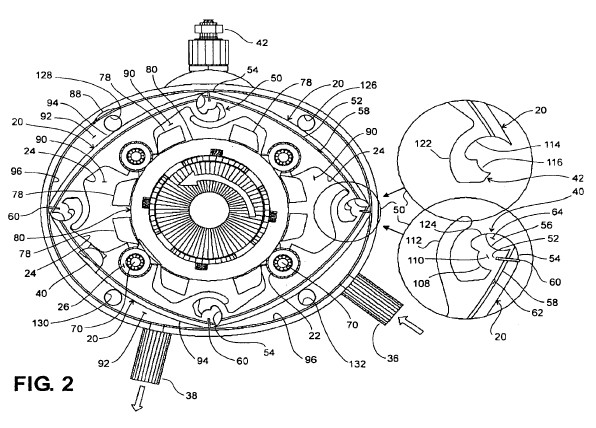
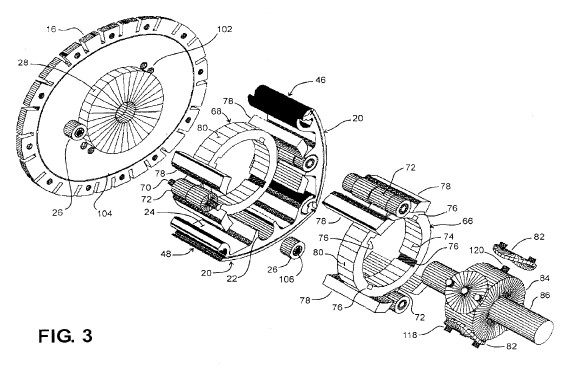
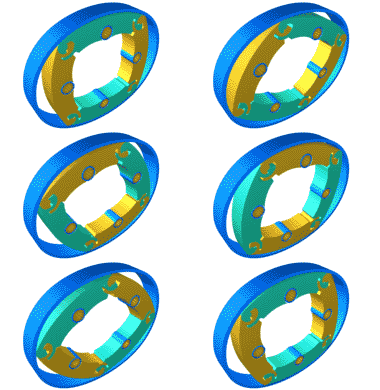
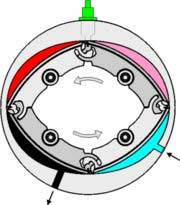
The Quasiturbine is a four-sided articulated rotary engine in which a deformable rotor rolls inside a housing, creating four chambers that each undergo a complete Otto-type cycle per rotor revolution. The design eliminates crankshafts and valve trains, enabling continuous combustion, high torque at low speeds, and operation with air, steam, hydrogen, or conventional fuels. Photo-detonation combustion is claimed to further improve efficiency.
Principles
- Four-sided articulated rotor geometry
- Continuous combustion with overlapping strokes
- Photo-detonation combustion mode
- Pressure-driven torque generation
Scientific Domains
Materials
- Metal alloy (rotor and housing)
- Steel or cast iron (structural components)
- Ceramic or polymer seals (optional)
Mechanisms of Action
- Variable-volume chambers created by rotor-housing geometry
- Simultaneous compression and expansion strokes
- Flame-transfer slot maintains continuous combustion
- Pressure pulses shaped to enable photo-detonation
Energy Sources
Applications
- Aircraft propulsion
- Chainsaws
- Powered parachutes
- Snowmobiles
- Jet skis
- Air compressors
- Turbochargers
- Pneumatic energy storage
Claimed Performance
Four combustion strokes per rotor revolution (~=8x a conventional four-stroke piston engine), high torque at low RPM, vibration-free operation, ability to run on multiple fuels including hydrogen and to achieve photo-detonation.
Experimental Evidence
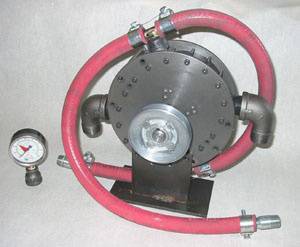
Demonstrated on a go-kart in November 2004; small pneumatic and steam units are available for research, academic training and industrial demonstration; pre-commercial units sold in 600 cc and 5 L displacement sizes.
Replication Status
Pre-commercial pneumatic and steam units are available for sale; demonstration units have been built and tested (e.g., go-kart).
Limitations
- Requires precise manufacturing of articulated rotor and housing
- Photo-detonation mode not yet independently verified
- Limited commercial adoption to date
Red Flags
- Claims of photo-detonation efficiency and hydrogen combustion lack independent peer-reviewed data