Goal
Separate a compressed gas into hot and cold streams for spot cooling or heating without moving parts.
Problem
Need for inexpensive, compact spot-cooling/heating that can use waste or readily available compressed air.
Concept Summary
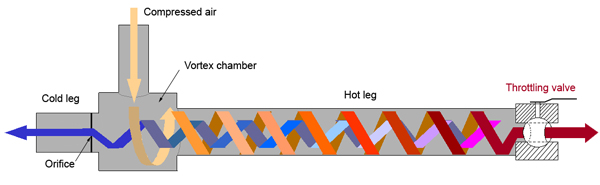
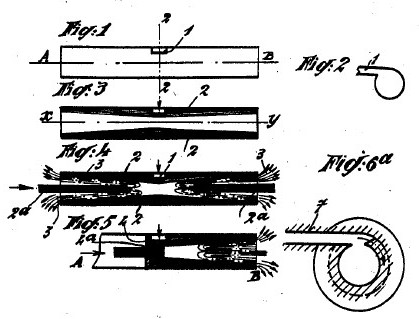
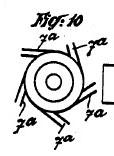
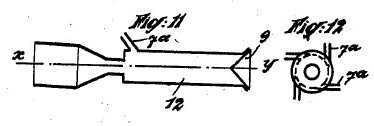
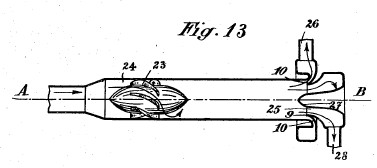
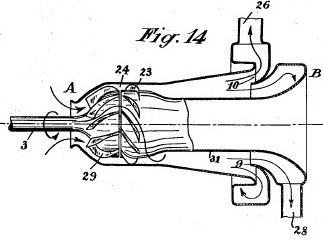
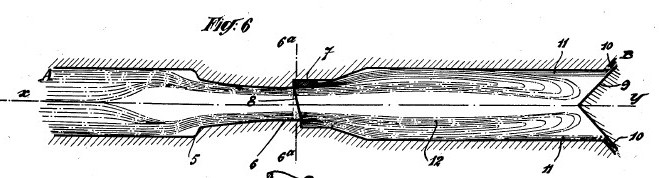
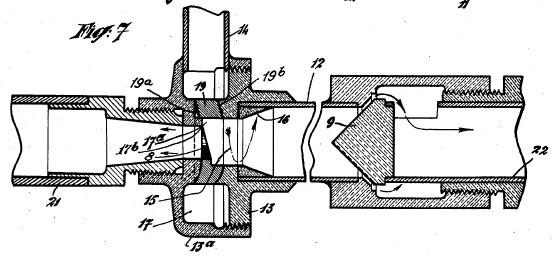
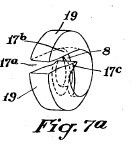
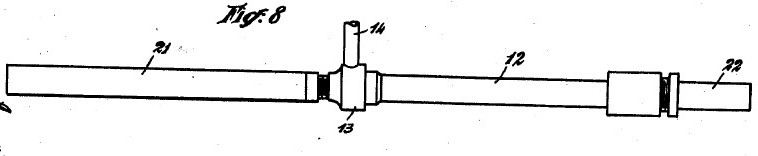
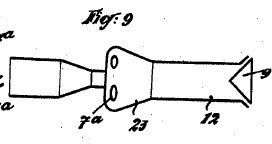
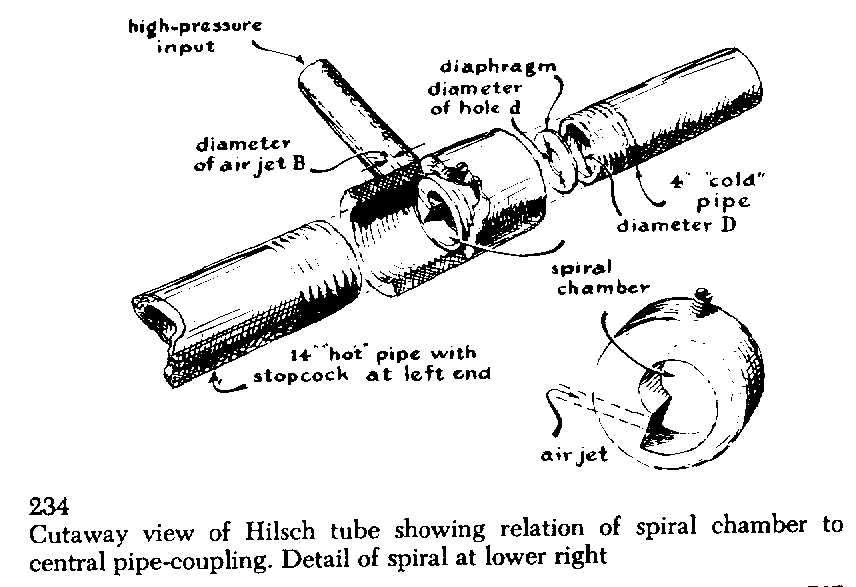
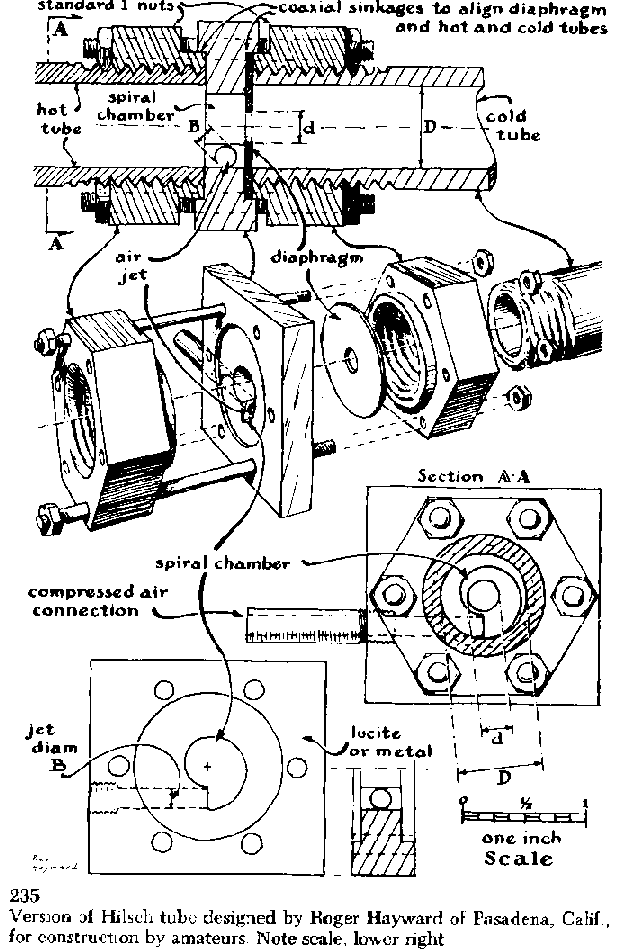
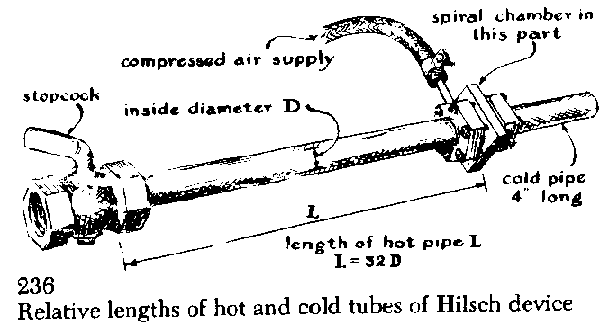
A vortex tube injects pressurised air tangentially into a conical chamber, creating a high-speed vortex. Centrifugal forces produce a pressure gradient that causes the outer layer of gas to become hotter while the inner core cools. By adjusting a control valve, a portion of the hot outer flow is exhausted, and the remaining slower inner flow exits as a cold stream. The device requires only compressed air and no moving components.
Principles
- Centrifugal force
- Solid-body rotation
- Pressure-induced temperature gradient
- Counter-flow heat exchange
- Acoustic streaming (in some variants)
Scientific Domains
Materials
- Air
- Steel
- Aluminium
Mechanisms of Action
- Centrifugal separation of gas parcels
- Conversion of angular momentum loss into kinetic energy of outer vortex
- Pressure-gradient driven temperature separation
- Counter-flow mixing of hot outer and cold inner streams
Energy Sources
Applications
- Industrial spot cooling of machines and processes
- Ice making in off-grid or third-world locations
- Recovery of waste pressure energy in industrial plants
- Cryogenic pre-cooling for scientific equipment
Claimed Performance
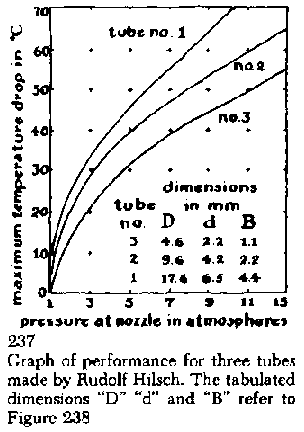
Typical temperature drop of about 45 deg C (80 deg F); some commercial units claim up to 100 deg F below inlet temperature; reported 100x differential in early acoustic-heating experiments.
Experimental Evidence
Numerous peer-reviewed papers, patents and industrial datasheets (e.g., Hilsch 1947, Kurosaka 1982, Saidi & Valipour 2003) demonstrate measurable temperature separation, with commercial models achieving the cited 45 deg C drop and occasional 100 deg F drops in laboratory tests.
Replication Status
Commercially available devices are used in industrial spot-cooling; many independent laboratory studies have reproduced the effect.
Limitations
- Overall thermodynamic efficiency lower than conventional refrigeration
- Requires a source of high-pressure compressed air
- Maximum temperature differential limited by inlet pressure and design