Goal
To amplify emissions produced by geometric forms in order to obtain industrially exploitable effects.
Problem
Prior to this invention, emissions due to shapes could not be measured or exploited for industrial use.
Concept Summary
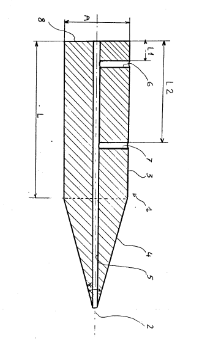
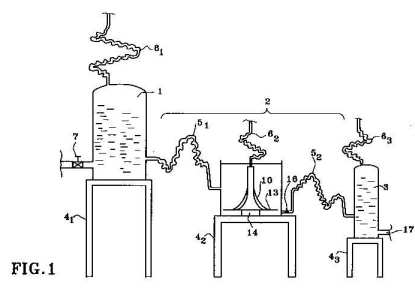
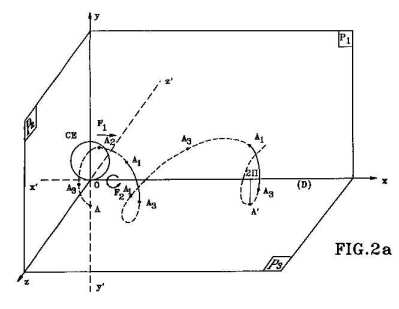
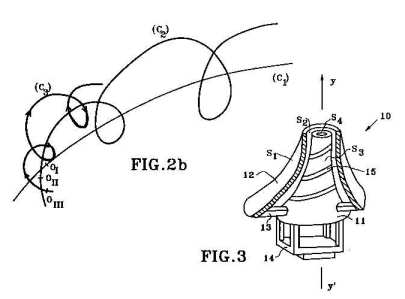
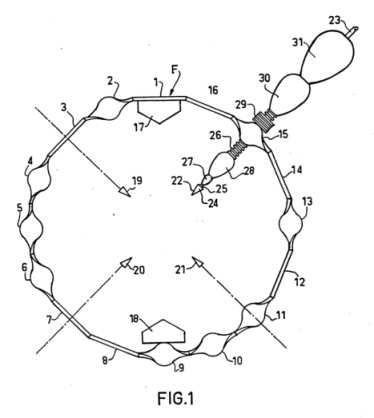
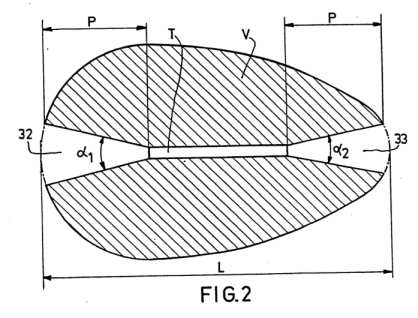
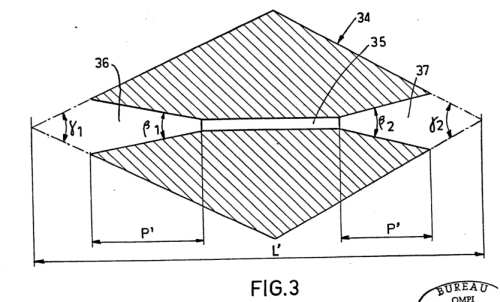
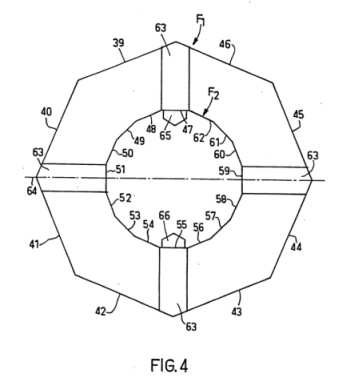
The invention uses a geometric form (e.g., a 16-sided polygonal frame made of dry wood) combined with a high-voltage electric/magnetic field generated by electrodes attached to the frame. By arranging the frame and electrodes in specific angles (~=28 deg and ~=23 deg ) and optionally incorporating Moebius-strip volumes, acoustic resonators, and additional wooden structures, the device is claimed to amplify the otherwise weak emissions associated with the shape, making them usable for industrial purposes.
Principles
- Localization principle of shape emissions
- Amplification of emissions via high-voltage electric field
- Geometric symmetry (minimum symmetry) effects
- Use of Moebius-strip geometry for enhanced amplification
- Acoustic resonance coupling
Scientific Domains
Materials
- Dry wood (poplar, oak, exotic wood)
- Copper
- Glass
- Porcelain
- Carborundum
Mechanisms of Action
- High-voltage electric field generation
- Interaction of electric/magnetic fields with geometric form
- Shape-induced emission amplification
- Acoustic resonance enhancement
Energy Sources
Applications
- Industrial processing
- Energy manipulation (claimed)
- Potentially materials science
Claimed Performance
Amplification sufficient for industrially exploitable effects when operated at >=45 kV (preferably >=60 kV) with a frame diameter of at least 250 cm.
Limitations
- No quantitative experimental data provided
- Requires very high voltage (>=45 kV)
- Performance depends on precise wooden geometry and fiber orientation
- Nature of the amplified emissions is undefined
Red Flags
- Claims lack peer-reviewed validation
- Potential safety hazards due to high voltage
- Vsubstantiated scientific mechanism for 'emissions'