Goal
Provide static-free radio reception and transmission through earth and water, eliminating atmospheric interference and increasing signal strength.
Problem
Static and atmospheric interference in aerial radio systems; limited range and reliability of conventional above-ground antennas; need for reliable underwater and underground communication.
Concept Summary
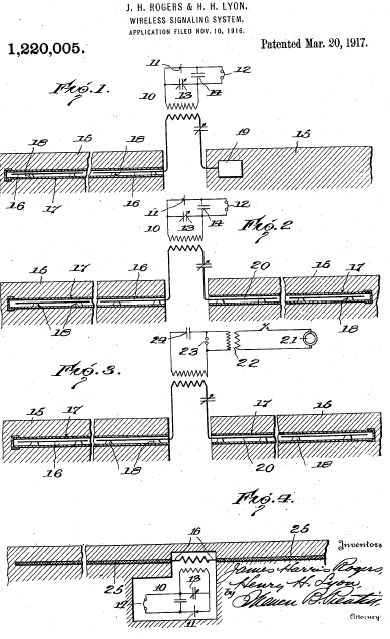
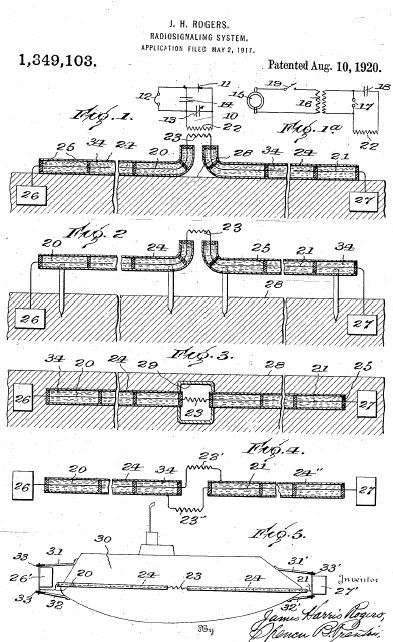
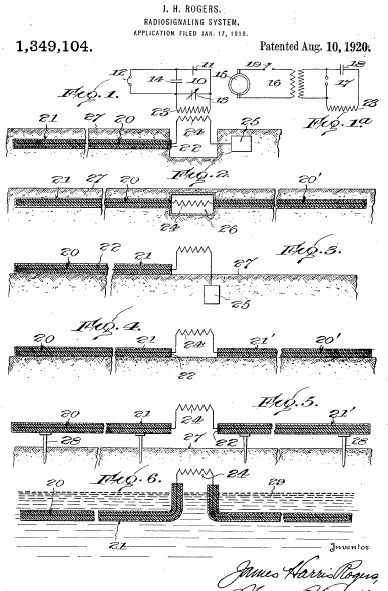
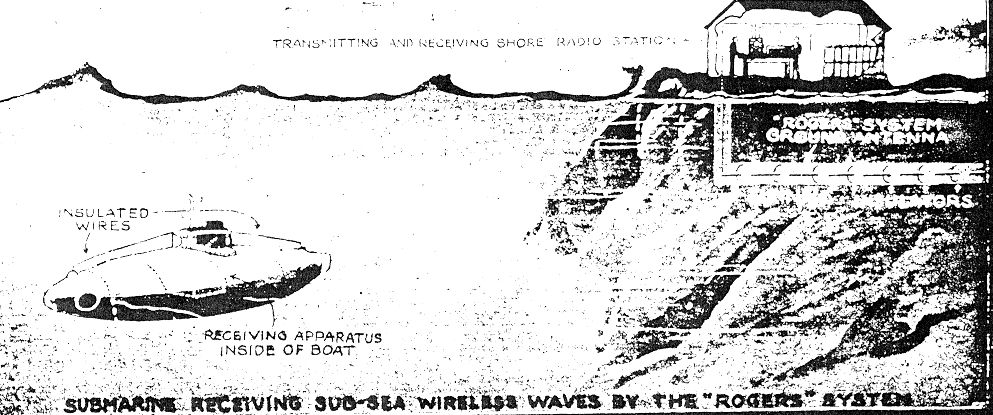
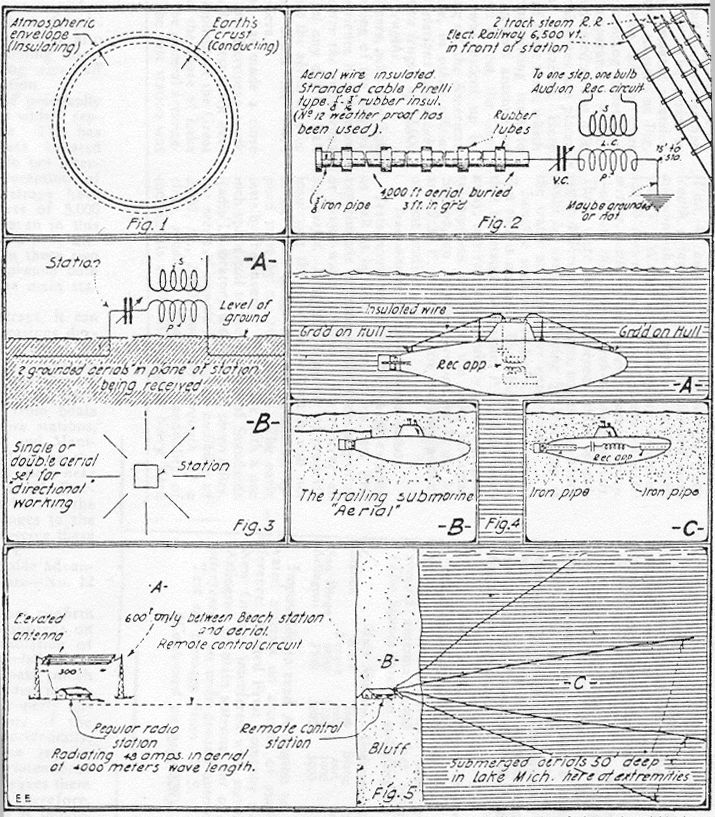
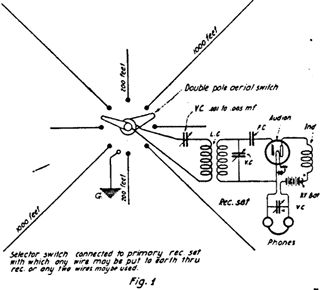
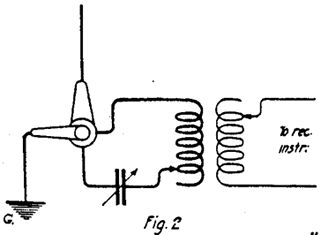
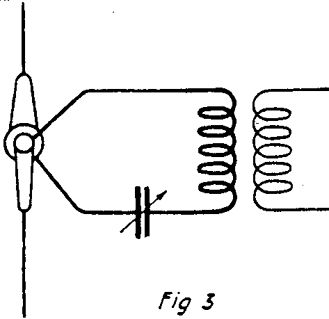
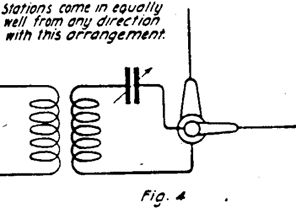
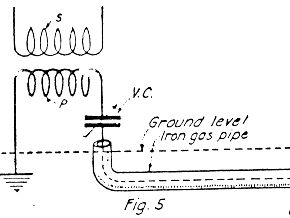
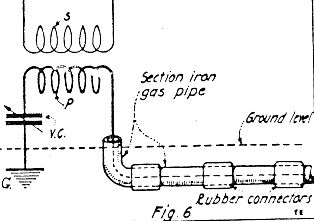
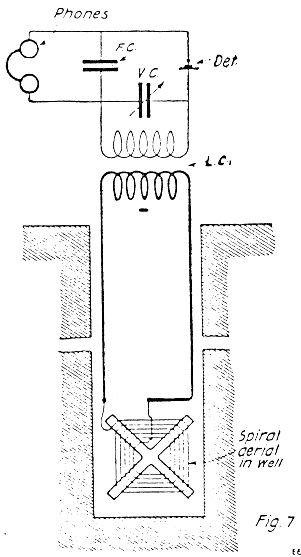
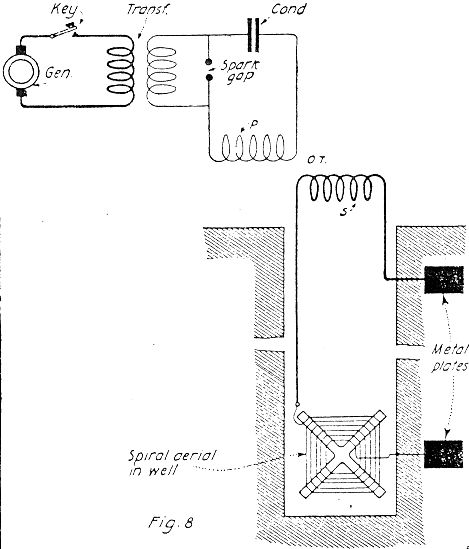
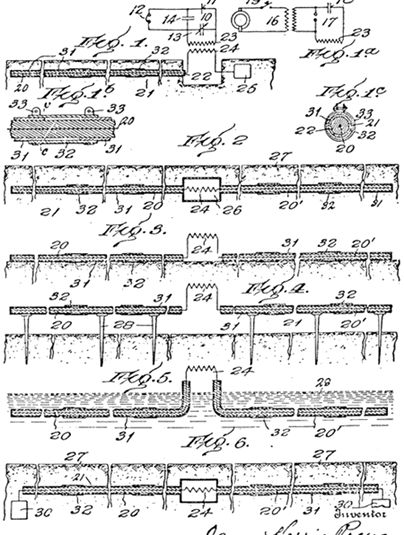
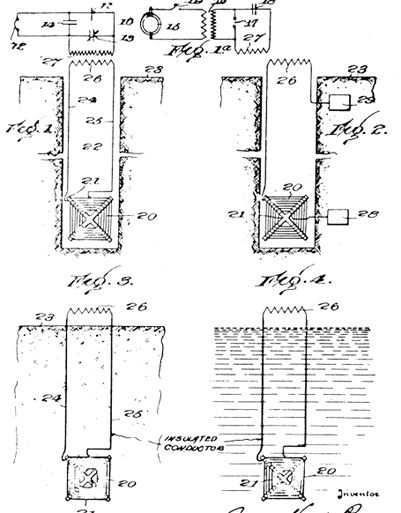
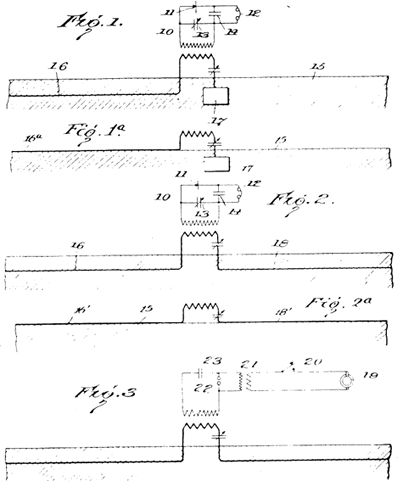
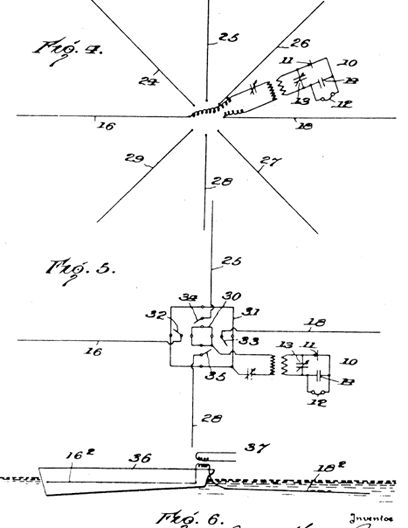
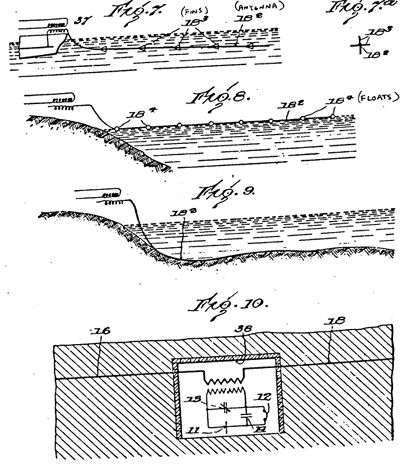
Rogers' system replaces traditional aerial wires with buried or submerged conductors that couple the transmitted electromagnetic energy directly into the earth and water. A high-frequency generator (water-jet-driven capacitor) feeds the buried antenna, allowing radio waves to propagate through the conductive ground and seawater. The earth-borne waves are picked up by a receiving antenna, providing a static-free, high-strength signal that can be heard up to 5,000 times louder than conventional reception.
Principles
- Ground-wave propagation
- Electromagnetic coupling to conductive earth and water
- Elimination of atmospheric static via underground pathways
- High-frequency generation using water-jet-driven capacitor
Scientific Domains
Materials
- Copper wire
- Audion vacuum tube
- Water jet apparatus
- Large-capacity capacitor
- Direct-current power source
Mechanisms of Action
- Buried copper antenna
- Submarine antenna immersed in seawater
- High-frequency generator driven by water jet and large capacitor
- Audion bulb detector for signal reception
Energy Sources
Applications
- Military communications
- Submarine and underwater signaling
- Underground tactical communications
Claimed Performance
Signal loudness up to 5,000x the usual strength; near-complete elimination of static and interference; reliable reception of trans-Atlantic stations and underwater communication with submarines.
Experimental Evidence
Official Navy Department letters confirming adoption; installations at New Orleans, Belmar (NJ), Great Lakes, New London (CT), and Norfolk (VA); testing by Prof. George W. Pierce (Harvard) who heard the system work through salt water; reported reception of distant stations (Nauen, Lyons, Honolulu) in Rogers' Hyattsville laboratory.
Replication Status
System installed and operated at multiple U.S. Navy stations during World War I; used in both underground and submarine contexts.
Limitations
- Requires extensive buried conductors
- Performance depends on soil conductivity and water salinity
- No quantitative data on bandwidth or power efficiency
Red Flags
- Extraordinary gain claims (5,000x) without independent measurements
- Lack of peer-reviewed data or modern replication