Confidence
0.90
Practicability
0.60
Evidence
0.20
Fringe Score
0.20
Risk
0.20
TRL
4
Goal
Reduce automobile fuel costs and simplify engine construction by eliminating spark plugs and connecting rods while using low-grade oil as fuel.
Problem
High fuel cost of gasoline, dependence on high-grade fuel, and mechanical complexity of conventional spark-plug and rod-based internal-combustion engines.
Concept Summary
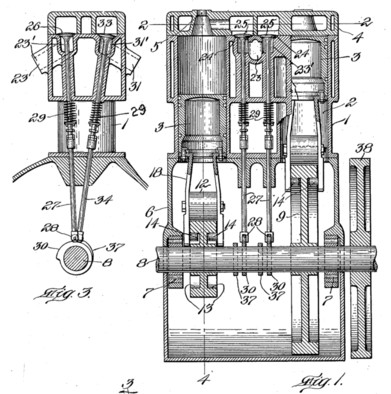
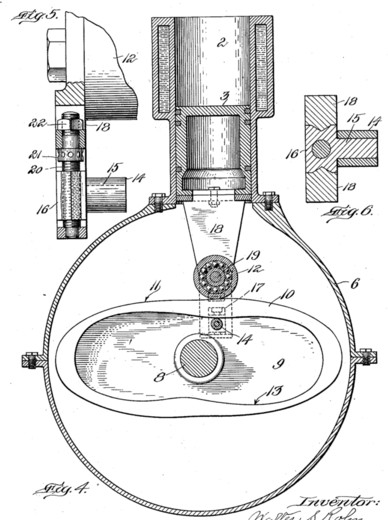
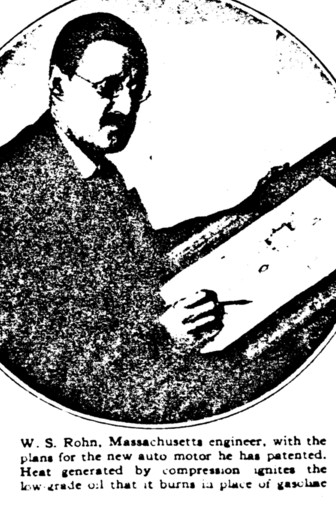
A novel internal-combustion engine that uses an odd-shaped cam on the crankshaft to receive power directly from a roller mounted on the piston. Extreme compression generates heat that ignites low-grade oil in a slow explosion, eliminating the need for spark plugs and traditional connecting rods.
Principles
- Compression ignition
- Cam-driven power transfer
- Direct piston-to-crankshaft mechanical coupling
Scientific Domains
Materials
- Steel
- Iron
- Low-grade oil (fuel)
Mechanisms of Action
- Heat generated by high compression ignites fuel
- Cam profile converts piston motion into crankshaft rotation without rods
Energy Sources
Applications
- Automobile propulsion
- Low-cost vehicular powerplants
Claimed Performance
Motor fuel costs can be cut to 5 cents a gallon.
Limitations
- No experimental data provided in the article
- Performance claims based on theoretical description only
- Potential material wear due to high compression
Red Flags
- Absence of quantitative performance data
- Reliance on a single historical patent claim