Confidence
0.80
Practicability
0.60
Evidence
0.30
Fringe Score
0.40
Risk
0.50
TRL
4
Goal
Increase fuel efficiency (miles per gallon) of gasoline internal-combustion engines.
Problem
Low fuel efficiency and high fuel consumption of conventional gasoline engines.
Concept Summary
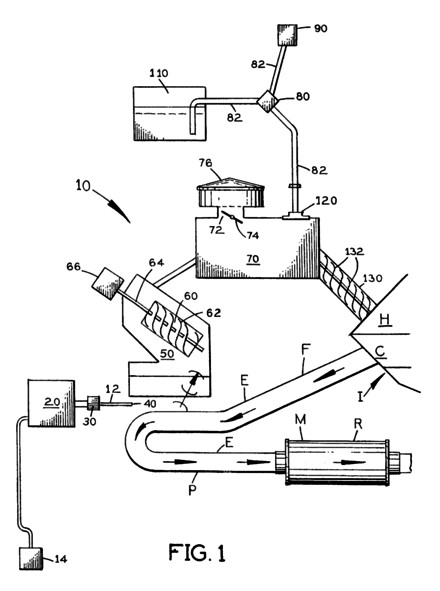
A steel fuel tank mounted in the trunk supplies gasoline to a vaporizing fuel system that uses engine exhaust heat to vaporize the fuel, mixes the vapor with atomized water and air, and delivers the mixture to the intake manifold, resulting in more complete combustion and higher mileage.
Principles
- Pre-heating fuel to vapor using exhaust heat
- Mixing vaporized fuel with atomized water and air
- Improved combustion efficiency through better fuel-air-water mixture
- Exhaust-heat recovery
Scientific Domains
Materials
- steel
- gasoline
- water
- metal components (valves, pumps, filters)
Mechanisms of Action
- Fuel is drawn from a one-gallon steel box
- Exhaust heat vaporizes the fuel in a collecting chamber
- A blower stirs the vapor
- Vapor mixes with atomized water and filtered air in a mixture box
- The mixture is delivered to the engine intake manifold
Energy Sources
Applications
- automotive fuel-efficiency improvement
- engine performance enhancement
Claimed Performance
50 % improvement in fuel efficiency (e.g., from ~30 mpg to ~45 mpg) and claims of 40-60 % gains by similar devices.
Experimental Evidence
During a test drive the car was run at a steady 65 mph for 45 miles on the fuel in the steel box; the author reported a 50 % improvement over the vehicle's normal mileage.
Limitations
- Legal and regulatory hurdles for aftermarket fuel-system modifications
- Potential fire or explosion risk if the vaporizer fails
- No independent or peer-reviewed verification
- Requires additional fuel tank and space in vehicle
Red Flags
- Anecdotal evidence only; no controlled data
- Conspiracy-theory language about industry suppression
- Potential for fraud due to lack of independent testing