Goal
Convert dead trees and other vegetative waste into a nutrient-rich, natural fertilizer.
Problem
Large quantities of forest slash and dead wood that are normally burned or landfilled, creating fire hazards and environmental waste.
Concept Summary
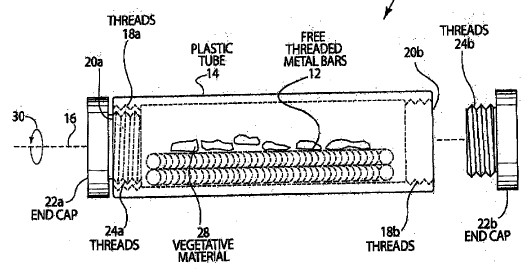
Roy's patented process loads chopped vegetative material into a horizontally oriented plastic cylinder that contains at least one free-moving metal rod. The cylinder is rotated, producing uniformly sized, dry particles that absorb any sap or liquids present. The resulting particles are sold as a natural fertilizer called Mill Creek Soil Primer.
Principles
- Mechanical size reduction by rotation
- Homogenization of particles
- Absorption of sap and liquids into particles
Scientific Domains
Materials
- plastic
- metal (steel rod)
- pine wood
- vegetative material (branches, needles, hay, etc.)
Mechanisms of Action
- Rotational shear breaks down wood and plant matter
- Metal rod agitates material to prevent clogging from sticky sap
- Uniform particles retain absorbed nutrients for gradual soil release
Energy Sources
Applications
- soil amendment for gardens
- fertilizer for agriculture
- agricultural waste management
Claimed Performance
Produces a high-quality, natural fertilizer using very little energy; users report dramatically healthier plants.
Experimental Evidence
The product has been "tested extensively by Colorado State University to prove without a doubt that it is a great fertilizer".
Replication Status
Tested by Colorado State University; small-scale commercial availability in local stores.
Limitations
- Process still needs a better manufacturing method
- Energy consumption not quantified
- Exact mechanism of nutrient release not fully understood
Red Flags
- Claims of "miracles" and "amazing" plant growth without quantitative data
- Inventor admits he is not sure how the process works