Goal
Capture a larger fraction of wind kinetic energy than conventional bladed turbines, reduce aerodynamic and mechanical losses, and provide cheaper, quieter, and more environmentally friendly wind power.
Problem
Conventional wind turbines are limited by the Betz limit (~59 % extraction), suffer from blade-related aerodynamic and mechanical losses, generate noise, and cause bird mortality.
Concept Summary
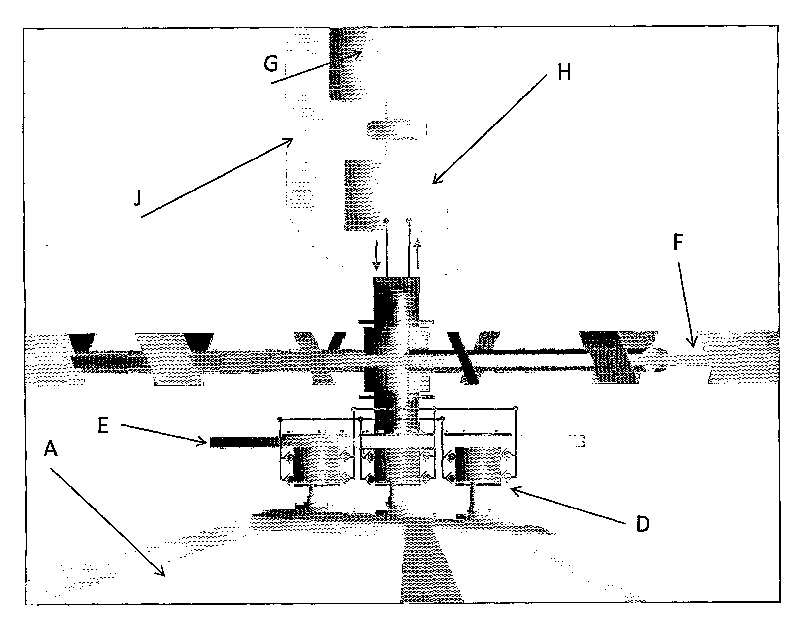
The Saphonian replaces the rotating blade rotor with a curved, sail-shaped body that directly captures wind pressure. The body pivots under wind force, driving double-acting hydraulic cylinders. The pistons generate hydraulic pressure that is routed to a hydraulic motor, which drives an electric generator. By eliminating blades, hub, and gearbox, the system claims efficiencies up to 2.3 x that of conventional turbines and wind capture up to 80 % of the available kinetic energy.
Detailed Description
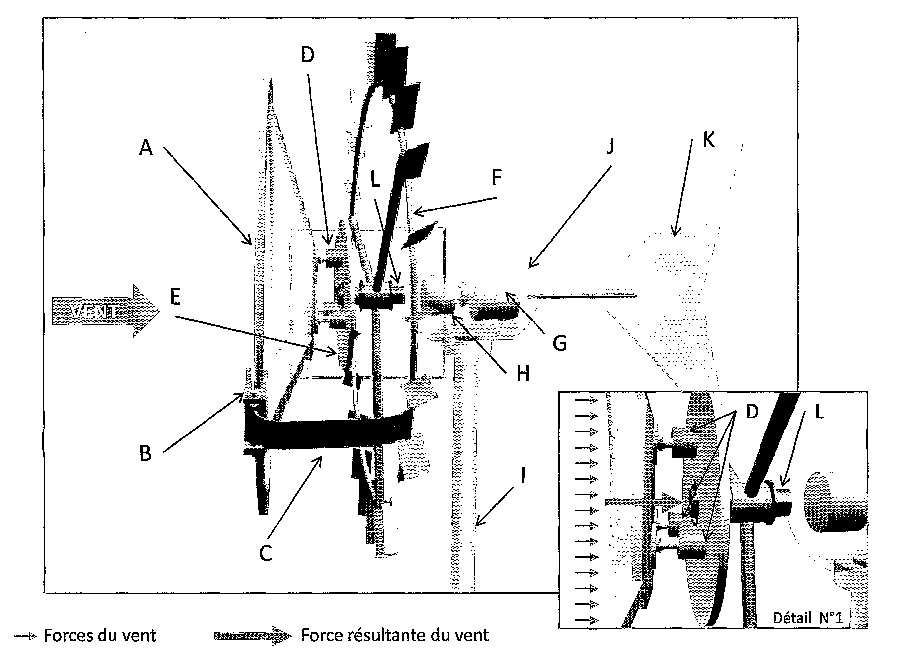
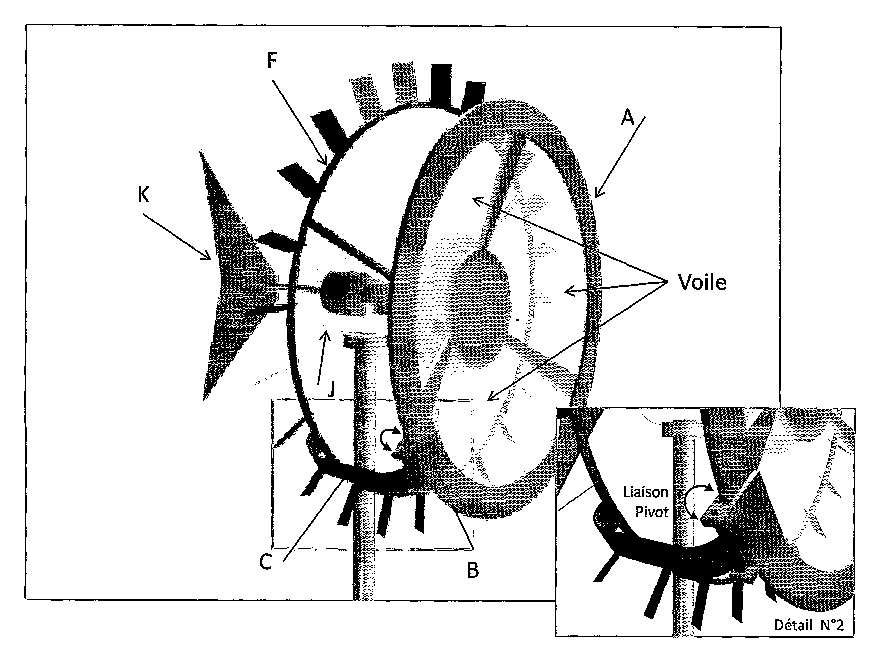
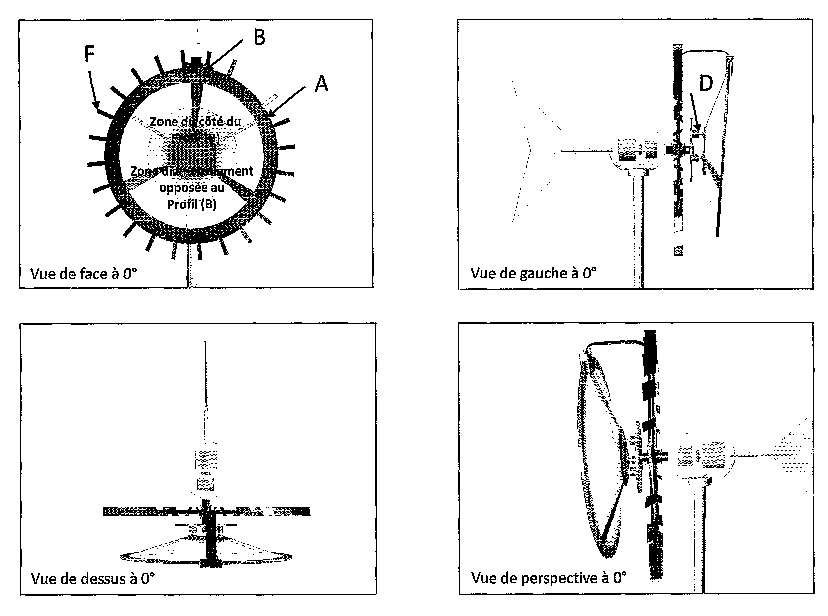
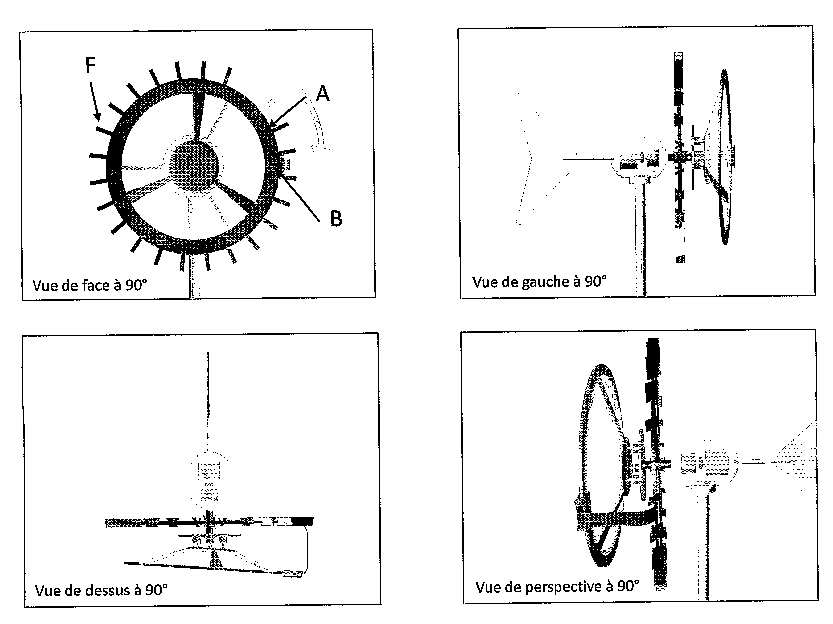
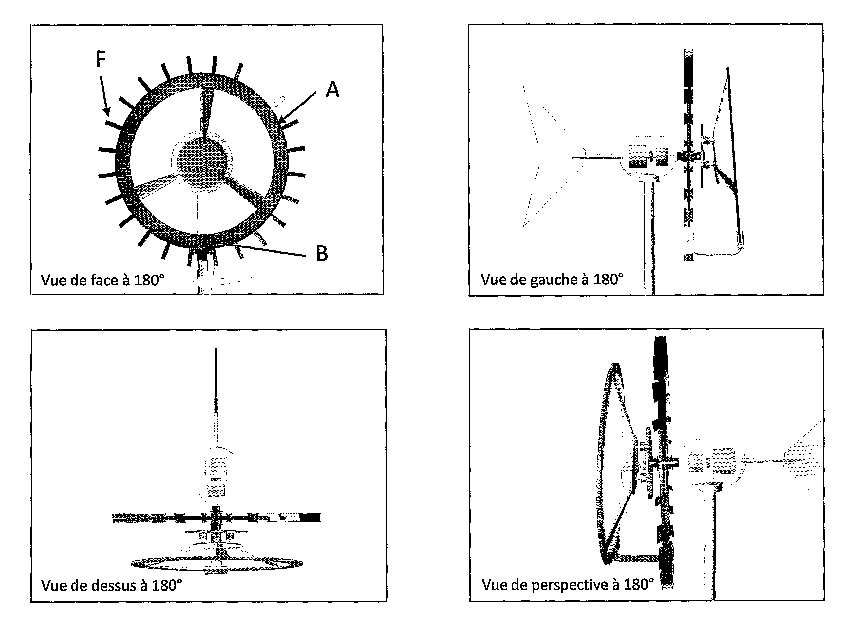
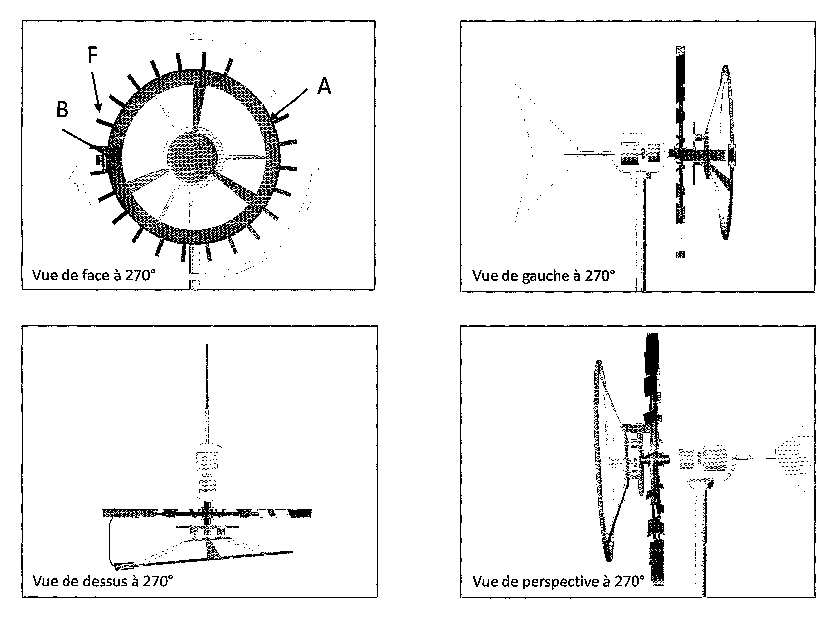
The invention (WO2012039688) consists of a wheel (F) with peripheral blades that spins about a fixed axle (L). A sail-shaped body (A) mounted on a ball-jointed support (E) pivots under wind load. A rigid arm (C) and a U-shaped profile (B) translate the pivoting motion into a circular satellite movement, causing a series of double-acting hydraulic cylinders (D) to reciprocate. The pistons pump hydraulic fluid through one-way valves into a hydraulic motor (H) located in the nacelle (J). The motor, via a speed multiplier, drives an electric generator (G). A tail vane (K) or automatic orientation system keeps the body facing the wind. The system claims to bypass the theoretical Betz limit, achieving up to 2.3 x higher efficiency and reducing cost by eliminating blades, hub, and gearbox.
Principles
- Aerodynamic lift and drag on a sail-shaped surface
- Hydraulic actuation of double-acting cylinders
- Mechanical conversion of wind pressure to piston motion
- Electrical generation via hydraulic motor
Scientific Domains
Materials
- Lightweight structural material (e.g., aluminum or composite)
- Hydraulic fluid
Mechanisms of Action
- Wind pressure on sail-shaped body causes pivot
- Pivot motion drives double-acting hydraulic cylinders
- Reciprocating pistons pump hydraulic fluid
- Hydraulic motor converts fluid pressure to rotation
- Generator converts rotation to electricity
Energy Sources
Applications
- Renewable electricity generation
- Wind farms
- Off-grid power supply
Claimed Performance
Efficiency 2.3 x higher than conventional bladed turbines; up to 80 % of wind kinetic energy captured; 300-500 W prototype demonstrated; cost estimated at roughly half of comparable conventional turbines.
Experimental Evidence
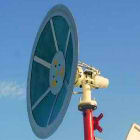
Empirical performance tests on a 300-500 W prototype (diameter 120 cm) confirmed the theoretical assumptions and showed an efficiency level 2.3 times higher than a conventional turbine. The second-generation prototype is under testing.
Replication Status
Prototype tested internally by Saphon Energy; no independent replication reported.
Limitations
- Performance depends on precise aerodynamic shaping
- Complex hydraulic system may increase maintenance
- Scaling to utility-scale power not yet demonstrated
- Limited independent verification
Red Flags
- Claims of exceeding the Betz limit without peer-reviewed data
- Efficiency figures based on limited prototype testing
- No independent replication or third-party testing reported