Goal
Convert ambient heat into mechanical (and optionally electrical) work with very high efficiency, allegedly up to 100 % conversion, without a cold reservoir.
Problem
Low efficiency of conventional heat engines limited by the Carnot cycle and the need for a cold sink; desire for clean, pollution-free energy conversion.
Concept Summary
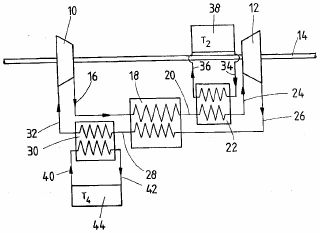
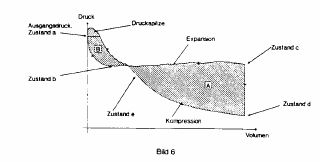
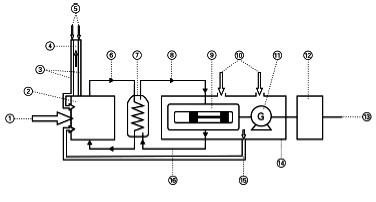
A circular thermodynamic process that uses a two-component vapor mixture (benzene + water, or other low-boiling/high-boiling pairs) heated to a specific temperature. The mixture exhibits retrograde condensation: during expansion the vapor superheats and does work, then partially condenses, causing a rapid pressure drop that drives the piston back. The cycle repeats, allegedly delivering net mechanical work from a single heat source without a cold pole.
Principles
- Retrograde condensation
- Closed-loop thermodynamic cycle
- Phase-change work extraction
- Heat-to-work conversion without a cold sink
Scientific Domains
Materials
- Benzene
- Water
- Gasoline
- Butane
- Nitrogen (N2)
- Butane (C4H10)
Mechanisms of Action
- Adiabatic expansion of a vapor mixture
- Spontaneous condensation (retrograde)
- Pressure-volume work on a piston/partition
- Heat exchange to re-heat condensate
Energy Sources
Applications
- Power generation
- Marine propulsion
- Air-conditioning / refrigeration
- Self-running heat-to-work devices
Claimed Performance
Authors report 60 % efficiency in early tests and claim a theoretical 100 % conversion of heat to mechanical work.
Experimental Evidence
The article mentions a forthcoming working model and patents, but provides no quantitative experimental data, peer-reviewed results, or independent replication.
Replication Status
No independent replication reported; only the inventor's own statements.
Limitations
- Requires precise temperature (e.g., 147 deg C) and specific mixture ratios
- Uses toxic benzene and other hydrocarbons
- No published quantitative performance data
- Claims conflict with established thermodynamic laws
Red Flags
- Violates the second law of thermodynamics as currently understood
- Lack of peer-reviewed experimental data
- Potential for fraud or misrepresentation
- Use of hazardous chemicals (benzene)