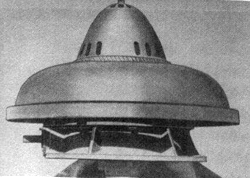
Goal
Generate drinking water from ambient air by rapid cooling and produce a high-velocity water jet.
Problem
Scarcity of fresh water and need for efficient atmospheric water generation.
Concept Summary
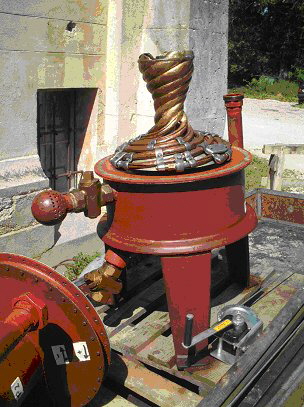
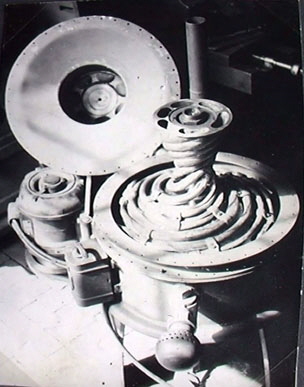
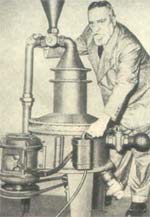
The Sogwendel uses a high-speed rotor to draw in hot air (~=90 deg C) and cool it in a fraction of a second to about +4 deg C. The temperature drop causes condensation of roughly 1 L of homogeneous water per cubic metre of air. The condensed water is expelled through a screw-type conduit at ~1290 m/s, driven by centrifugal and diamagnetic forces, eliminating the need for pressure piping.
Principles
- Rapid adiabatic cooling
- Condensation of water vapor
- Centrifugal acceleration
- Diamagnetic levitation
Scientific Domains
Materials
- Copper
- Steel
Mechanisms of Action
- Air cooling
- Water condensation
- Centrifugal ejection
- Diamagnetic attraction
Energy Sources
Applications
- Remote water supply
- Water purification
- Low-energy water generation
Claimed Performance
Cools 1 m^3 of 90 deg C air to +4 deg C in a fraction of a second, yields ~1 L of homogeneous water, and ejects the water at 1290 m/s.
Experimental Evidence
Inventor's own description; no independent measurements or peer-reviewed data are provided.
Limitations
- No independent verification of performance
- Requires a source of hot air
- Materials and construction details are vague
- Energy balance not quantified
Red Flags
- Extraordinary claims without quantitative data
- Potential pseudoscientific explanation
- Lack of peer-reviewed validation