Goal
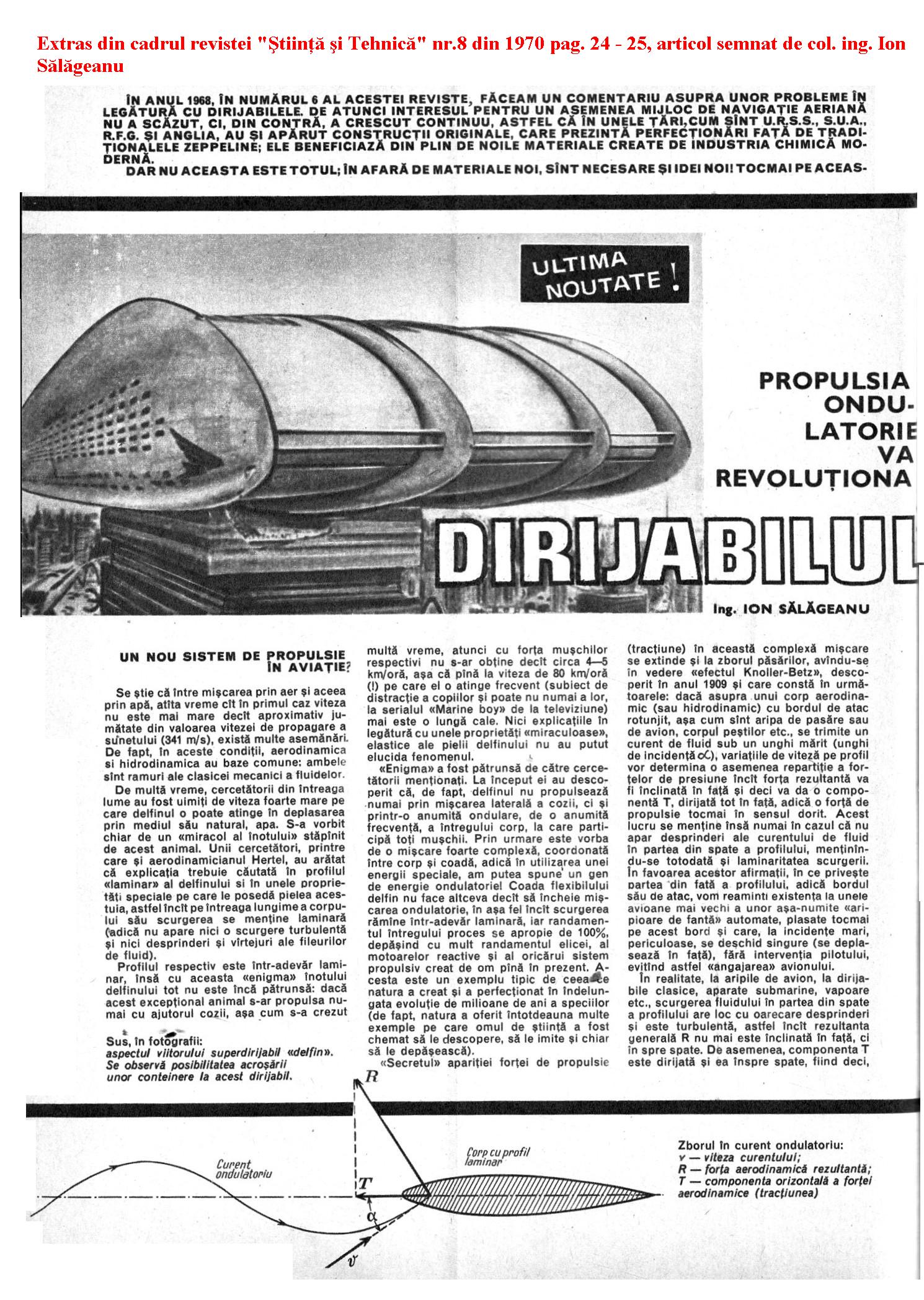
To improve thrust efficiency and reduce noise by exploiting the Knoller-Betz (Katzmeyr) effect, i.e., by deflecting a generated fluid stream alternately onto opposite sides of a body to lower the velocity differential while maintaining thrust.
Problem
Conventional propellers and jet engines are limited by cross-sectional area, tip-speed (sonic) constraints, and high noise caused by large velocity differentials between the stream and the vehicle.
Concept Summary
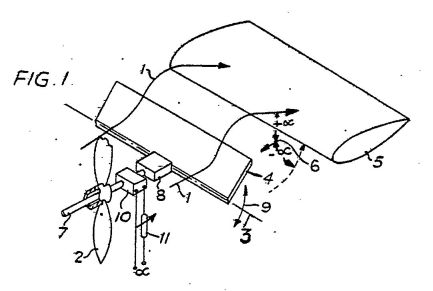
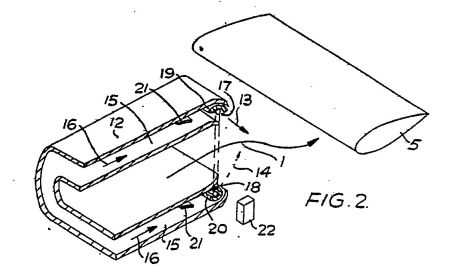
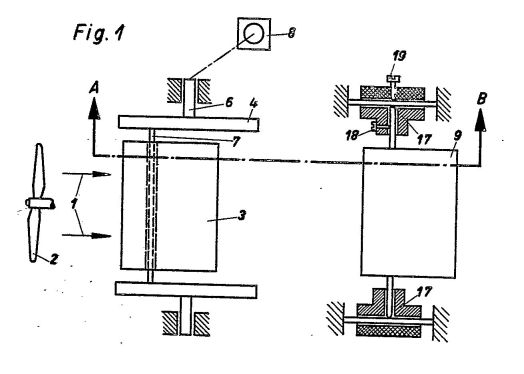
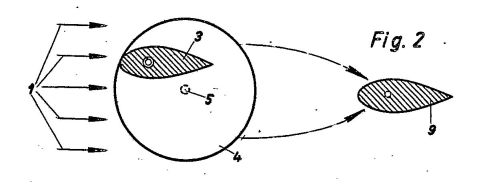
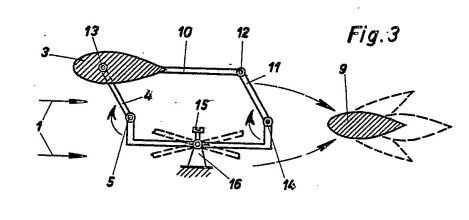
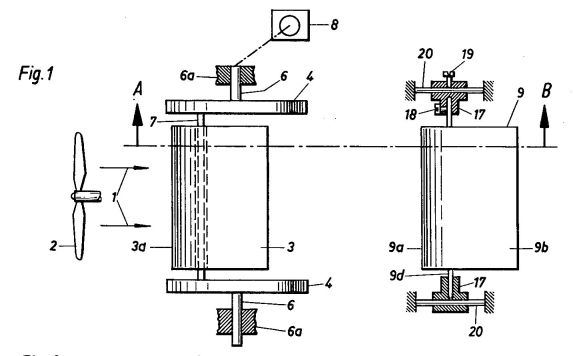
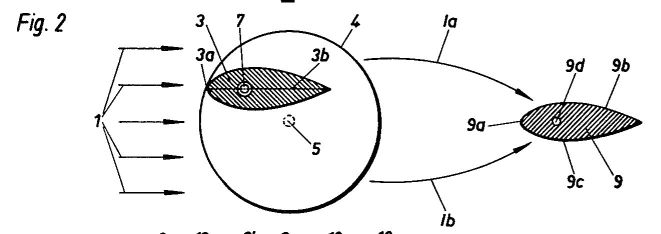
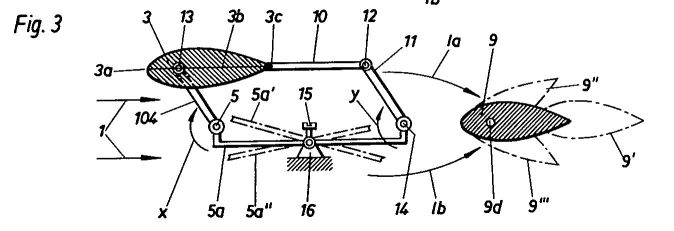
A fluid stream produced by a propeller, screw, or jet is periodically deflected onto opposite sides of a streamlined body using a flapping flap, pulsed flow shutters, electric/magnetic fields, or a rotating deflector. The alternating incidence creates an unsteady aerodynamic loading (Knoller-Betz effect) that generates thrust with a reduced velocity differential, improving efficiency and lowering acoustic emissions.
Detailed Description
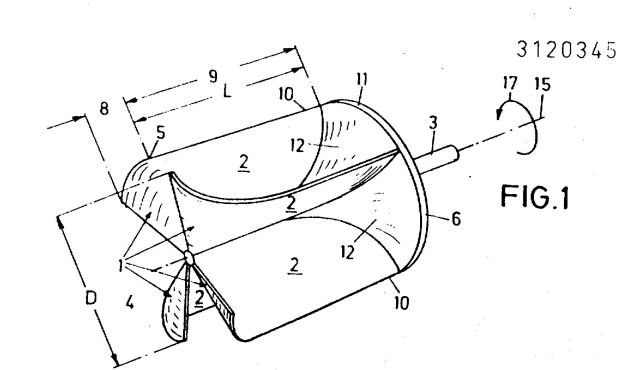
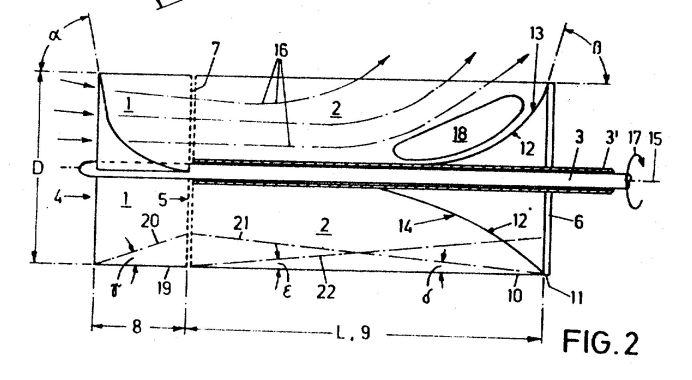
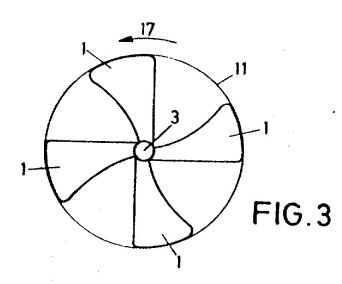
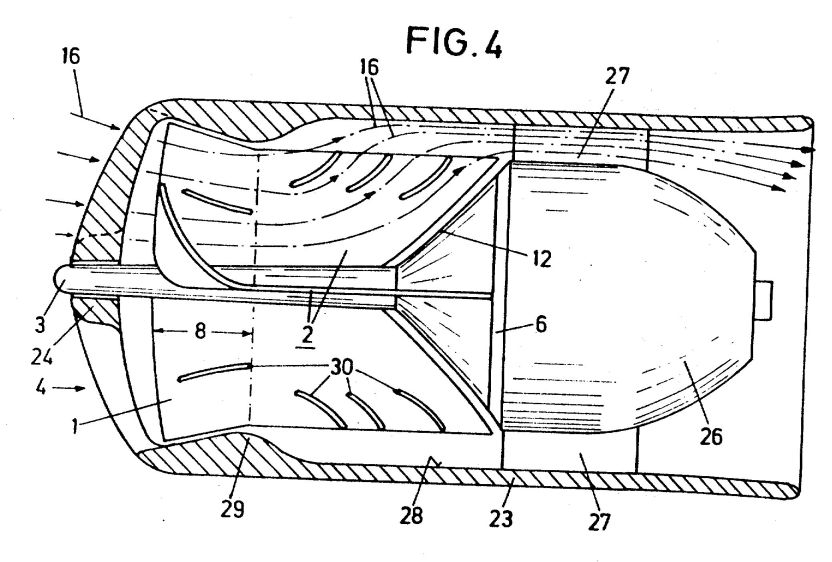
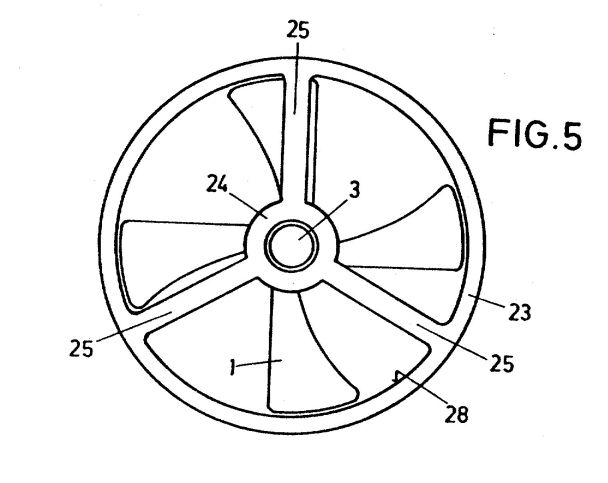
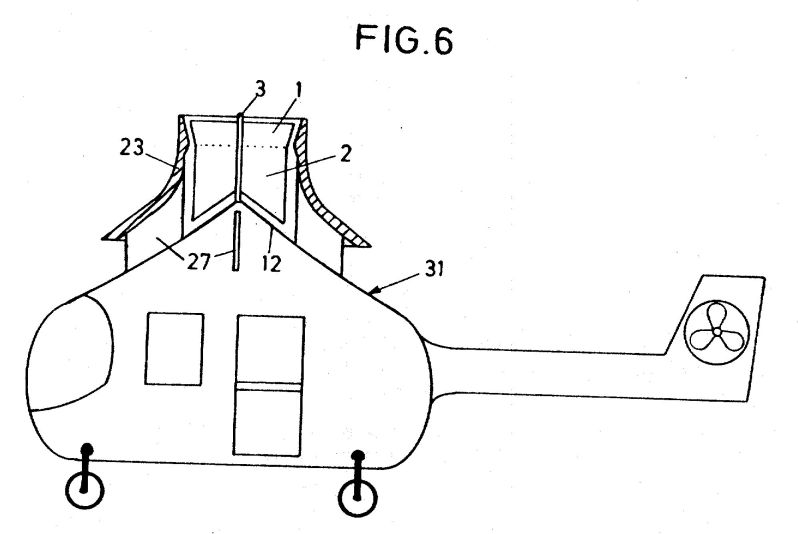
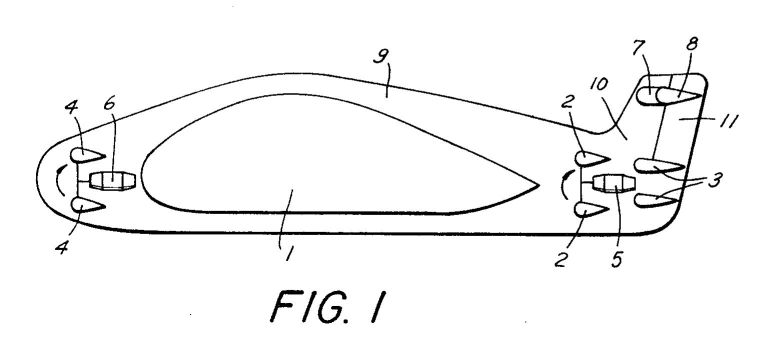
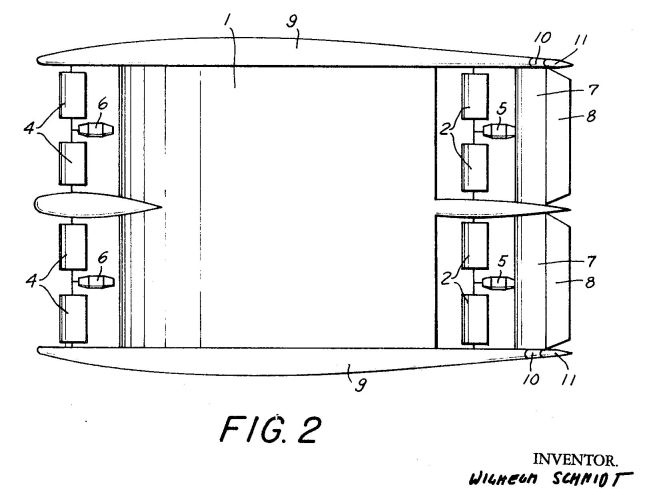
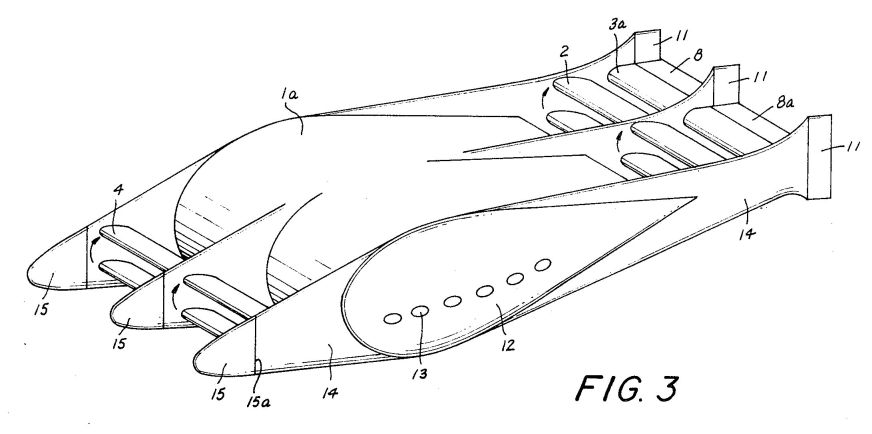
The invention describes several embodiments: (1) a flap hinged about an axis that oscillates under gear and an electromagnetic clutch; (2) a hollow twin-shelled body with internal pulsed streams controlled by revolving shutters; (3) multiple nozzles that alternately feed a body; (4) charging the fluid and deflecting it with an alternating electric or magnetic field; (5) a rotating deflector mounted on a shaft inside a duct or tail-pipe, driven by epicyclic gearing or a clutch. All configurations aim to direct the flow alternately onto opposite faces of the impingement body, thereby exploiting the Knoller-Betz effect for thrust generation.
Principles
- Knoller-Betz (Katzmeyr) effect
- Unsteady aerodynamics
- Momentum exchange
- Fluid deflection
- Vortex generation
Scientific Domains
Mechanisms of Action
- Alternating deflection of a fluid stream onto opposite sides of a body
- Oscillatory motion of a flap or deflector
- Pulsed flow injection via shutters
- Electric or magnetic field induced deflection of charged particles
- Rotating deflector altering flow direction
Energy Sources
Applications
- Aircraft
- Ships
- Underwater vehicles
- Drones
Claimed Performance
Improved thrust efficiency and lower noise compared with conventional propeller or jet thrust systems, achieved without increasing the cross-sectional flow area.
Limitations
- Mechanical complexity and wear of moving flaps/deflectors
- Precise timing and control required for alternating deflection
- Effectiveness may diminish at very high (transonic/supersonic) speeds
- Additional weight from gearing and actuators