Goal
Generate large amounts of mechanical energy from a light-driven hydrogen-chlorine reaction, providing a low-cost, environmentally benign power source.
Problem
Dependence on fossil fuels, high energy costs, and environmental pollution associated with conventional energy generation.
Concept Summary
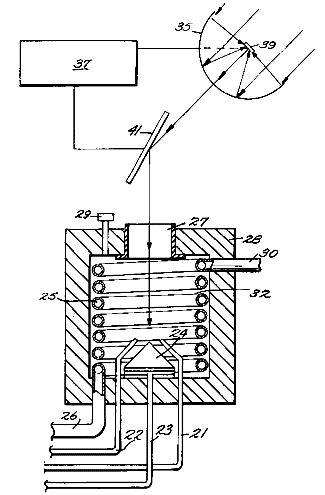
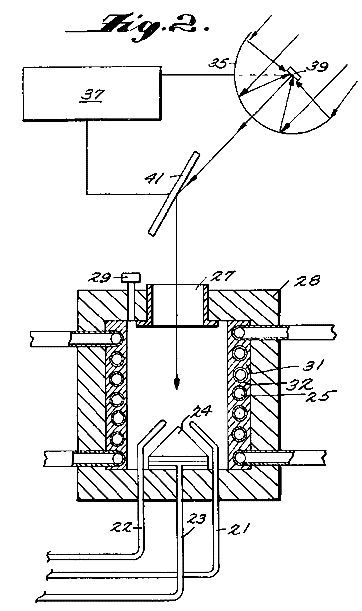
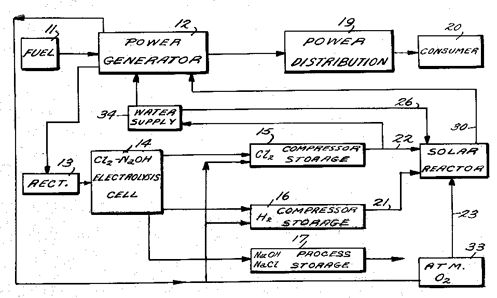
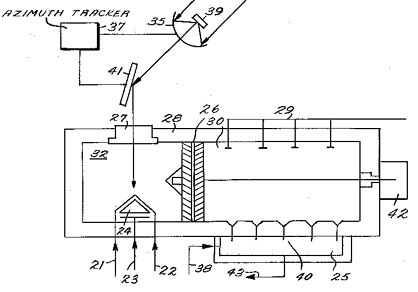
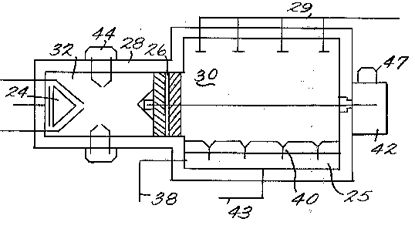
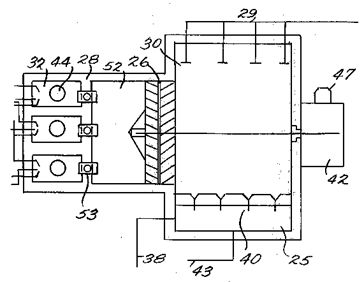
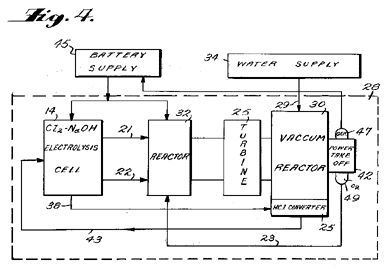
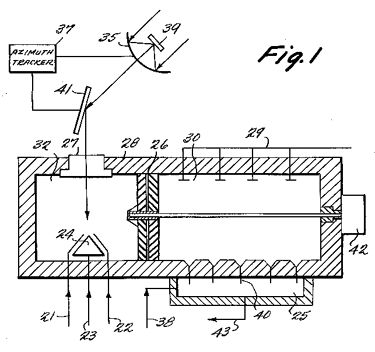
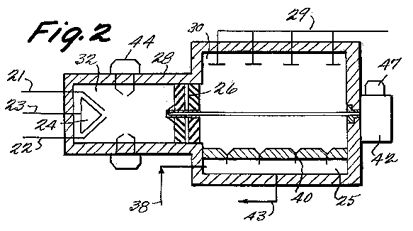
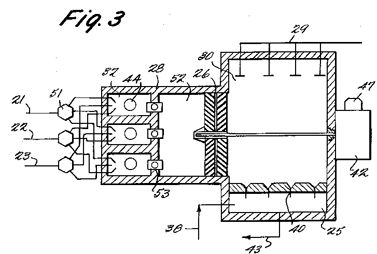
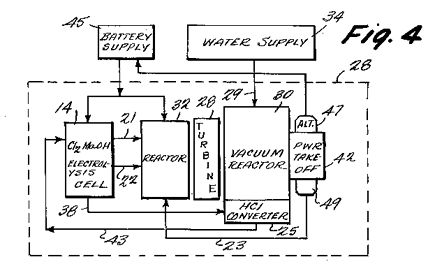
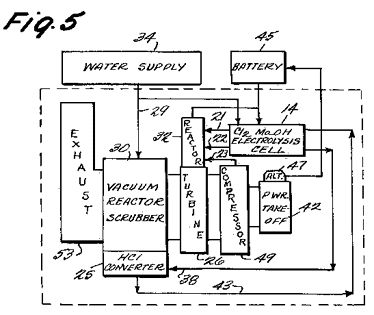
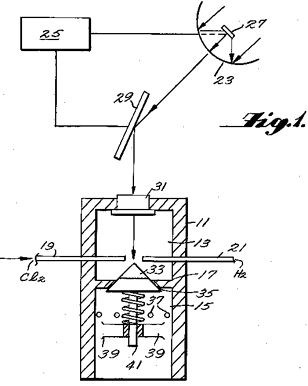
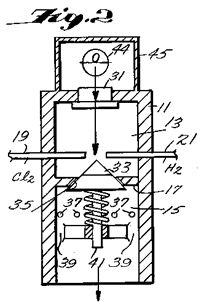
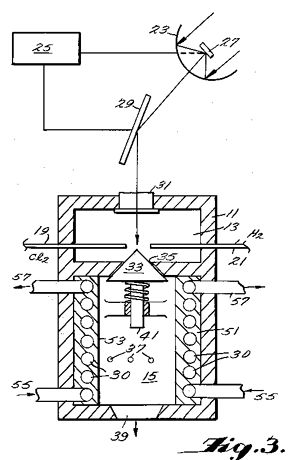
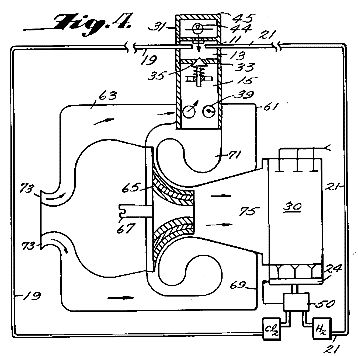
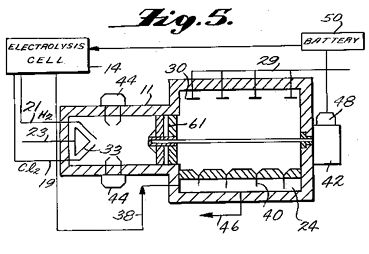
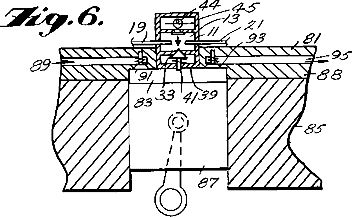
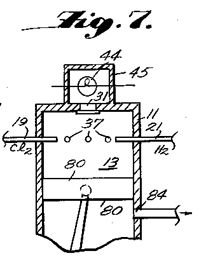
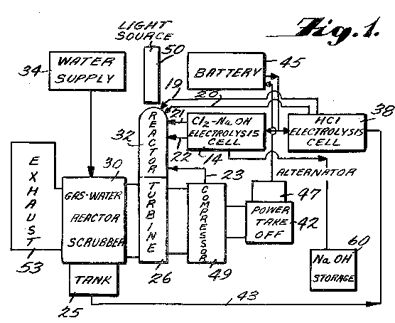
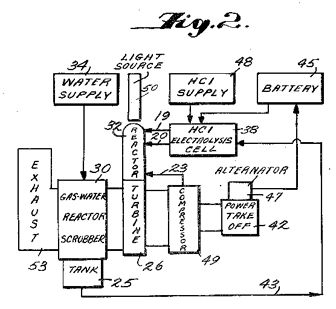
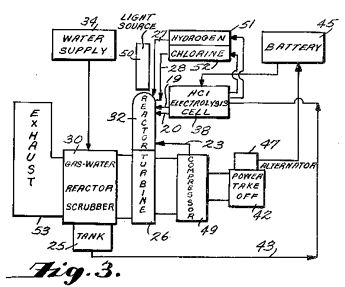
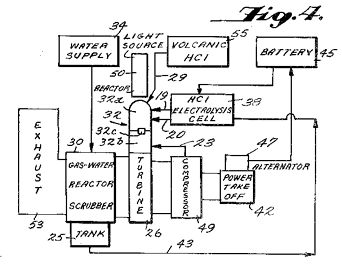
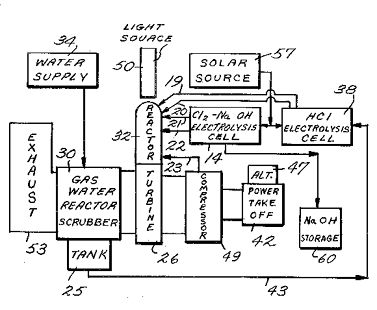
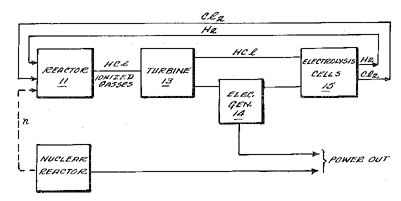
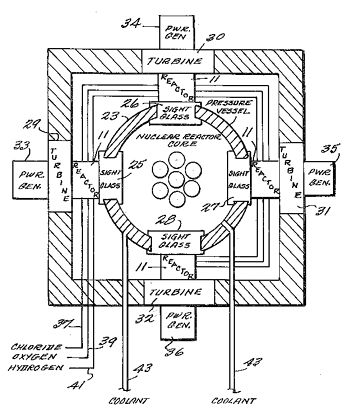
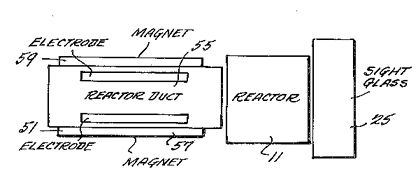
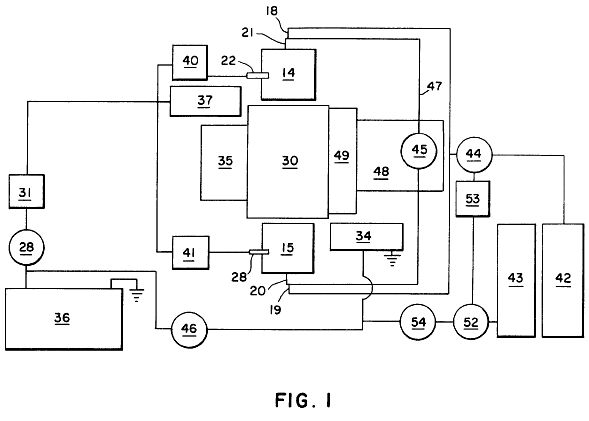
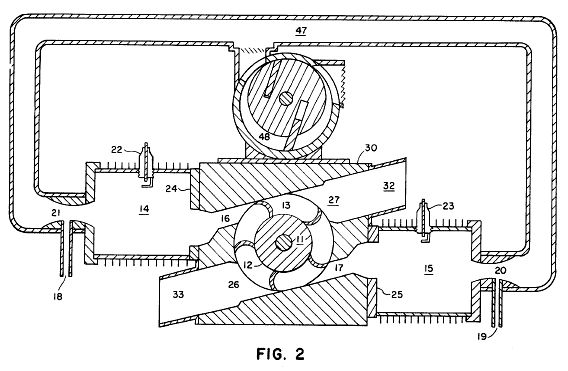
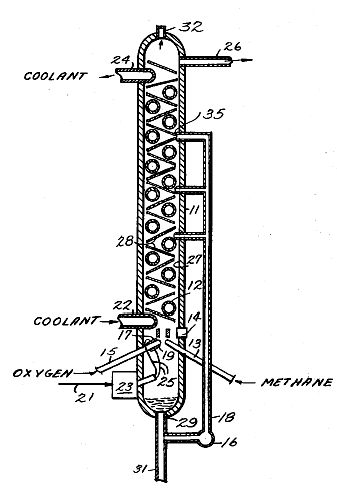
A reactor chamber receives hydrogen, chlorine, and oxygen. When exposed to ultraviolet light (solar or artificial), the gases undergo an explosive exothermic reaction that creates a high-temperature plasma of ionized hydrochloric gas. The reaction releases kinetic energy that can be harvested directly by turbines or modified internal-combustion engines, while the resulting hydrochloric acid is recycled back into hydrogen and chlorine. The system claims to produce several times more kinetic energy than conventional hydrogen-oxygen combustion and many times more than gasoline.
Principles
- Photochemical activation of chemical reaction
- Exothermic hydrogen-chlorine reaction
- Direct conversion of reaction energy to kinetic energy
- Closed-loop recycling of hydrochloric acid
Scientific Domains
Materials
- Hydrogen gas
- Chlorine gas
- Oxygen
- Hydrochloric acid
- Silicon carbide blocks
- Tungsten carbide tubing
Mechanisms of Action
- Ultraviolet light induces H_2 + Cl_2 -> 2 HCl plasma
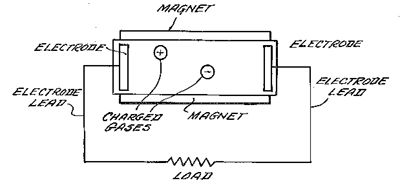
- Rapid expansion of ionized gas drives pistons or turbine blades
- Electrolysis or thermal decomposition recovers H_2 and Cl_2 from HCl
Energy Sources
Applications
- Automotive power
- Aircraft propulsion
- Stationary power generation
- Marine propulsion
Claimed Performance
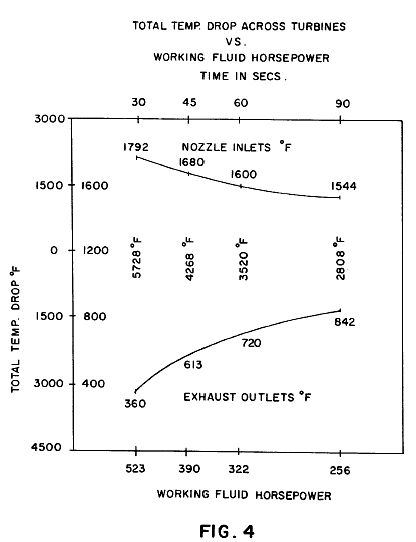
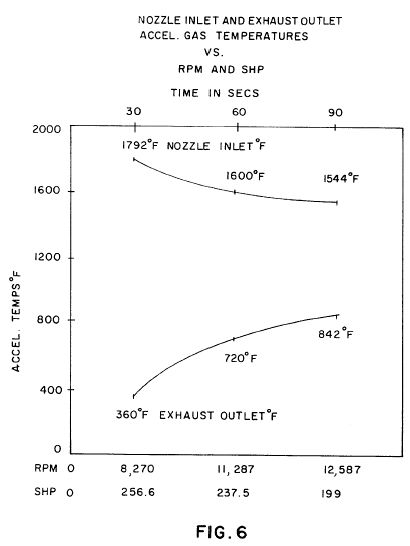
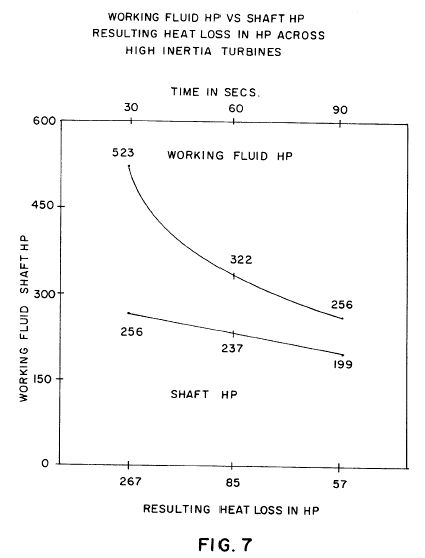
Side-by-side tests reported kinetic energy up to 5x that of H_2-O_2 explosions and up to 14x that of a gasoline engine of equal size; thermal temperatures around 1,000 deg F.
Experimental Evidence
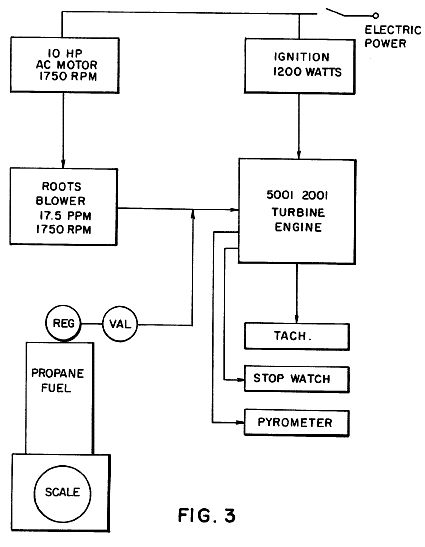
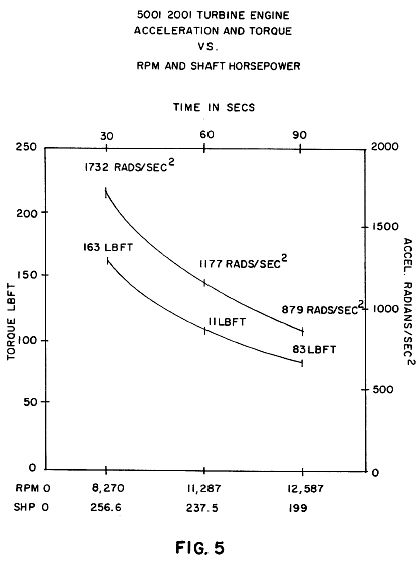
Tests using wooden-ball projectiles fired from a mortar with hydrogen-chlorine-arc radiation showed ~5x greater kinetic energy than hydrogen-oxygen-arc; patents filed describing reactor construction; reports of small engines (Honda motorcycle, Tecumseh appliances, custom turbine) operating on UV-induced H-Cl reaction.
Replication Status
Only two independent laboratories (including H.P. White Laboratory) are mentioned; no large-scale or peer-reviewed replication reported.
Limitations
- Requires high-intensity UV light source
- Handling of corrosive HCl
- No demonstrated closed-loop operation at scale
- Thermal management of 1,000 deg F reaction zone
Red Flags
- Claims of perpetual motion and over-unity
- Lack of peer-reviewed, independent replication
- Reliance on anecdotal test data