Goal
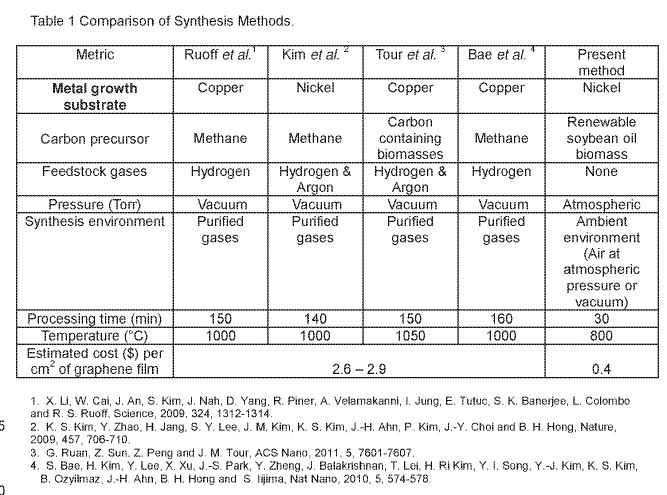
Low-cost, scalable production of continuous graphene films without the need for purified gases or vacuum processing.
Problem
Conventional graphene CVD requires energy-intensive vacuum chambers, purified/compressed gases, and long annealing times, making large-scale production expensive and complex.
Concept Summary
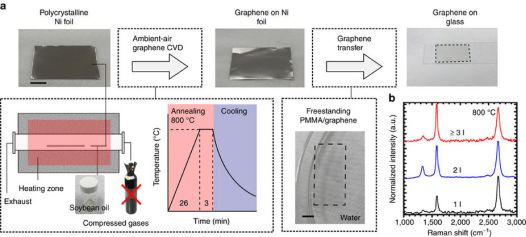
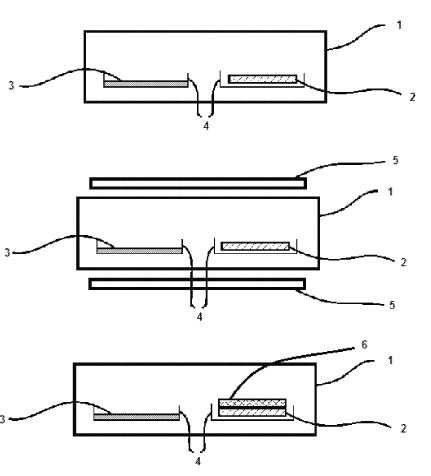
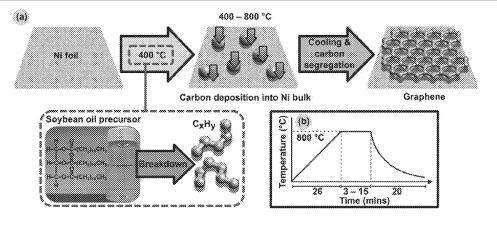
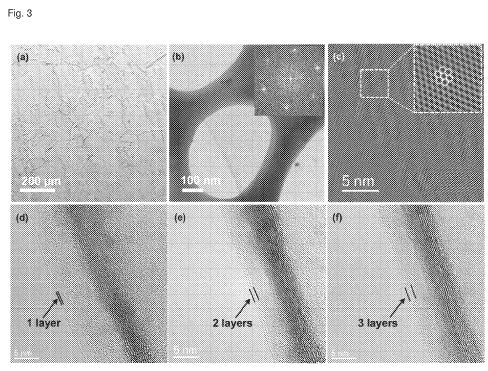
A single-step thermal chemical vapor deposition performed in ambient air using a renewable liquid precursor (soybean oil) and a nickel foil catalyst. The oil is thermally decomposed into carbon-building units that dissolve into Ni, then segregate as graphene upon rapid cooling. Water vapor generated in-situ suppresses amorphous carbon formation, allowing high-quality few-layer graphene films to be grown without external gases or vacuum.
Principles
- Thermal chemical vapor deposition (CVD)
- Catalytic carbon dissolution and precipitation
- Ambient-air processing (no vacuum, no purified gases)
- In-situ oxygen consumption by hydrocarbon precursor
- Water-vapor assisted etching of amorphous carbon
Scientific Domains
Materials
- Soybean oil
- Nickel foil (Ni)
- Quartz tube (SiO_2)
- Alumina plates (Al_2O_3)
- Poly(methyl methacrylate) (PMMA)
- Ferric chloride solution (FeCl_3)
- Acetone
- Deionized water
Mechanisms of Action
- Thermal decomposition of soybean oil into CH_3, C_2H_2, H_2, H_2O, CO_2, etc.
- Diffusion of carbon species into Ni bulk at ~800 deg C
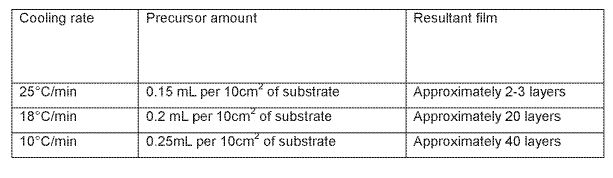
- Carbon segregation and crystallization on Ni surface during rapid cooling
- Water vapor suppresses amorphous carbon deposition
- Oxygen consumption by hydrocarbon fragments limits Ni oxidation
Energy Sources
Applications
- Transparent conductive electrodes
- Flexible electronics
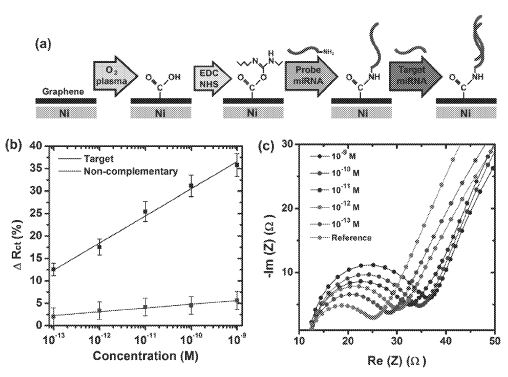
- Electrochemical biosensing
- Energy storage electrodes
Claimed Performance
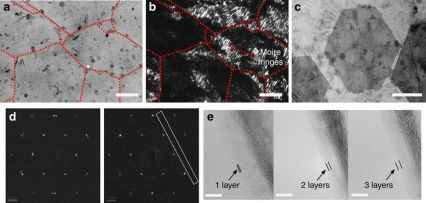
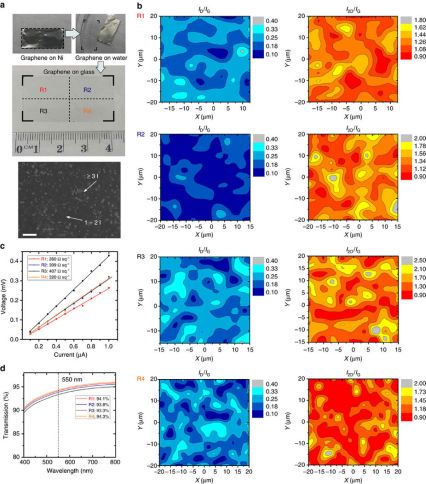
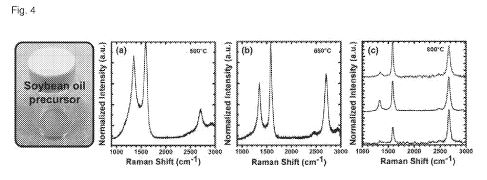
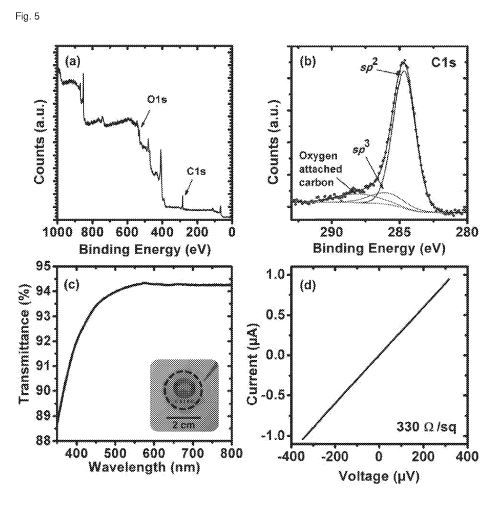
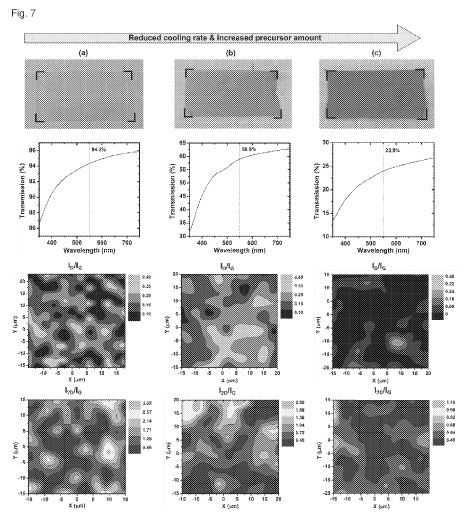
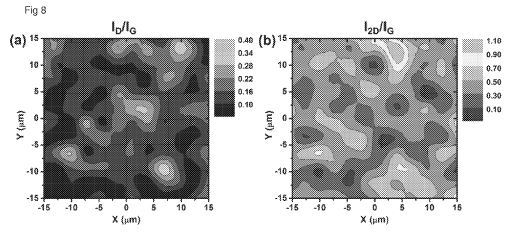
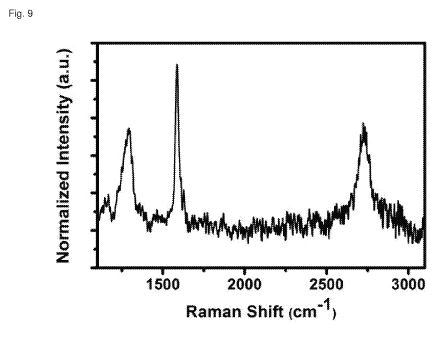
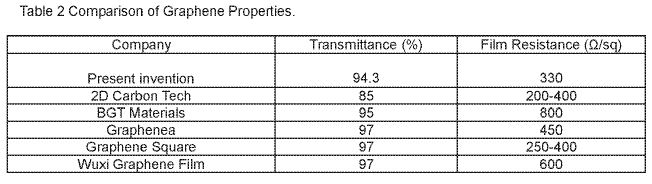
Optical transmission ~93.9 %, sheet resistance ~324 Omega sq^-^1, Raman ID/IG 0.15-0.25, I_2D/IG 0.95-1.50, domain size 200-500 nm.
Experimental Evidence
Raman spectroscopy, optical transmission measurements, sheet-resistance testing, X-ray photoelectron spectroscopy (XPS), mass spectrometry of gaseous by-products, thermogravimetric analysis of oil decomposition, and demonstration of an electrochemical genosensor using the graphene electrode.
Replication Status
Demonstrated in the authors' laboratory; no external replication reported.
Limitations
- Requires high temperature (~800 deg C)
- Nickel substrate must be removed (chemical etching)
- Process currently demonstrated on small quartz tubes
- Uniformity over very large areas not yet proven
- Limited to carbon-rich renewable precursors