Goal
Convert heat from a heater into mechanical energy without the need for a cooler, effectively using ambient heat.
Problem
Need for a heat engine that can generate mechanical power from low-grade or ambient heat without a temperature gradient.
Concept Summary
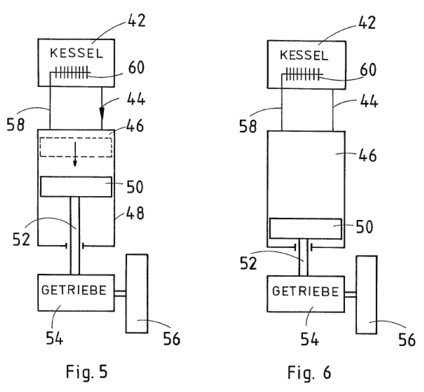
The invention is a closed-cycle heat engine that uses a binary working fluid (a light volatile gas and a heavier vapor/steam). The mixture is chosen so that one component has a critical temperature below the boiler temperature and the other above it. At the boiler temperature retrograde condensation occurs, allowing the fluid to expand and drive a moving chamber wall, producing mechanical work. The device claims to deliver 18 kW of mechanical power using only a heat source, without a separate cooling sink.
Principles
- Retrograde condensation
- Critical temperature engineering
- Phase-change thermodynamics
- Closed-cycle heat engine operation
Scientific Domains
Materials
- Water/steam
- Light volatile gas (unspecified)
- Heavy volatile fluid (unspecified)
Mechanisms of Action
- Binary fluid mixture with differing critical temperatures
- Retrograde condensation at boiler temperature
- Expansion of lighter component to drive moving chamber wall
Energy Sources
Applications
- Mechanical power generation
- Energy harvesting from low-grade heat
Claimed Performance
Produces 18 kW of mechanical energy from a heat source without a cooler.
Experimental Evidence
The device has been demonstrated to the German Bundestag, a former Green Party deputy, and a Swedish corporation, which negotiated a blackout against further exposure of the device in action.
Limitations
- Requires precise binary fluid mixture with specific critical temperatures
- No independent peer-reviewed data supporting the claimed free-energy conversion
- Potential conflict with the second law of thermodynamics
Red Flags
- Free-energy claim that appears to violate conventional thermodynamics
- Lack of quantitative experimental data or independent replication
- Potential for the technology to be marketed as a scam