Goal
Multiply the output of a small motor to provide sufficient power for industrial tools and, in theory, for a small community.
Problem
High cost of electricity and the need for low-cost power generation for industrial and municipal use.
Concept Summary
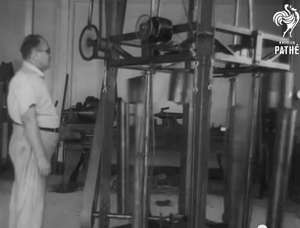
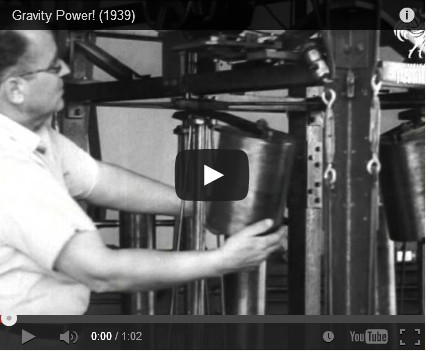
A steel framework with four shafts driven by an eccentric mechanism. Each shaft carries an off-balance weight that is continuously "falling" as the shaft rotates at about 60 rpm. The motion of the weights is claimed to add gravitational potential energy to the system, thereby multiplying the input motor power by roughly 1200 % and allowing the output to drive heavy-duty tools such as a 12-ft lathe, drill press, and hack saw.
Principles
- Eccentric rotating shafts
- Off-balance (unbalanced) weight dynamics
- Gravity-assisted energy transfer
Scientific Domains
Materials
- Steel
Mechanisms of Action
- Eccentric cam drives shafts
- Off-balance weights create continuous falling motion
- Conversion of weight motion into additional mechanical output
Energy Sources
Applications
- Low-cost electricity generation
- Industrial tool power
- Potential community-scale power supply
Claimed Performance
1200 % increase in motor horsepower; a 1 hp motor could allegedly power a town of 3,500 people at a cost of about $5 per month.
Experimental Evidence
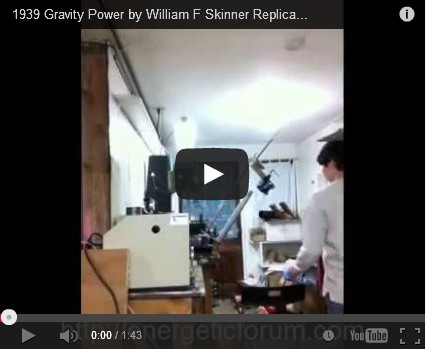
Demonstration model driven by a 1/8 hp electric motor operating a 12-ft lathe, a six-foot drill press and a hack saw; video footage from 1939 newsreel and later YouTube reverse-engineering videos.
Replication Status
No independent replication reported; only inventor-provided demonstrations and anecdotal engineer reports.
Limitations
- No peer-reviewed data or independent verification
- Claims appear to violate conservation of energy
- Performance based on anecdotal observation rather than quantitative measurement
Red Flags
- Overunity claim (1200 % power increase)
- Lack of independent testing or scientific validation
- Historical context of many unsubstantiated free-energy devices