Goal
Generate a controllable binding force / gravity-like effect using a rotating magnetic field.
Problem
Absence of a practical method to manipulate gravitational or pseudo-gravitational fields for force generation or propulsion.
Concept Summary
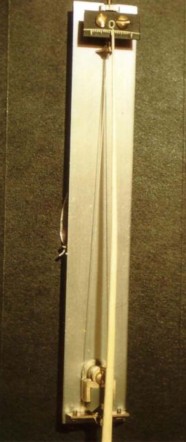
Smith describes a device that uses a disc bearing multiple ceramic magnets and a specially wound ferrite-core coil (the "Caduceus Coil") to create a rotating magnetic field. By exploiting what he calls field-energy minimization and the orthogonal nature of magnetic field motion, the apparatus is claimed to generate virtual "gravitron" fields that alter the weight of nearby masses, as measured on a precision balance.
Principles
- Rotating magnetic field without moving the magnets
- Field-energy minimization (lower energy level favours rotated configuration)
- Maxwell's equations governing v x B orthogonal to velocity and field vector
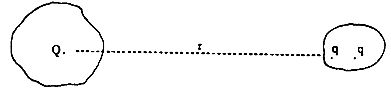
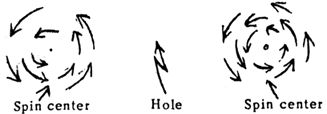
- Virtual gravitron formation at inner and outer edges of the magnetic ring
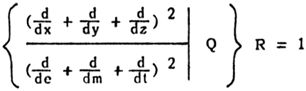
- Time treated as a field function (as described in correspondence)
Scientific Domains
Materials
- ceramic magnets
- ferrite core
- copper wire (gauge #16-#18)
- aluminum block (active material)
- mercury (used in a rolling design)
- plastic insulated #14 electric house wire
Mechanisms of Action
- A rotating magnetic field induces a velocity-dependent force (v x B) that is orthogonal to both motion and field
- The rotating field is hypothesized to create opposing pseudo-mass fields (gravitons) that modify local weight
- Interaction of the generated field with Earth's gravitational field produces measurable weight changes
Energy Sources
Applications
- gravity-based propulsion
- force generation for lifting or thrust
- experimental physics research
Claimed Performance
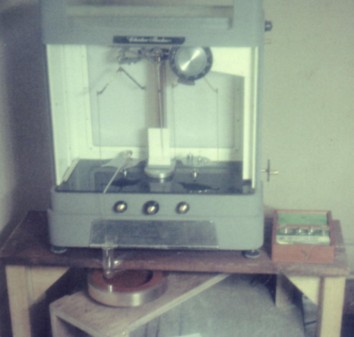
A brass weight of 24.4623 g increased to 24.4628 g (~= 0.0005 g) when a cubic inch of aluminum was placed 10 inches directly beneath it while the device was active.
Experimental Evidence
Smith reports a single measurement on a precision chemical balance showing the above weight increase; no independent replication or peer-reviewed data are provided.
Limitations
- Only a single, unverified measurement reported
- Mechanism described with vague, non-standard terminology
- Device requires precise power levels; fails at low power
- Potential heating and mercury handling hazards
Red Flags
- Extraordinary gravity-control claims without peer-reviewed evidence
- Use of non-standard concepts (e.g., "gravitron", "time as a field function")
- Lack of independent replication or detailed experimental methodology