Goal
Provide a lightweight, impact-resistant, infrared-transparent window/armor material that can replace glass in military, UAV, and consumer-electronics applications.
Problem
Current glass and plastic armor are heavy, brittle, and opaque to infrared; a need exists for a thin, tough, transparent material that can survive harsh environments while transmitting visible and IR light.
Concept Summary
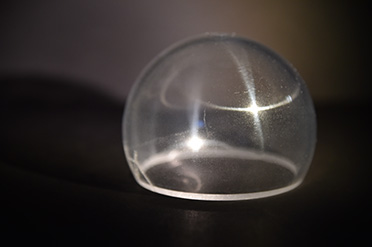
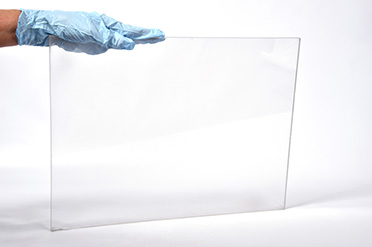
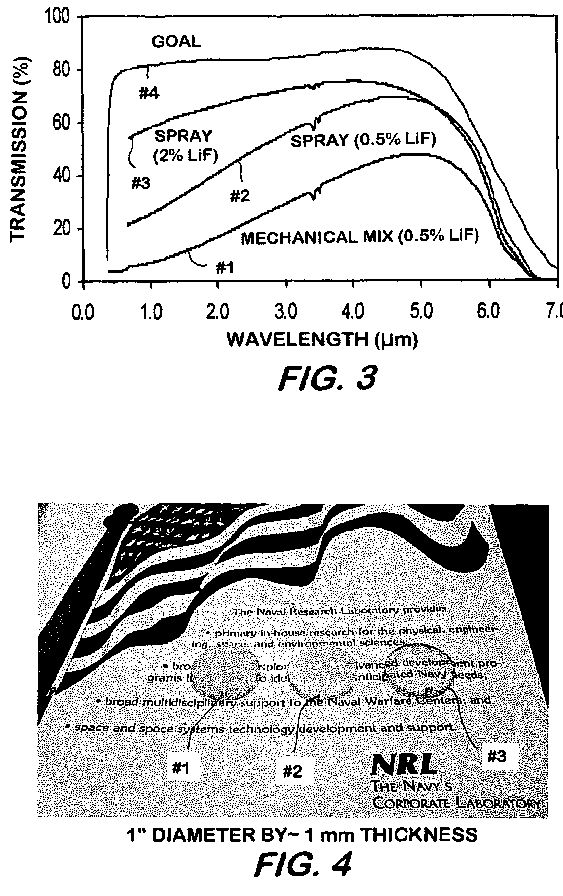
NRL developed a transparent ceramic made of magnesium aluminate spinel (MgAl_2O_4) using a low-temperature hot-press sintering process. The resulting polycrystalline spinel is tougher, harder, and lighter than glass, with uniform optical and mechanical properties and the ability to transmit infrared radiation. The process is scalable, allowing flat sheets, domes, and conformal shapes for windows, armor, and optics.
Detailed Description
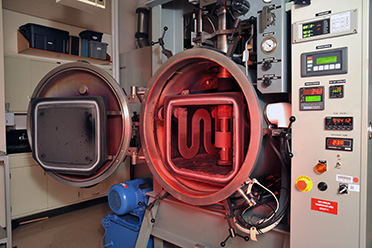
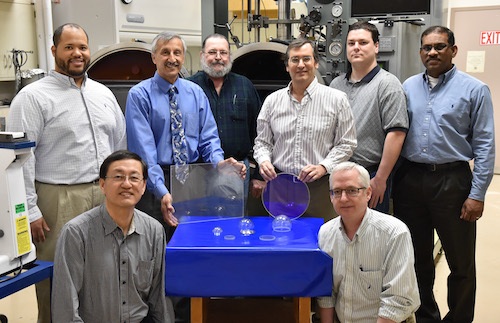
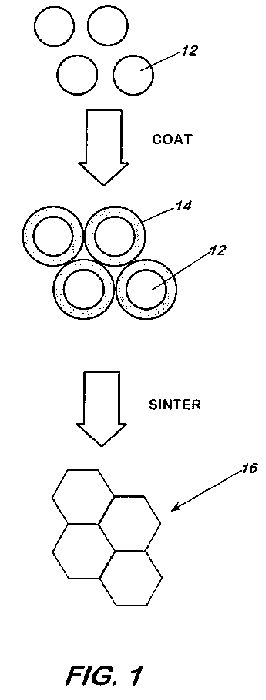
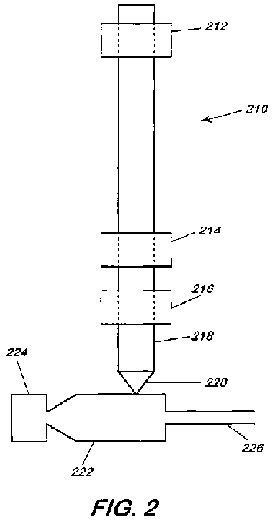
Spinel powder is mixed with a lithium-fluoride sintering aid and water to form a dispersion, atomized into droplets, dried, and then hot-pressed under vacuum to densify the material into a clear, dense ceramic. The hot-press sintering avoids high-temperature melting and crucible contamination, yielding a uniform microstructure that deflects cracks at grain boundaries. The material can be ground and polished like a gemstone to achieve optical quality. NRL has produced 8-inch diameter samples in the lab and licensed the technology to a company that has scaled production to 30-inch plates, demonstrating the process's scalability and suitability for conformal optics on UAV wings, vehicle windows, and laser system components.
Principles
- Hot-press sintering
- Vacuum densification
- Use of sintering aid (LiF) for particle lubrication
- Polycrystalline grain boundary crack deflection
- Optical transparency through high-purity ceramic
Scientific Domains
Materials
- Magnesium aluminate spinel (MgAl_2O_4)
- Lithium fluoride (LiF) sintering aid
- Water (for sintering aid solution)
- Additives (unspecified) for dispersion stability
Mechanisms of Action
- Densification of spinel powder into a uniform, transparent polycrystal
- Crack deflection at hard crystal grains increasing toughness
- Infrared transmission due to spinel's intrinsic optical properties
- Weight reduction by replacing multi-layer glass/plastic armor with a single thin ceramic sheet
Applications
- Military vehicle and aircraft windows
- Head-mounted face shields
- UAV sensor windows
- Infrared camera protection
- Smart-phone and consumer-electronics ruggedization
- Laser system windows and components
Claimed Performance
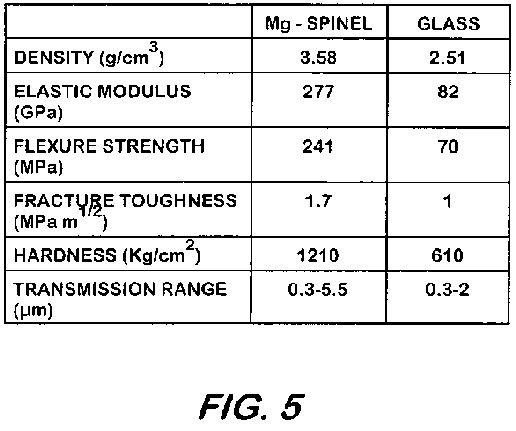
Tougher, stronger, and harder than glass; weight reduction of roughly 50 % for armor windows; infrared transmission; optical clarity comparable to glass; scalable to large-area plates (up to 30 inches).
Experimental Evidence
Lab-scale 8-inch diameter transparent spinel pieces were produced; the technology was licensed to a company that scaled production to 30-inch plates; NRL demonstrated infrared-transparent windows and demonstrated the material's resistance to sand, rain, and blast environments.
Replication Status
Licensed to a commercial partner that has produced larger-scale plates; NRL has transitioned laser-compatible spinel and other ceramic laser materials to industry.
Limitations
- Finishing (grinding and polishing) adds cost
- Maximum part size limited by hot-press dimensions
- Requires high-purity powders and precise sintering aid control