Goal
Convert latent hydrostatic pressure in a water body into mechanical energy and generate electricity.
Problem
Reliance on fossil-fuel electricity and high operating costs of conventional water-pumping systems.
Concept Summary
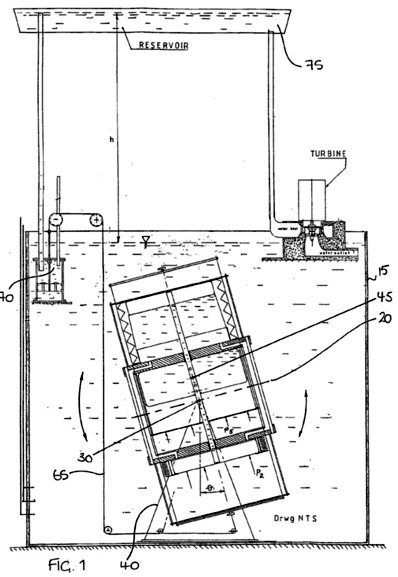
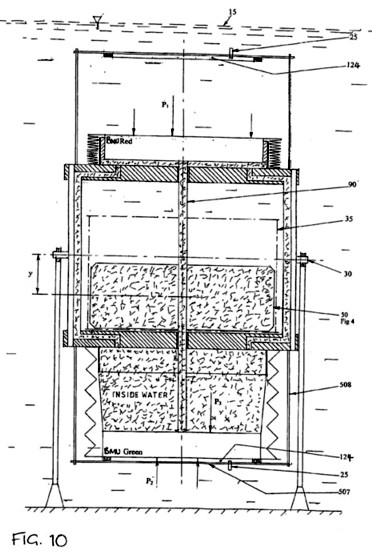
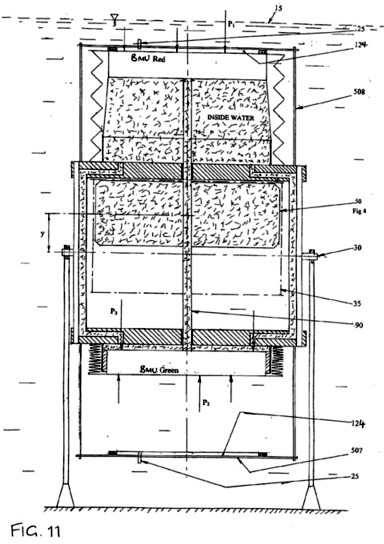
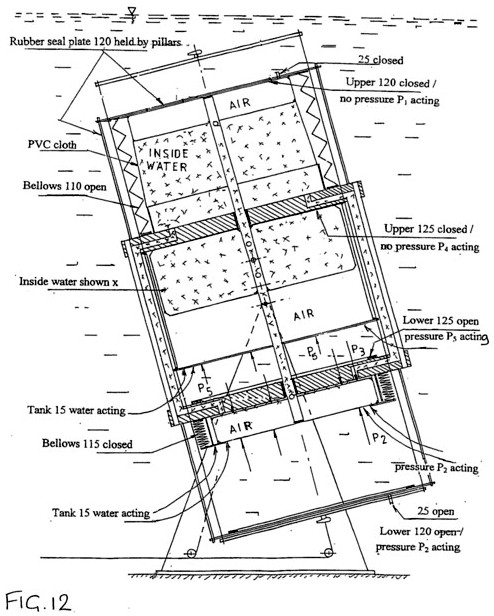
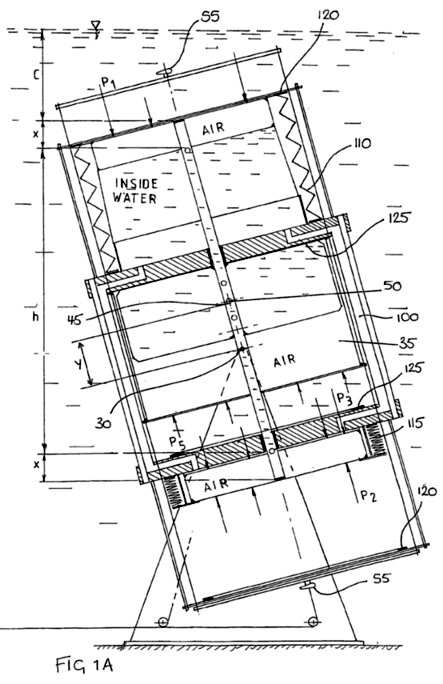
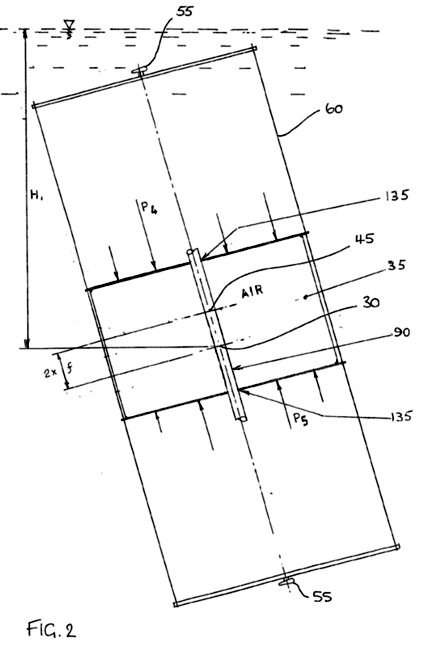
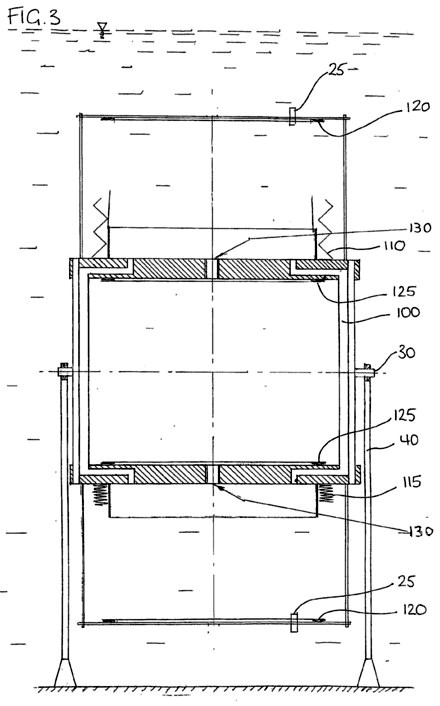
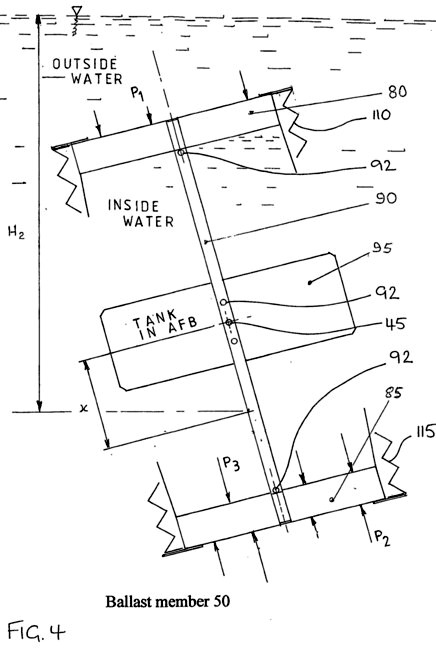
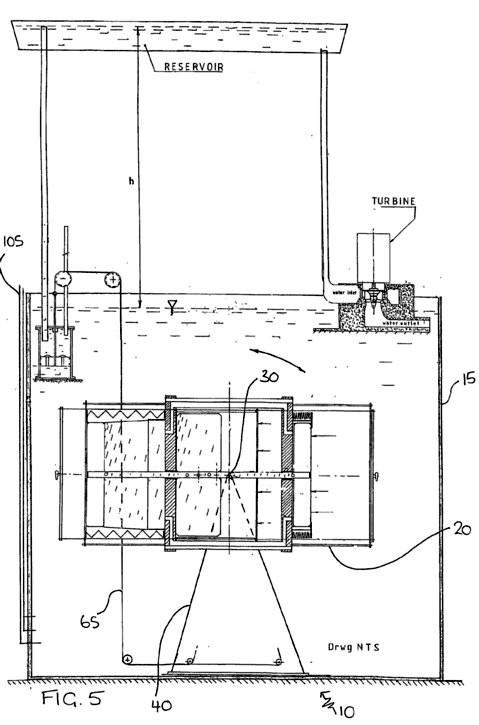
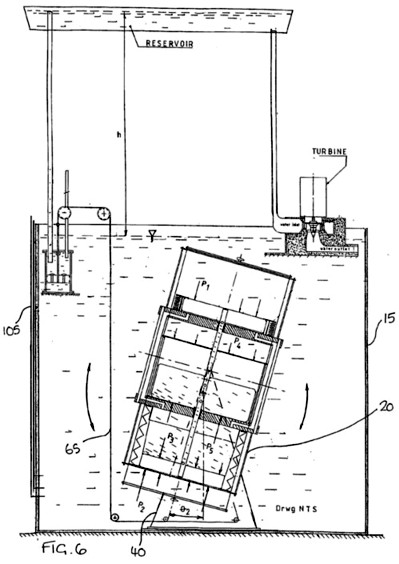
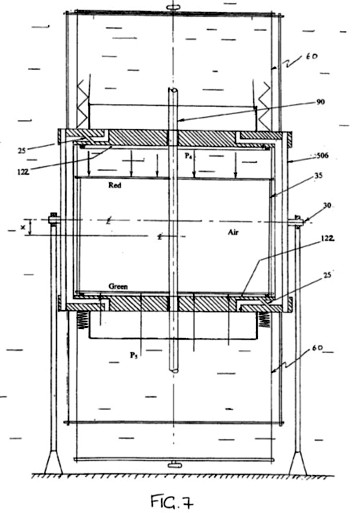
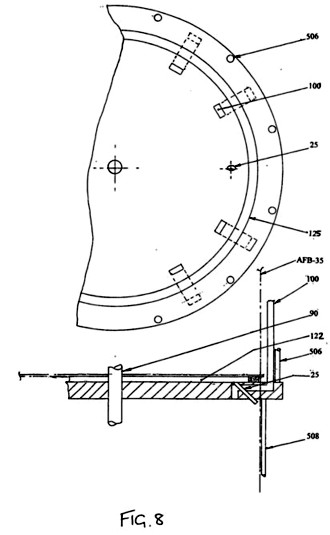
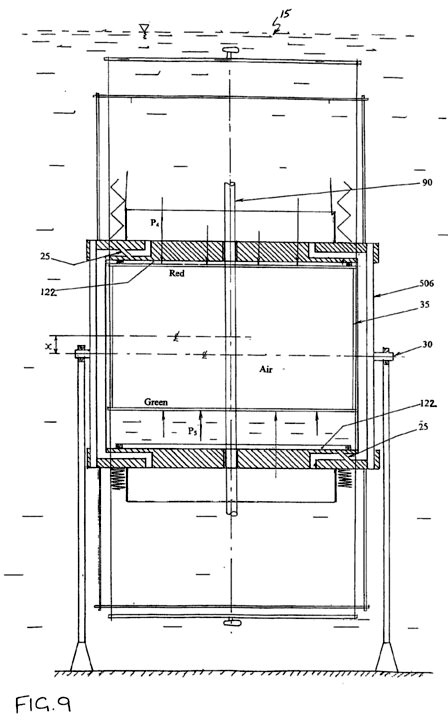
A submerged pump motor contains a buoyant member and a ballast tank. By moving the ballast tank, the buoyant member rises, driving a pump that creates an artificial waterfall. The waterfall drives a turbine that generates electricity, effectively transferring latent hydrostatic energy to useful power.
Principles
- Hydrostatic pressure
- Buoyancy
- Pressure differential
- Energy transfer from potential to kinetic
- Artificial waterfall generation
Scientific Domains
Materials
- Water
- Metal
- Buoyant material (e.g., foam)
- Ballast material (e.g., concrete)
Mechanisms of Action
- Ballast tank moves downward under gravity, creating a pressure differential
- Buoyant member rises, driving a pump shaft
- Pump creates a controlled water flow that forms an artificial waterfall
- Waterfall drives a turbine to produce electricity
Energy Sources
Applications
- Electrical power generation
- Water pumping
- Gas compression
Claimed Performance
A larger unit can generate 250 kW, enough to power 120 households; several modular units could supply up to a quarter of Malta's electricity consumption.
Experimental Evidence
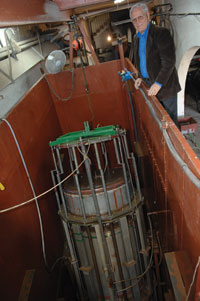
A working prototype was built in a 4-m-high tank in Luqa, Malta; it has been verified by two master-degree water-technology engineers and received an international award.
Replication Status
Prototype built and verified by external engineers; no independent commercial replication reported.
Limitations
- Requires a sufficiently large water body or reservoir
- Scale-up to utility size not yet demonstrated
- Performance depends on local water head and flow conditions
Red Flags
- Claims of three-times more heat output than electrical input for an air-conditioner (potential over-unity suggestion)
- Lack of peer-reviewed data or independent replication