Goal
Reduce take-off and landing speed, lower energy consumption, increase lift efficiency and enable short-take-off-and-landing (STOL) performance.
Problem
High take-off/landing speeds, excessive energy use, low lift at low speeds, and limited stall margin for conventional aircraft.
Concept Summary
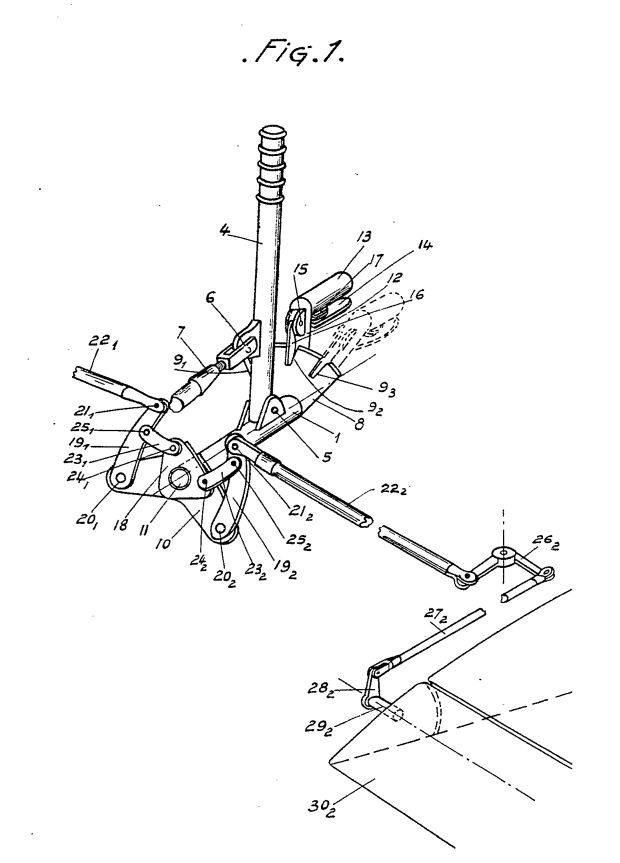
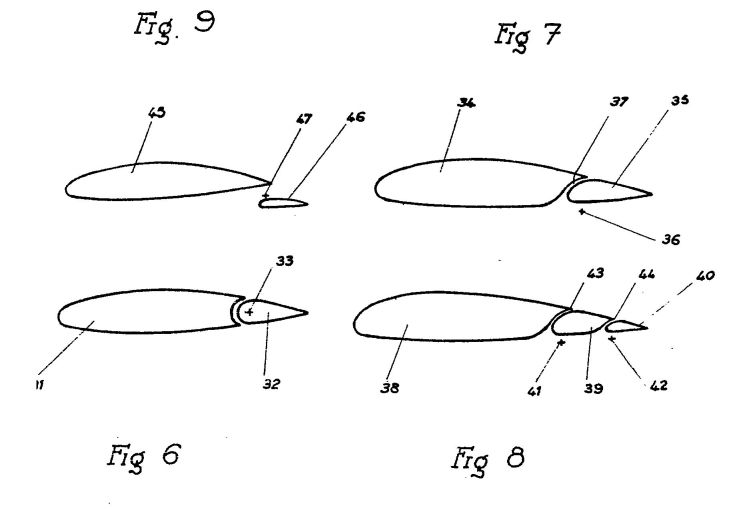
The invention combines conventional ailerons with additional control surfaces (mixed ailerons, curvature-acting spoilers, and fin-warping) linked through a torque-tube mechanism. By varying the curvature and differential deflection of these surfaces along the entire trailing edge, the wing can generate higher lift at low speeds and reduce stall speed, achieving the so-called Knoller-Betz effect.
Detailed Description
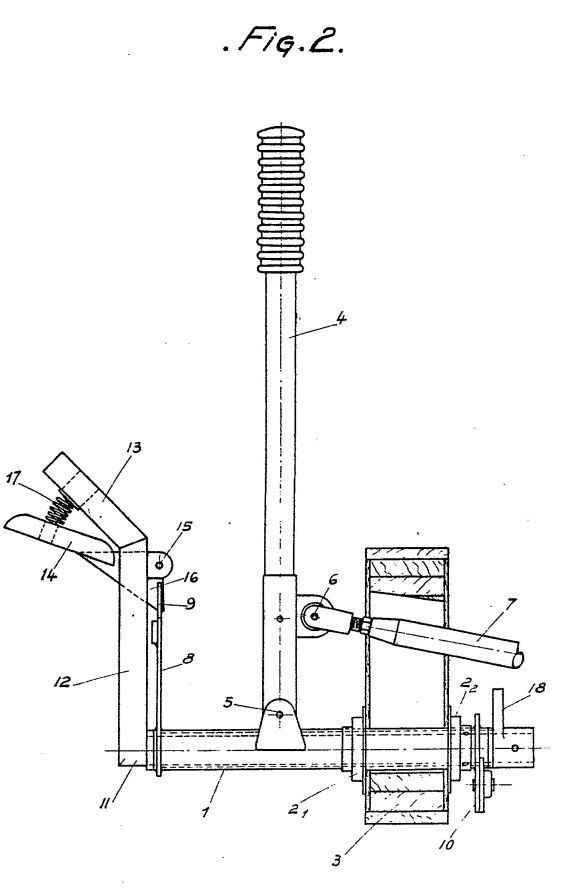
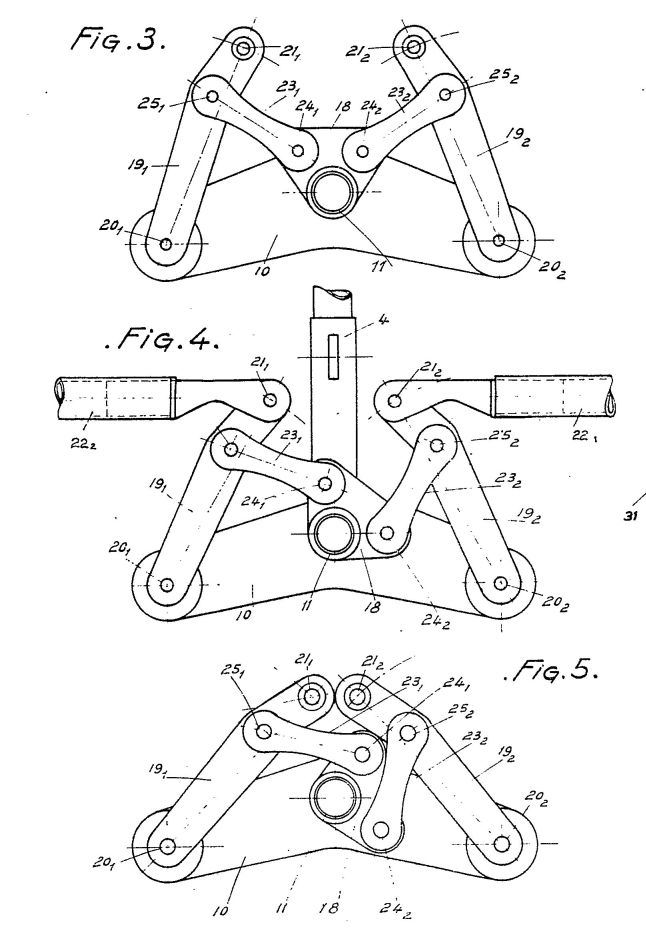
A torque tube runs inside the wing and carries a handle that the pilot moves. The handle rotates the tube, which in turn moves a set of rods and levers attached to mixed ailerons, flaps, and fin-warping devices. The system allows the entire trailing edge to act as a high-lift surface or to warp for roll control. Different notches in the torque tube lock the wing in preset positions for cruise, take-off, and landing. The device reduces the number of separate control linkages, saving weight and simplifying construction while providing differential lift and roll control.
Principles
- Aerodynamic lift augmentation
- Wing warping
- Mixed control surface actuation
- Torque-tube mechanical linkage
- Differential fin deflection
Scientific Domains
Materials
- Aluminum alloy (wing structure)
- Steel (torque tube, rods, pivots)
- Rubber/elastic springs
Mechanisms of Action
- Mixed ailerons produce combined roll and lift control
- Curvature-acting spoilers increase camber on demand
- Fin-warping changes local angle of attack
- Torque-tube rotation translates pilot input into surface deflection
Applications
- STOL transport aircraft
- Light utility aircraft
- Low-speed reconnaissance platforms
Claimed Performance
Large decrease in energy consumption for take-off and cruise, wide flying range, extremely low stall speed, high critical angles, and short take-off/landing distances (STOL).
Experimental Evidence
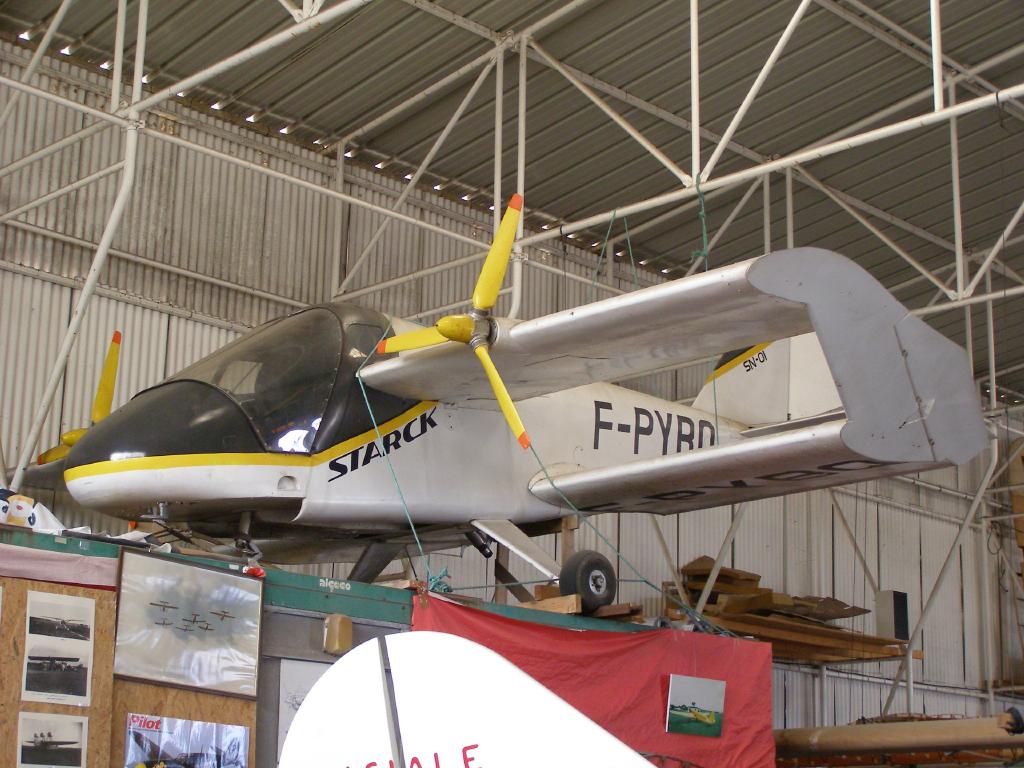
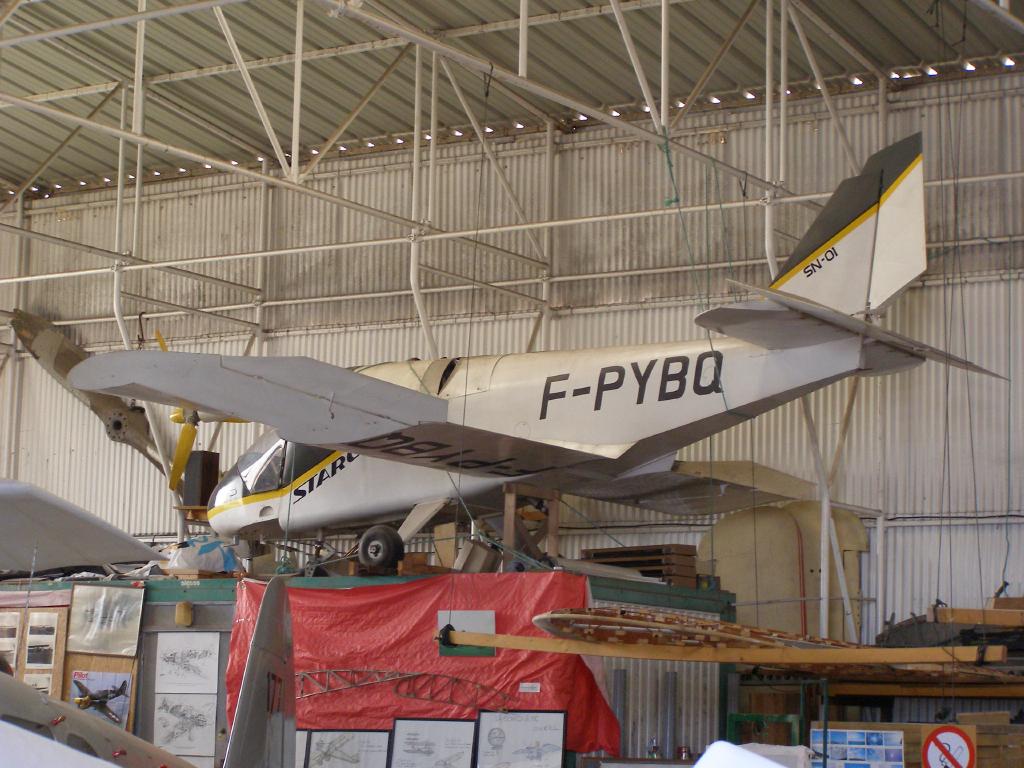
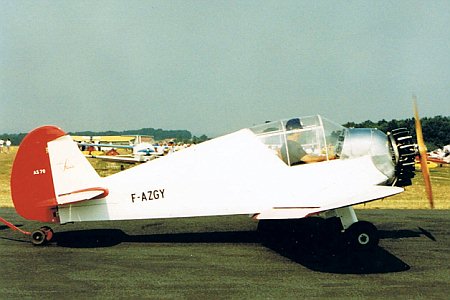
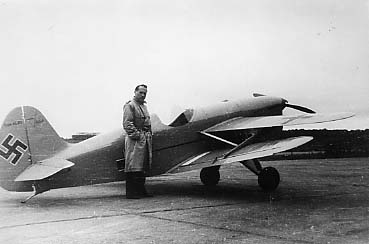
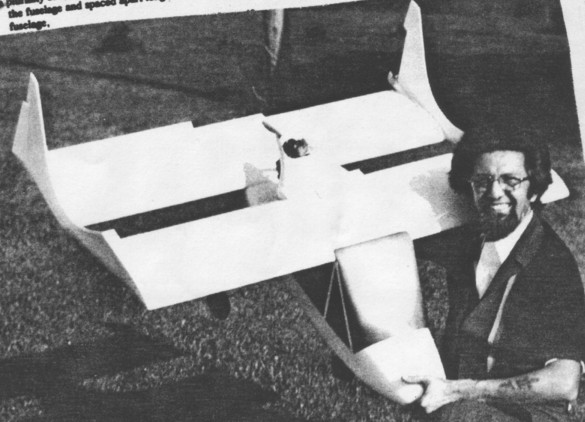
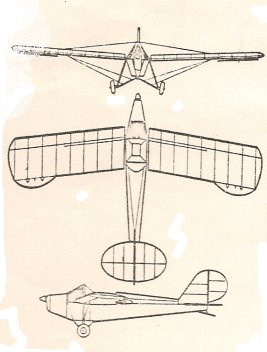
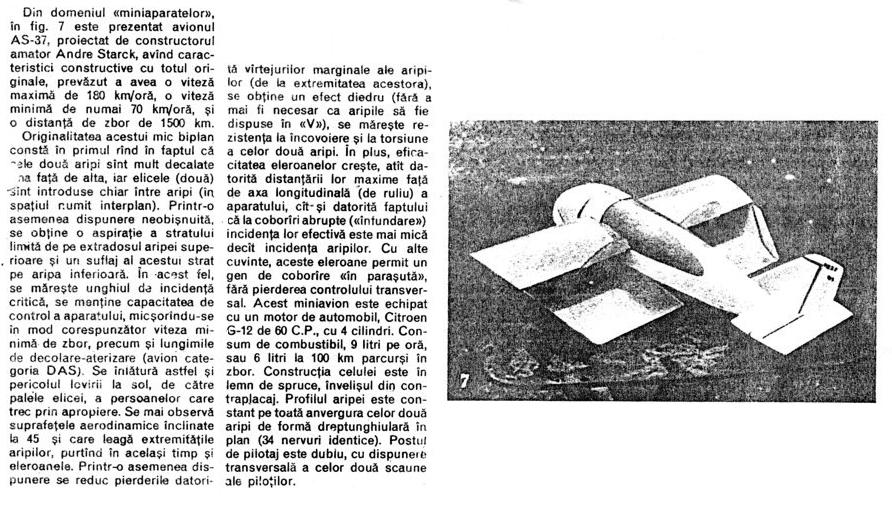
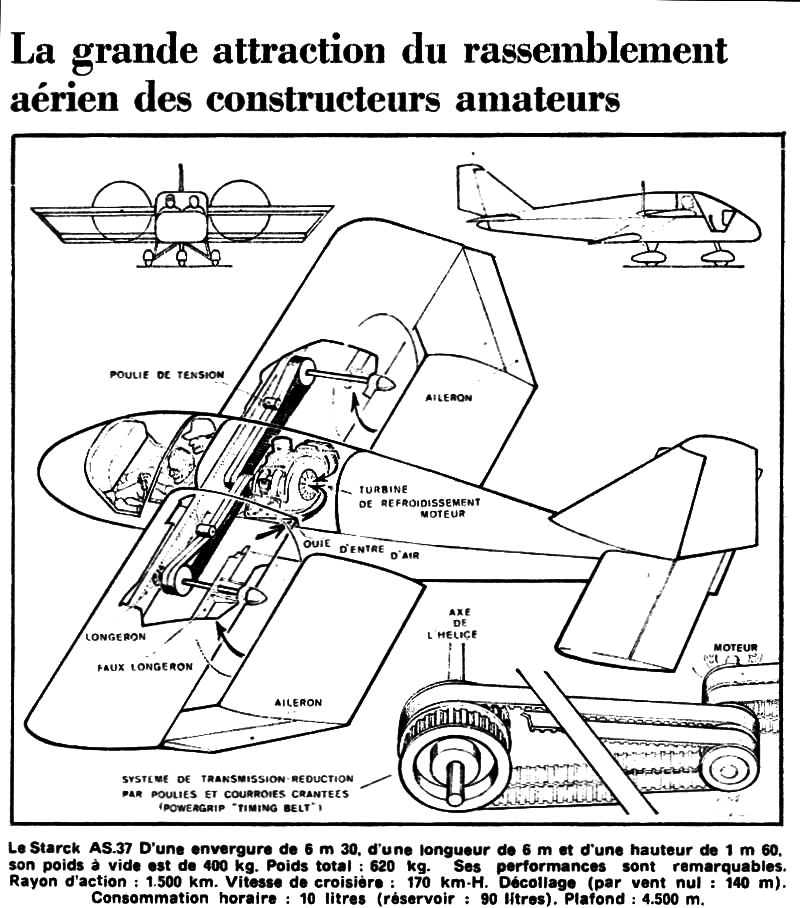
The article cites flight tests of the AS20 aircraft (first flight 23 Oct 1942) achieving speeds over 200 km/h and demonstrating low-speed handling, but provides no quantitative data on lift or energy savings for the control device itself.
Limitations
- Complex mechanical linkage may increase maintenance
- No published quantitative performance data
- Requires pilot training for differential control