Goal
Provide safe drinking water to individuals without the need for electricity, tools, or extensive training.
Problem
Lack of access to improved water sources for hundreds of millions of people, especially in Sub-Saharan Africa.
Concept Summary
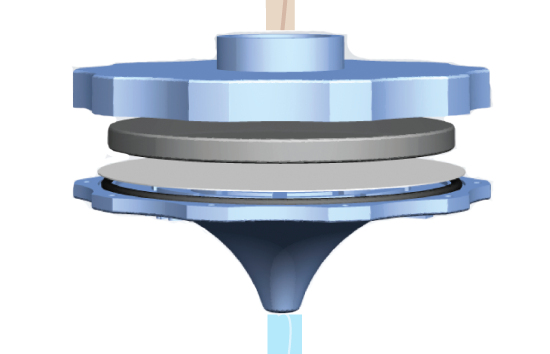
A screw-top, bottle-mounted water filter that combines a nano-porous polymer membrane (90 nm pore size) with a pre-filtration capture layer and an activated-charcoal adsorption layer. The filter removes bacteria, protozoa, odour and chemical contaminants at up to one litre per minute, delivering up to 300 L of clean water per filter before the membrane and carbon need replacement.
Detailed Description
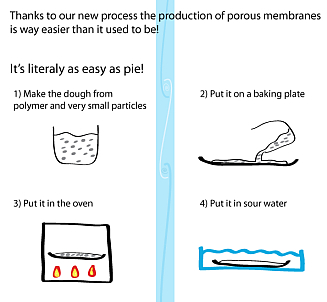
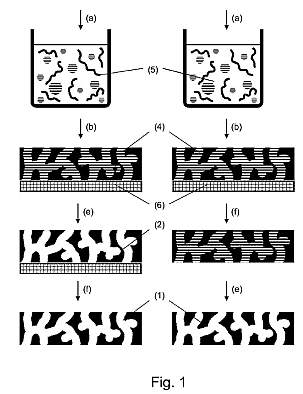
The DrinkPure system consists of a simple plastic screw-top housing that fits onto any standard bottle bottle Inside, a two-stage filtration train is employed: (1) a capture filter that removes large particles, (2) a nano-porous polymer membrane fabricated by a nanotechnology-based process (metal-salt-nanoparticle templating and dissolution) that excludes particles down to 90 nm, and (3) an activated-charcoal layer that adsorbs odour and chemical contaminants. The membrane and carbon cartridge are replaceable, allowing repeated use. The filter weighs < 100 g and is targeted to cost < US$20 per unit.
Principles
- Size-exclusion filtration using nano-porous polymer membranes
- Adsorption of organic compounds and odour on activated charcoal
- Nanoparticle templating and dissolution to create controlled pore structures
Scientific Domains
Materials
- Synthetic polymer (unspecified; e.g., polysulfone or similar)
- Metal-salt nanoparticles (templating agent)
- Activated charcoal
- Plastic bottle housing
Mechanisms of Action
- Physical sieving of particles >= 90 nm by the polymer membrane
- Adsorptive removal of chemicals and odour by activated carbon
- Pre-filtration capture of larger debris
Applications
- Portable household water purification
- Emergency relief water supply
- Rural community water access
Claimed Performance
Filters up to 300 L of water per membrane; flow rate up to 1 L min^-^1; removes particles down to 90 nm, including bacteria and protozoa; odour and chemical removal via activated carbon.
Experimental Evidence
Prototype filters have been produced and demonstrated to deliver 300 L of clean water at 1 L min^-^1; field testing planned in five villages in Mali; crowdfunding campaign raised > US$71 k for production.
Replication Status
Prototype testing ongoing; first production filters slated for distribution to supporters in January 2015 and field trials in Mali.
Limitations
- Membrane and carbon cartridges require periodic replacement
- Capacity limited to ~300 L per membrane
- Performance data limited to prototype demonstrations