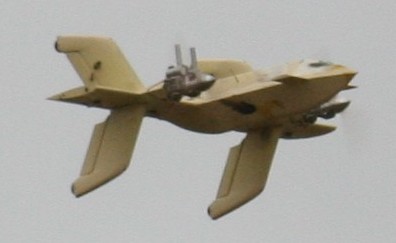
Goal
Provide a vertical-take-off and landing (VTOL) UAV that combines helicopter hover capability with fixed-wing forward-flight efficiency for surveillance and reconnaissance.
Problem
Need for unmanned aircraft that can operate without runways, offering higher speed, range and endurance than helicopters while retaining vertical take-off/landing capability.
Concept Summary
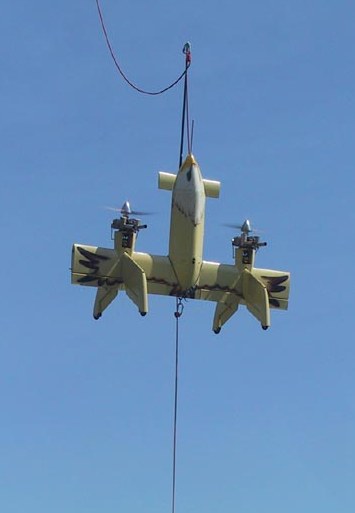
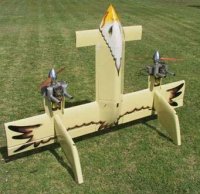
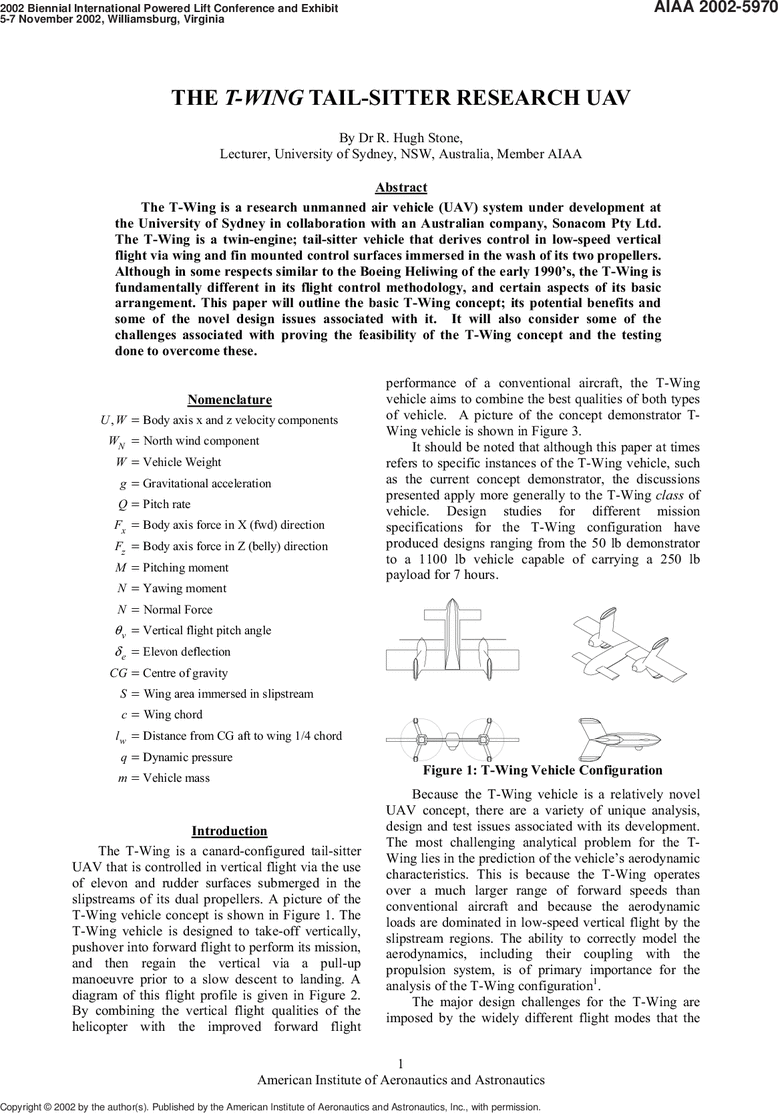
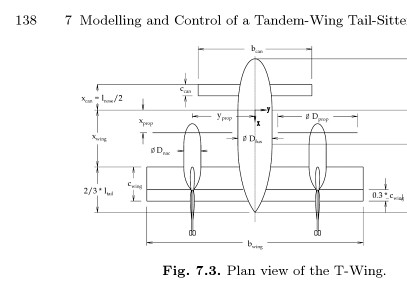
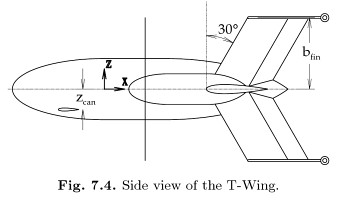
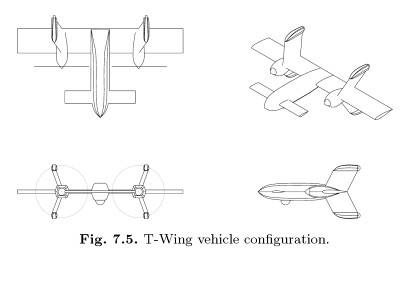
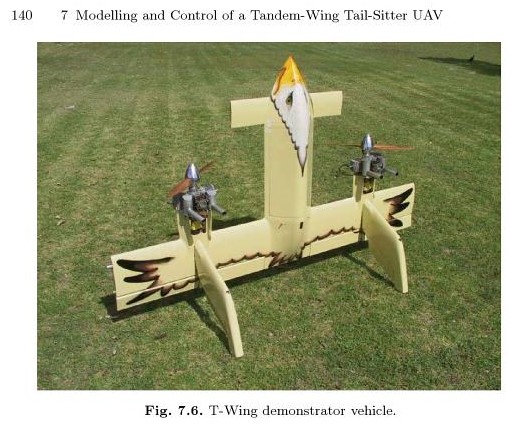
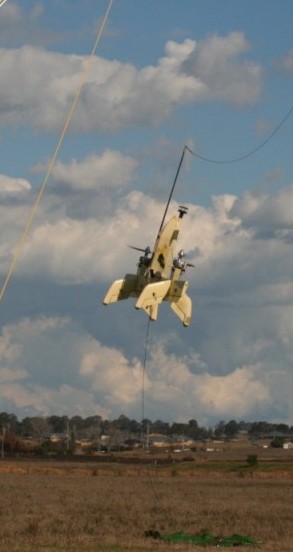
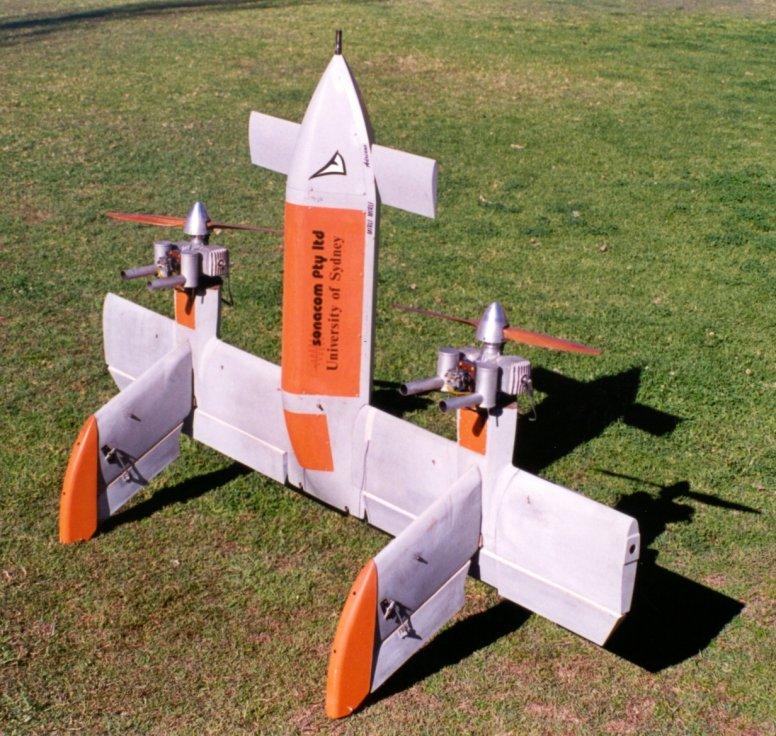
The T-Wing is a tail-sitter UAV that uses twin fixed-pitch propellers for lift during vertical flight and fixed control surfaces (flaps, canard, fin) immersed in the propeller slipstream to control attitude. An onboard PC-104 computer processes GPS/IMU data and runs model-predictive control to autonomously navigate between way-points, allowing transition from vertical hover to conventional forward flight and back.
Principles
- VTOL thrust from propellers
- Fixed-wing aerodynamics for forward flight
- Control surfaces in propeller slipstream
- Autonomous waypoint navigation
- Model predictive control
Scientific Domains
Mechanisms of Action
- Propeller thrust provides lift for vertical take-off
- Slipstream-immersed flaps generate pitch, roll and yaw moments
- Canard balances aft wing and adjusts CG
- GPS/IMU sensors feed position and attitude to onboard computer
- MPC algorithm computes optimal control commands
Energy Sources
Applications
- Surveillance and reconnaissance
- Deployment of sonar buoys
- Scientific data collection
Claimed Performance
Hover stability with flaps moving 50 times per second; autonomous transition between vertical and horizontal flight; flight up to 300 ft altitude; operation in 10-15 kt wind; payload ~30 kg, wingspan ~2.4 m, height ~1.5 m.
Experimental Evidence
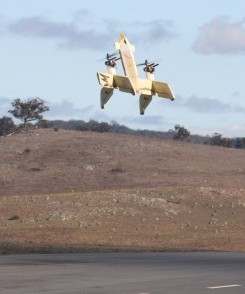
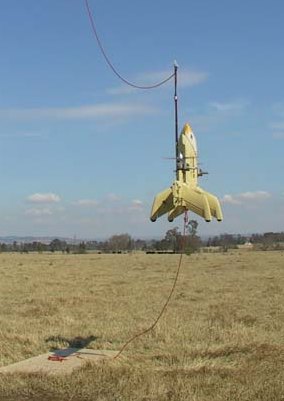
Prototype flown in hover mode (manual and autonomous), tethered hover testing, fully autonomous vertical flight testing, three transition flights (vertical-to-horizontal and back) performed in August 2006, model-predictive-control flights on a tether test-rig, videos documenting flights.
Replication Status
Multiple flight tests performed; prototype demonstrated autonomous transition and hover; no commercial production reported.
Limitations
- Vehicle is inherently unstable; flaps must move at 50 Hz
- Control-system saturation caused altitude loss during tight turns
- Tethered testing required for early vertical-flight validation
- Limited payload capacity (~30 kg)