Goal
To reduce neurological deficits and improve recovery after stroke and other brain injuries using anti-TNF biologics.
Problem
Stroke, traumatic brain injury, spasticity, neuroinflammation, and related neuropsychiatric disorders.
Concept Summary
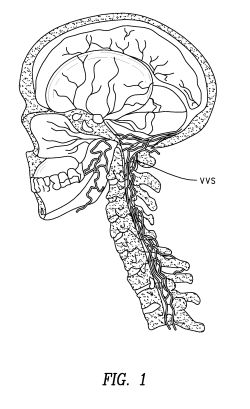
The invention delivers TNF-antagonist biologics (e.g., etanercept) perispinally, using Trendelenburg positioning to exploit the vertebral venous system for rapid transport of large molecules to the brain, thereby suppressing neuroinflammation and promoting neurological recovery.
Detailed Description
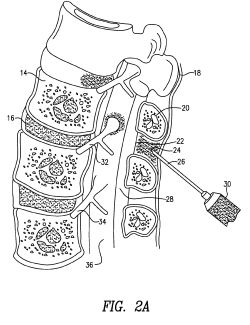
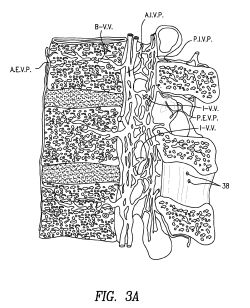
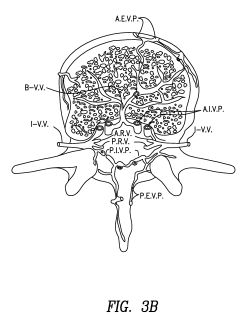
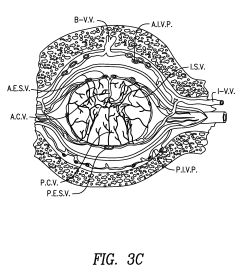
The patented method (US8900583) describes perispinal, parenteral, transepidermal, or intranasal administration of TNF antagonists such as etanercept, monoclonal antibodies, fusion proteins, or nanobodies. The preferred embodiment uses a perispinal injection of etanercept in a patient positioned in Trendelenburg, allowing the drug to travel retrograde through the internal vertebral venous plexus to the brain. This approach is claimed to produce rapid (within minutes) neurological improvement after stroke, reduce chronic pain and spasticity, and improve cognitive and motor function even years after the initial injury.
Principles
- TNF inhibition
- Anti-inflammatory cytokine blockade
- Perispinal drug delivery
- Vertebral venous plexus transport
- Trendelenburg positioning
Scientific Domains
Materials
- Etanercept (TNF receptor fusion protein)
- TNF monoclonal antibodies
- TNF receptor fusion proteins
- Anti-TNF nanobodies
- Domain antibody fragments
Mechanisms of Action
- TNF antagonism reduces neuroinflammation
- Modulation of cytokine cascade (IL-6, IL-8, IL-1)
- Enhanced delivery of large biologics to the CNS via vertebral venous system
Applications
- Stroke treatment
- Brain injury therapy
- Spasticity reduction
- Neuropsychiatric disorder treatment
Claimed Performance
Rapid (within three minutes) recovery of stroke symptoms; documented neurological improvement 17 years post-stroke after perispinal etanercept treatment.
Experimental Evidence
Video demonstration of a stroke victim cured in three minutes; case report of rapid neurological improvement 17 years after stroke following perispinal etanercept treatment; patent description of the method.
Limitations
- Lack of peer-reviewed clinical trial data
- Potential side effects of systemic TNF inhibition
- Requires specialized positioning and injection technique
Red Flags
- Extraordinary recovery claims without robust, independent evidence
- Inventor is also the treating physician, raising conflict-of-interest concerns
- No documented independent replication of results