Goal
Automatically sort, sterilise and process unsorted municipal solid waste while generating usable energy.
Problem
Manual waste sorting, landfill overload, and the need for renewable energy recovery from municipal waste.
Concept Summary
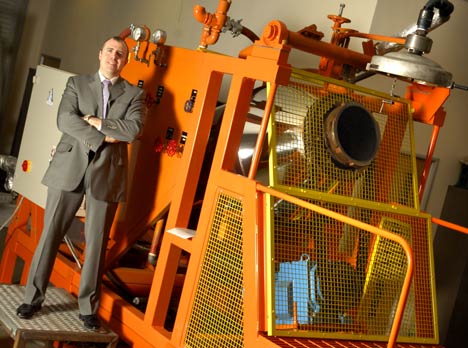
The AeroThermal Autoclave is a high-pressure steam vessel that treats unsorted municipal waste, sterilising and breaking down organic material, reducing volume by ~60 %, and producing a clean, homogeneous stream. Metals, plastics and glass are separated by magnetic, eddy-current and air-separator stages. The organic fraction is fed to an anaerobic digester to produce biogas, which powers gas-driven generators that can supply the plant's electricity needs and export surplus to the grid.
Detailed Description
The system consists of two parallel autoclave vessels that operate on a 144-minute cycle, handling up to 15 t of waste per vessel per load (~=300 t day^-^1 for a two-vessel plant). Steam is generated from waste heat and recycled between vessels, minimising external energy demand. After autoclaving, waste passes through a series of screens, magnetic drums, eddy-current separators and optional infrared/plastic detectors to recover steel, aluminium, glass and plastics. The remaining organic slurry is sent to an anaerobic digestion unit, producing methane-rich biogas that drives generators. By-products include cellulose floc for paper/cardboard recycling or solid biomass fuel. The process claims a 60 % volume reduction, 75-225 kWh electricity per tonne of waste, and the ability to meet EU recycling targets.
Principles
- Steam-based high-pressure heat treatment
- Sterilisation and lignin breakdown
- Magnetic separation
- Eddy-current separation
- Air-flow separation
- Anaerobic digestion of organic fraction
- Biogas combustion in generators
- Heat recovery and steam recycling
Scientific Domains
Materials
- Steel
- Aluminium
- Plastics
- Glass
- Organic waste (food, cellulose)
- Steam
- Biogas (methane)
- Cellulose floc
Mechanisms of Action
- Steam heat sterilisation
- Pressure-induced material breakdown
- Magnetic attraction of ferrous metals
- Eddy-current repulsion of aluminium
- Air-stream separation of light plastics
- Anaerobic digestion converting cellulose to methane
- Combustion of biogas to generate electricity
Energy Sources
Applications
- Municipal waste processing plants
- Recycling facilities
- Energy recovery from waste streams
Claimed Performance
Processes 30 t of waste in 2 h (~=300 t day^-^1 with two autoclaves); 60 % volume reduction; 144 min cycle time per vessel; electricity generation 75-225 kWh per tonne of waste; self-sustaining energy with surplus for grid export.
Experimental Evidence
The company cites "exhaustive trials and in-house analysis" showing cell-structure modification, 60 % volume reduction, and biogas yields sufficient to power the plant and export surplus electricity. No independent peer-reviewed data are provided.
Replication Status
In-house pilot trials reported; no independent replication or commercial deployment confirmed in the article.
Limitations
- Requires high-pressure steam vessels and associated safety systems
- Significant capital investment for autoclave and downstream digestion units
- Dependence on reliable anaerobic digestion infrastructure for energy self-sufficiency
Red Flags
- Self-sustaining energy claim based on internal testing only
- No independent verification of biogas yield or electricity balance