Goal
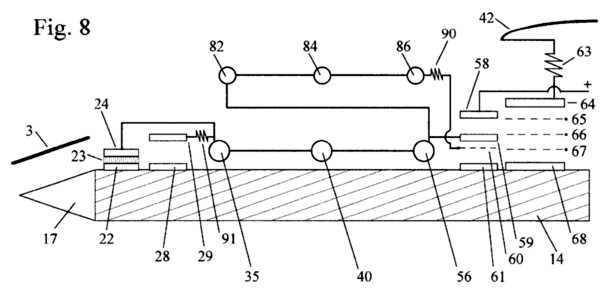
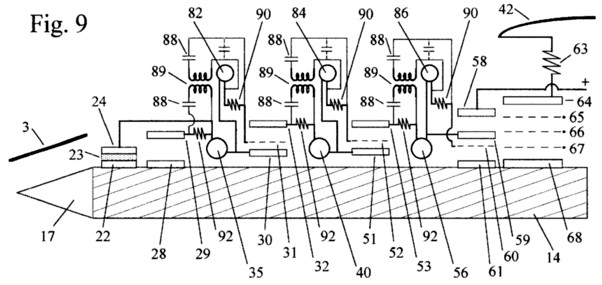
Generate a continuous high-voltage DC corona/arc discharge to produce thrust for spacecraft, potentially enabling reactionless or warp-drive propulsion.
Problem
Need for a propulsion system capable of ultra-high specific impulse and reactionless acceleration for space travel.
Concept Summary
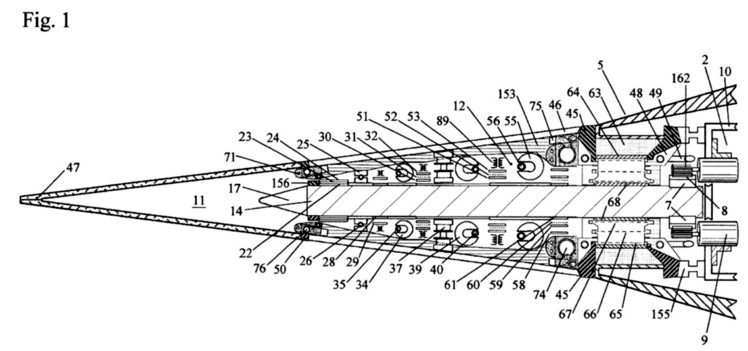
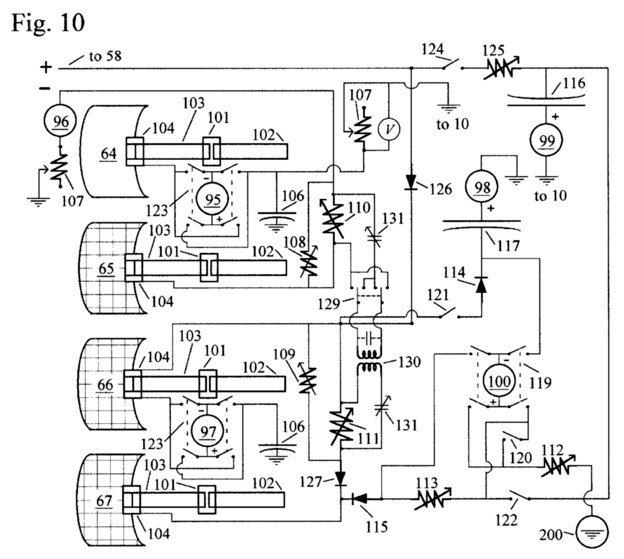
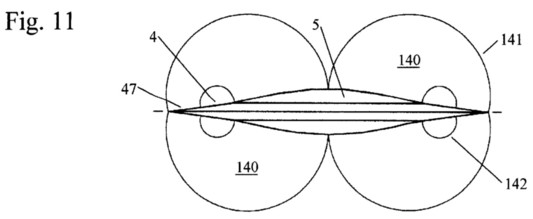
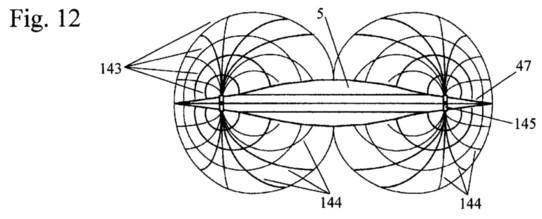
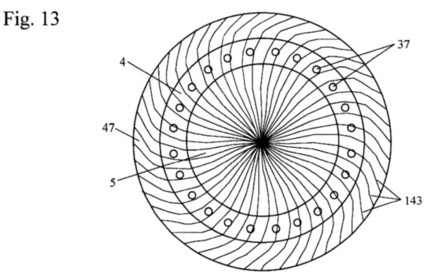
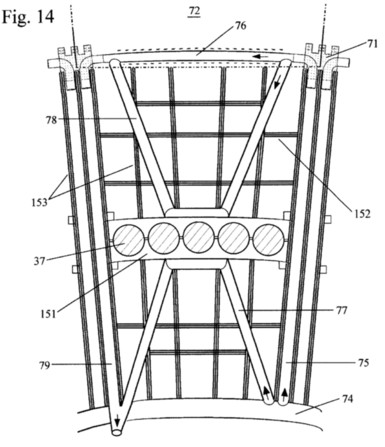
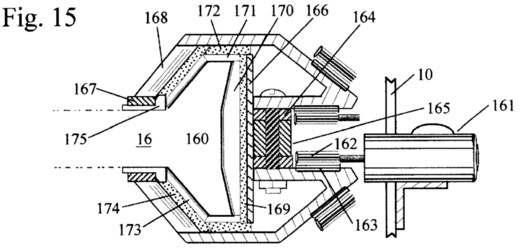
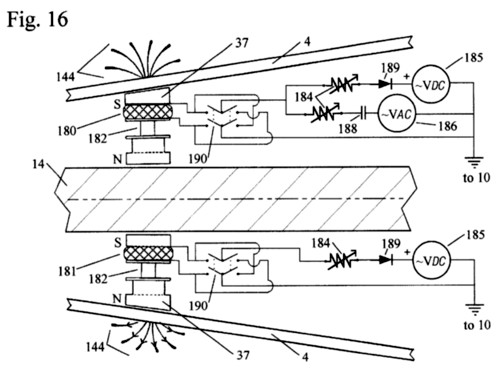
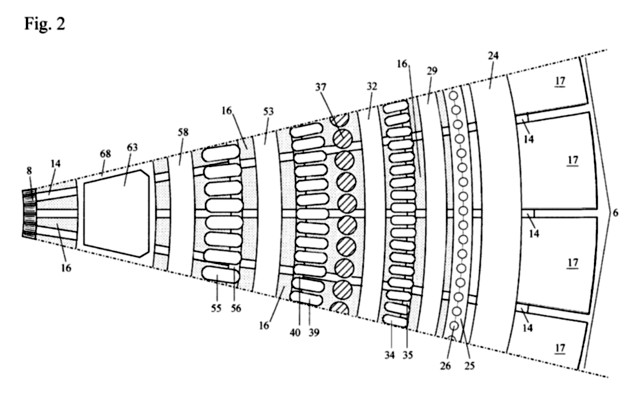
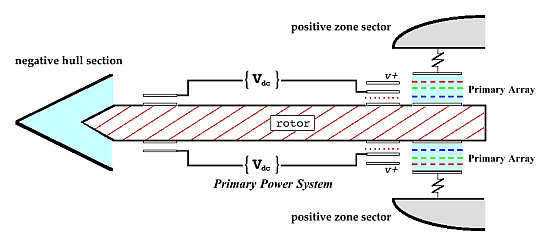
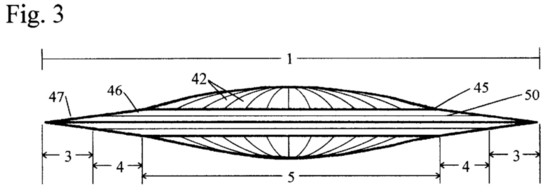
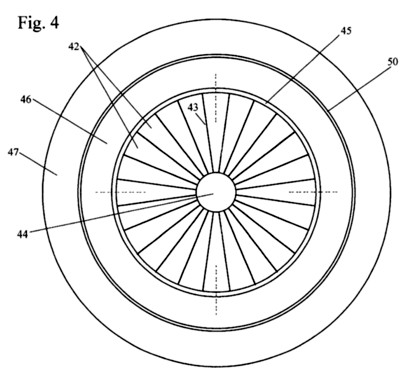
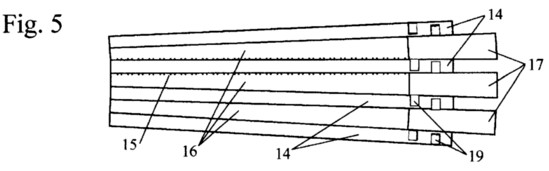
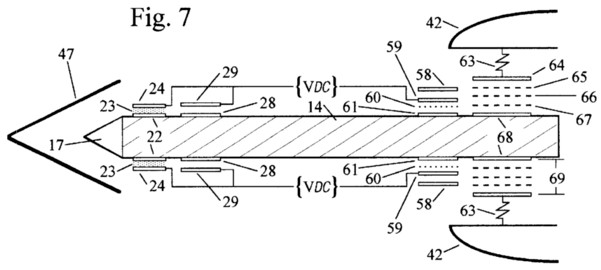
The patented Electrodynamic Field Generator (EDF) is a brushless, high-voltage rotary generator that creates a uniform external electrodynamic field (corona or arc discharge) surrounding its conductive housing. By driving the rotor with mechanical torque, permanent-magnet-induced DC voltages of several gigavolts are produced, producing massive electron velocities and magnetic field densities. The inventor claims that at sufficiently high field electron speeds the spacecraft's relativistic mass approaches the Chandrasekhar limit, allowing a stable wormhole/warp-field to form and providing reactionless thrust.
Principles
- Electrostatic corona discharge
- Magnetic field generation via permanent magnets
- Relativistic mass increase
- Lorentz contraction
- Reactionless thrust concept
Scientific Domains
Materials
- Permanent magnets
- Conductive rotor (likely copper or aluminum)
- Toroidal generating coils (copper)
- Insulating housing material
- Air (dielectric medium) or other gas
Mechanisms of Action
- High-voltage DC corona/arc discharge accelerates ions and electrons, producing thrust
- Strong magnetic field density interacts with surrounding plasma or vacuum fluctuations
- Relativistic effects (mass increase, Lorentz contraction) are claimed to enable warp-field formation
Energy Sources
Applications
- Spacecraft propulsion
- Warp-field generation
- Reactionless thrust for satellites
Claimed Performance
Capable of producing electron velocities of ~0.999999999 c, generating a field strong enough to induce a metric warp field, and achieving near-light-speed travel for spacecraft.
Limitations
- Requires extremely high voltages (~5 x 10^9 V)
- No peer-reviewed experimental data presented
- Theoretical calculations only, no prototype performance data
- Potential safety hazards from high-voltage corona/arc discharge
Red Flags
- Extraordinary claims (near-light-speed, warp field) without experimental verification
- Potential violation of conservation of momentum
- Lack of independent replication or peer-reviewed publications