Goal
Enable crop production using saline, brackish, or polluted water by delivering water directly to plant roots with minimal waste.
Problem
Fresh-water scarcity for agriculture, soil salinization, and water loss from conventional irrigation methods.
Concept Summary
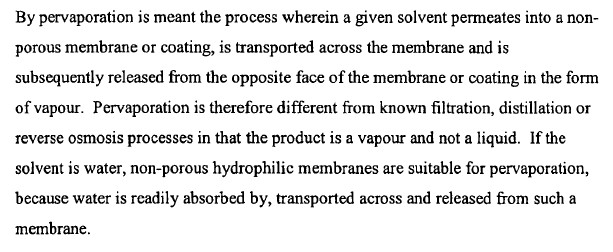
A gravity-fed network of sub-surface porous plastic pipes made of a hydrophilic polymer membrane. Water diffuses through the pipe walls to the root zone while contaminants are retained inside the pipe. The system requires no pressure, emitters, or active control; plants draw water on demand, preventing over-watering and reducing evaporation and runoff.
Detailed Description
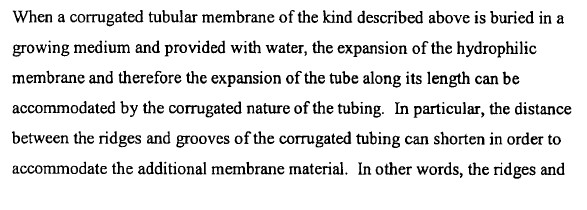
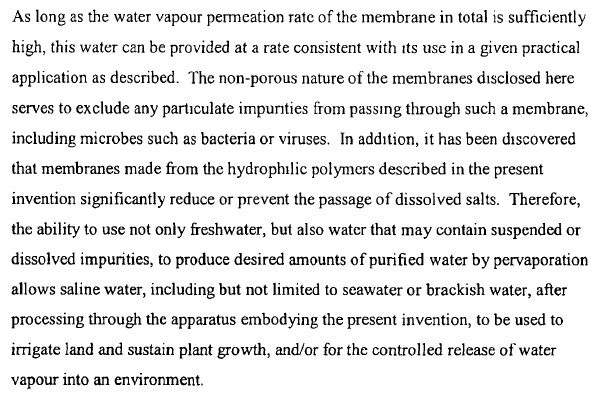
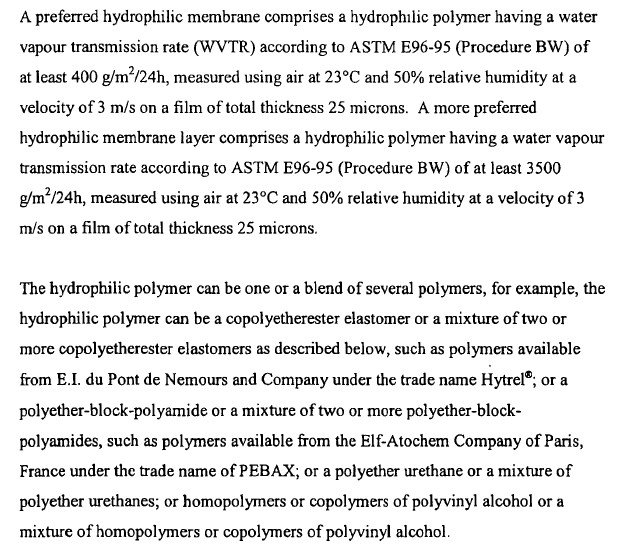
The dRHS system consists of corrugated tubular hydrophilic membranes (polyether-based polymer) buried in the growing medium. The pipes are filled with any water source-fresh, brackish, salty, or industrial waste. Water moves by diffusion through the porous walls, while virtually all dissolved contaminants are held inside the pipe. The network is fed by gravity from an elevated storage tank, eliminating the need for pumps or pressure regulators. Plants take up water as the soil dries, and the system automatically reduces flow when the soil is wet, thus avoiding over-irrigation. Maintenance consists mainly of occasional flushing to remove accumulated salt crystals. Trials have demonstrated successful growth of tomatoes, radishes, peppers, lettuce, strawberries, beans, and several tree species using water up to seawater salinity.
Principles
- Diffusion through porous hydrophilic membrane
- Gravity-fed water delivery
- Selective permeability (contaminant retention)
- Demand-driven water uptake by plants
Scientific Domains
Materials
- Hydrophilic polymer (polyether) membrane
- Plastic pipe (likely polyethylene or similar)
- Corrugated tubular structure
Mechanisms of Action
- Water diffusion across porous pipe walls
- Capillary action in the root zone
- Physical filtration of contaminants
Applications
- Agricultural production in arid or saline regions
- Reuse of industrial or municipal waste water for irrigation
- Low-maintenance large-scale irrigation
Claimed Performance
Can grow a wide variety of crops using salt water or industrial waste water with virtually no evaporation loss, no over-watering, and minimal maintenance.
Experimental Evidence
The system was trialled in the UK with tomato plants and later in the US with multiple crops. Over 20,000 m of pipe have been shipped for testing in the Middle East with water more saline than seawater. Trials are planned in Chile, Libya, Tanzania, Mauritius, and Spain.
Replication Status
Tested in the UK and US; further field trials scheduled in several countries.
Limitations
- Requires an elevated water tank for gravity feed
- Periodic flushing needed to remove salt crystals
- Long-term durability of the membrane under harsh water chemistry not fully documented
Red Flags
- Claims of "no over-watering" are idealised and may depend on soil conditions
- Limited quantitative data on water use efficiency and crop yields