Goal
Conserve water, protect trees from frost and wind, improve root growth and overall tree productivity.
Problem
Excessive water usage in irrigation, frost damage to young trees, inefficient delivery of water and fertilizer to root zone.
Concept Summary
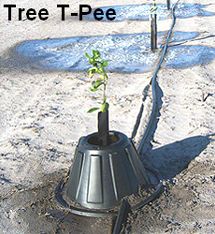
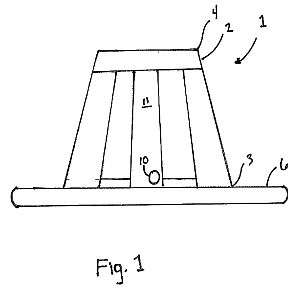
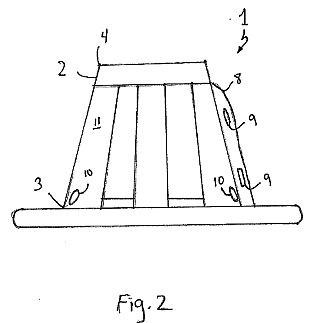
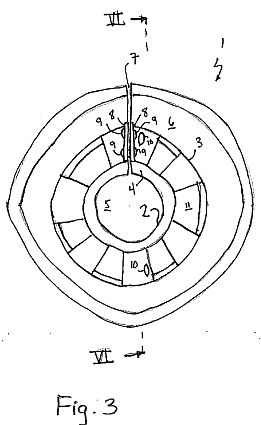
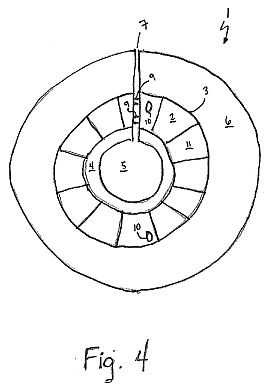
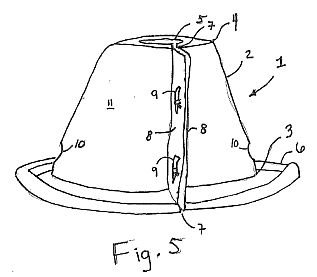
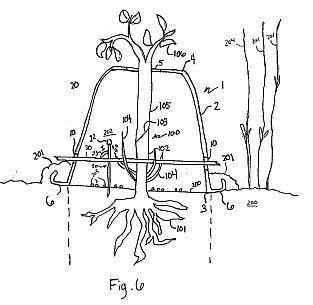
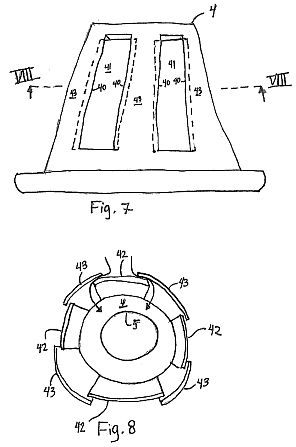
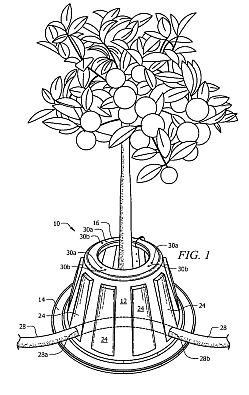
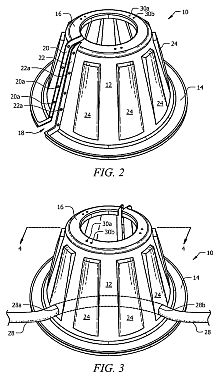
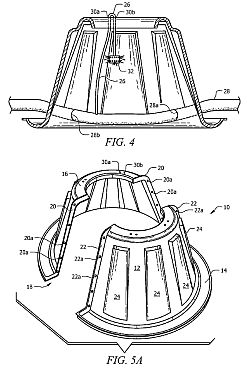
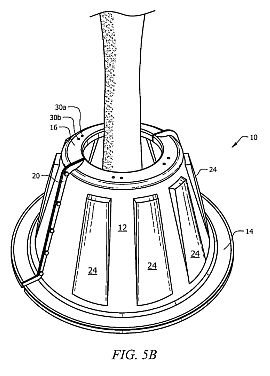
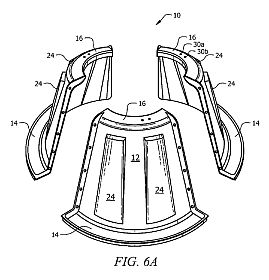
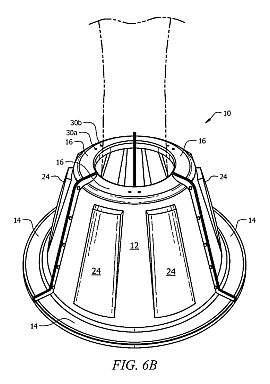
A frusto-conical, recycled-plastic housing that surrounds the base of a tree. Water (or fertilizer) is delivered through a conduit and emitter inside the housing, creating a localized humid and warm micro-environment that reduces water loss, protects against frost by emitting warm mist, and encourages deep root growth.
Principles
- Targeted root-zone irrigation
- Heat retention and warm mist for frost protection
- Wind shielding via cone-shaped housing
Scientific Domains
Materials
- high density polyethylene
- recycled plastic
Mechanisms of Action
- Direct delivery of water/fertilizer to tree roots
- Warm water mist raises ambient temperature around the trunk
- Physical barrier reduces wind-induced cooling
Energy Sources
Applications
- citrus orchards
- peach orchards
- olive orchards
- pecan orchards
- jatropha cultivation
Claimed Performance
Reduces water use from ~26,000 gal/yr/tree to ~900 gal/yr/tree; on a 1750-acre grove saves 13.2 million gal per watering; frost protection raises base temperature by 40 deg F; up to 30 % increase in new-tree growth; installed on >5,000 acres (~=250,000 units).
Experimental Evidence
University of Florida research shows water savings, reduced fuel and fertilizer costs, and increased growth. On a 1750-acre grove, watering time fell from 6 h (15.8 M gal) to 1 h (2.6 M gal) using the device.
Replication Status
Commercially available since 1986; installed on over 5,000 acres and >250,000 units; used by citrus, peach, olive, pecan, and jatropha growers.
Limitations
- Requires a pressurized water source
- Performance depends on proper installation and water temperature
- Plastic housing lifespan limited to ~20 years