Goal
Provide ultra-high-energy-density rechargeable storage that can self-charge and also produce cooling.
Problem
Low gravimetric energy density of conventional batteries and capacitors.
Concept Summary
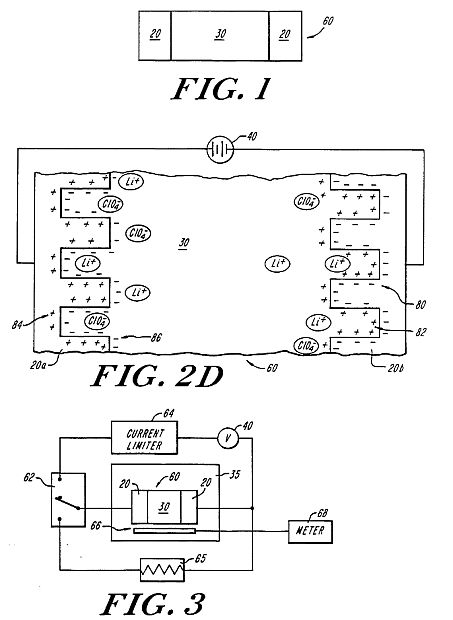
A solid-state energy storage device built from a mono-molecular carbon crystalline lattice (or bismuth chalcogenide) fabricated under a modulated torsion-field beam. Electrons are trapped in virtual energy wells formed by inter-layer contacts, allowing energy densities of 850-1500 Wh kg^-^1. The device can also act as a thermoelectric capacitor, extracting heat and producing ice crystals when a small DC bias is applied.
Detailed Description
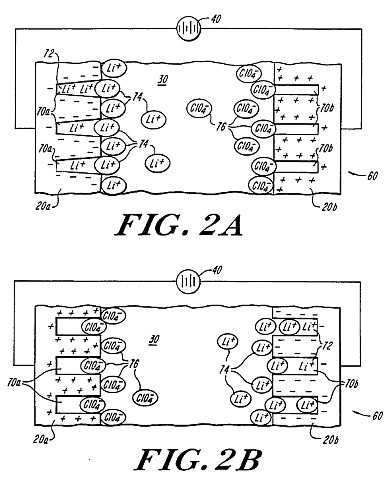
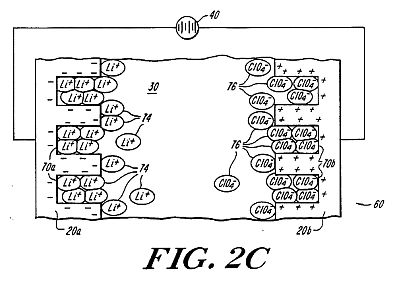
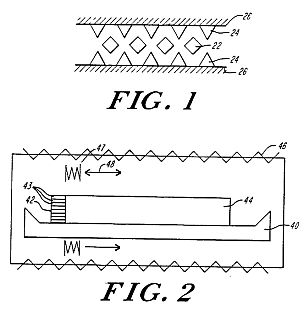
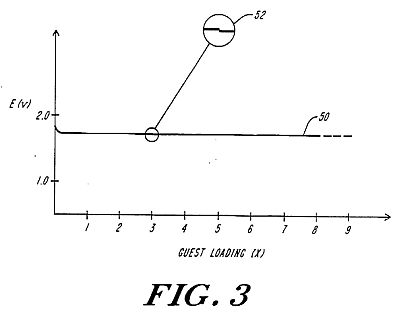
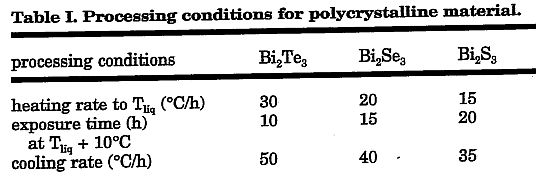
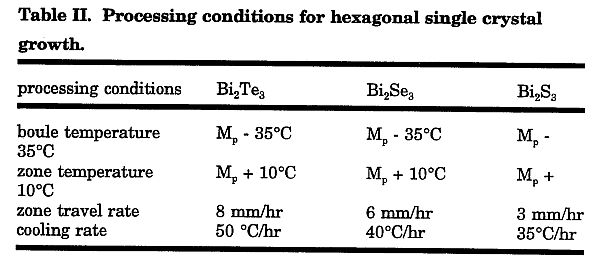
The IPMS team creates a defect-free layered crystalline material (atomically engineered carbon films or bismuth chalcogenide) with van-der-Waals channels that can intercalate lithium, hydrogen, or alpha-emitting isotopes. A torsion-field beam is used during deposition to produce mono-molecular powders that retain charge in static form. When the material is biased with a low DC voltage, one surface becomes extremely cold (-68 deg F) while the opposite side warms, demonstrating a Peltier-like effect that can freeze atmospheric CO_2. Energy density measurements reported by INEEL, DARPA and the AMTL range from 840 Wh kg^-^1 to >1500 Wh kg^-^1, exceeding gasoline by 1.4x. The device's mass increases when fully charged, which the authors claim disproves E = mc^2.
Principles
- Torsion-field beam deposition
- Intercalation of guest species in van-der-Waals channels
- Electron confinement in virtual energy wells
- Thermoelectric (Peltier) cooling
- Alpha-decay heating for self-recharge
Scientific Domains
Materials
- Atomically engineered carbon films
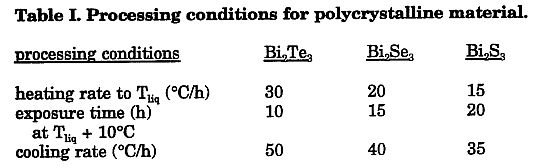
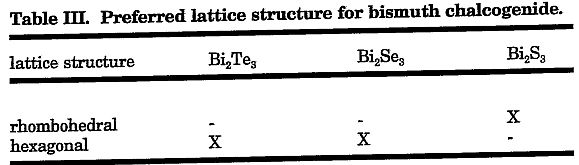
- Bismuth chalcogenide (Bi-Te/Se/S)
- Lithium
- Thorium-232 (alpha emitter)
- Conventional electrolytic salts
Mechanisms of Action
- Electron trapping in lattice-defined wells
- Heat extraction via thermoelectric effect
- Radio-active decay providing internal energy
- Torsion-field-induced lattice structuring
Energy Sources
Applications
- Portable high-energy power sources
- Cryogenic cooling devices
- Self-recharging energy storage
- Spacecraft power and thermal management
Claimed Performance
Energy density 850-1040 Wh kg^-^1 (lab prototype), up to >1500 Wh kg^-^1 with thorium-232; cooling surface to -68 deg F with 9 V bias; mass increase when fully charged.
Experimental Evidence
INEEL and DARPA reports of 840-1024 Wh kg^-^1; demonstration video of ice-crystal cloud; measurements of >1140 Wh kg^-^1 corroborated by Idaho National Engineering and Advanced Materials & Technologies Laboratory (1993).
Replication Status
Verified by INEEL, DARPA and AMTL according to article; no independent peer-reviewed replication reported.
Limitations
- Reliance on unverified torsion-field physics
- Use of radioactive isotopes (thorium-232) raises safety concerns
- Scalability of defect-free mono-crystalline production not demonstrated
- Lack of peer-reviewed data and independent replication
Red Flags
- Claims that E does not equal mc^2
- Absence of peer-reviewed publications
- Potential safety issues with alpha-emitter materials
- Historical pattern of over-unity and free-energy assertions