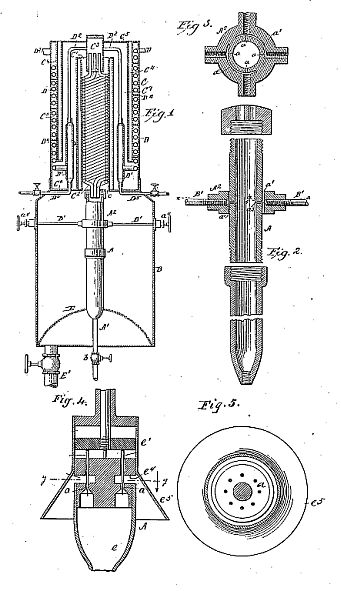
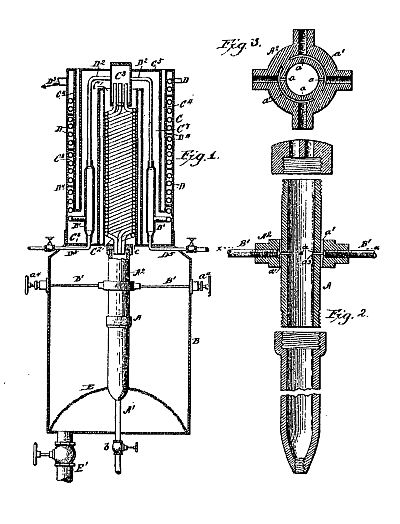
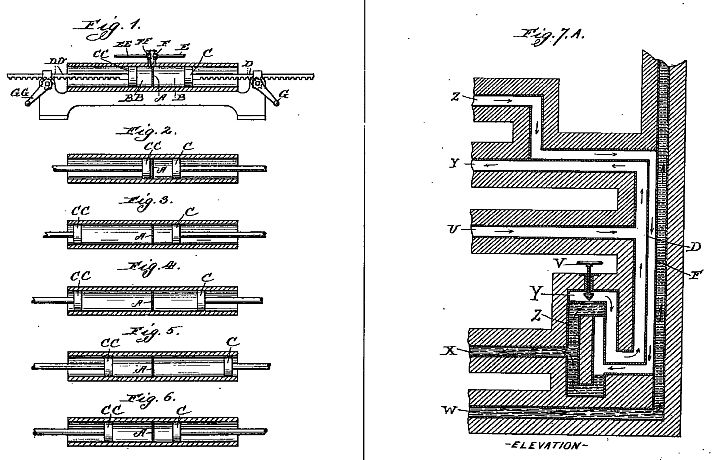
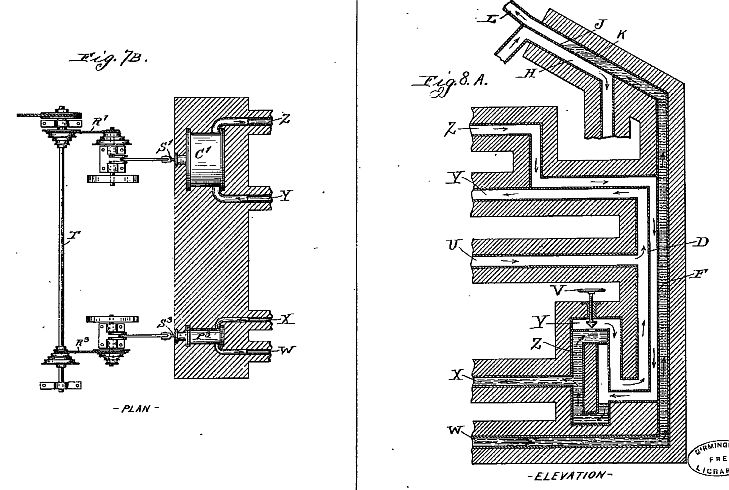
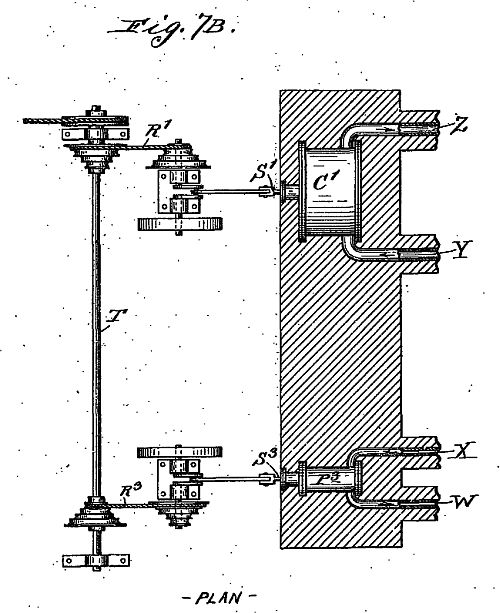
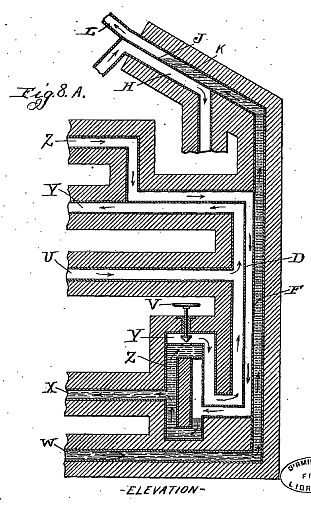
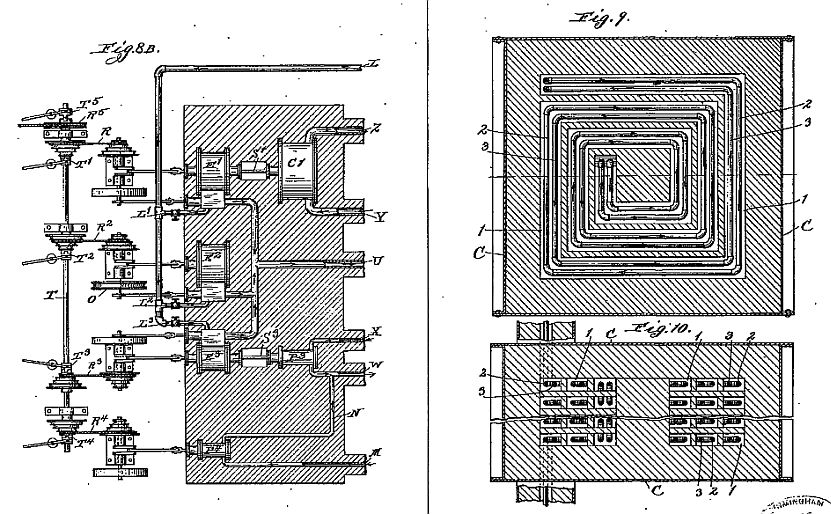
Goal
Convert ambient atmospheric heat into mechanical work using a liquid-oxygen/CO_2 working fluid, thereby eliminating the need for conventional fuel.
Problem
Reliance on fossil-fuel or external energy sources for heat-engine operation and the loss of waste heat to a refrigerator.
Concept Summary
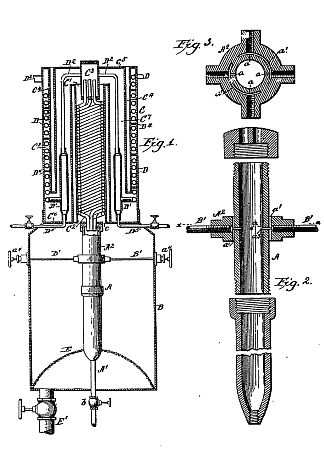
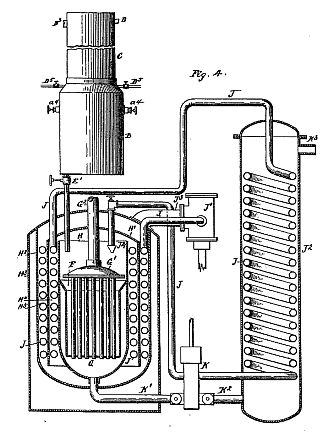
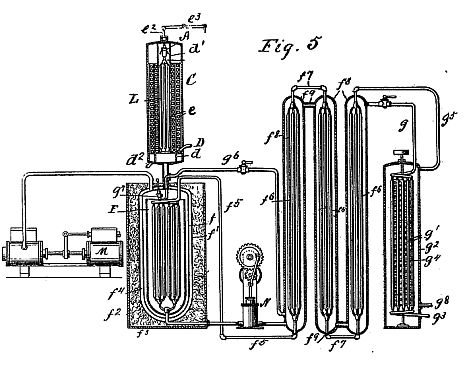
The invention describes a heat engine that compresses air, cools it with water, expands it through a Joule-Thomson valve to produce extreme cold, liquefies oxygen, and then uses the liquid oxygen as a working fluid to generate mechanical work. A "potential transformer" cycle is claimed to recycle the rejected heat back to the source, allowing the engine to run on ambient atmospheric heat alone.
Principles
- Compression of air to high pressure
- Joule-Thomson expansion for rapid cooling
- Liquefaction of atmospheric oxygen
- Potential transforming engine that recycles rejected heat
- Revised interpretation of the second law of thermodynamics
Scientific Domains
Materials
- Air
- Liquid oxygen
- Carbon monoxide
- Water
- Metal pipes
- Heat-conducting diaphragm material
- Non-conducting cylinder
Mechanisms of Action
- High-pressure compression of ambient air
- Water-cooled heat exchangers to lower temperature
- Sudden expansion of compressed air to create cold (Joule-Thomson effect)
- Liquefaction of O_2 at -312 deg F and collection in a tank
- Use of liquid O_2/CO_2 as a working fluid in pistons to produce work
- Heat-recovery via a "potential transformer" that returns waste heat to the source
Energy Sources
Applications
- Standalone power generation
- Vehicle propulsion
- Portable energy source for remote locations
Claimed Performance
The engine can operate continuously using only atmospheric heat, producing mechanical work without external fuel consumption.
Experimental Evidence
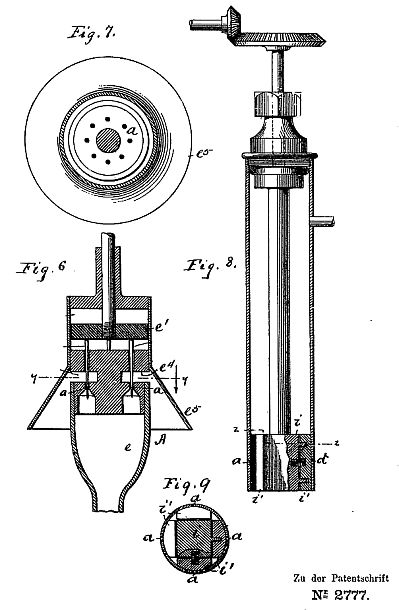
The article provides a descriptive process and patent drawings but no quantitative experimental data or independent verification.
Limitations
- No peer-reviewed experimental data
- Claims conflict with established thermodynamic laws
- Requires high-pressure compression and handling of liquid oxygen (cryogenic safety)
- Efficiency and net power output not quantified
Red Flags
- Violation of the second law of thermodynamics claimed
- Absence of independent replication or peer-reviewed validation
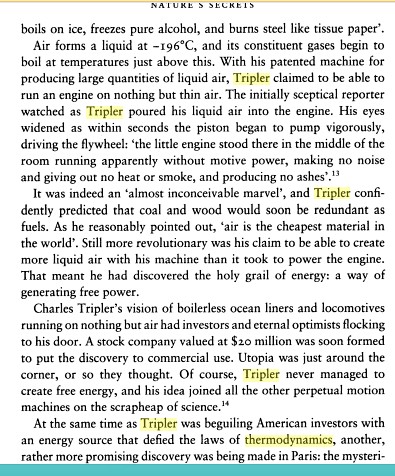
- Potential overunity / free-energy claims