Goal
Generate electrical power that exceeds the input power (overunity) using a low-voltage, high-current homopolar design.
Problem
Provide a compact, high-power electricity source with very low internal resistance and high efficiency.
Concept Summary
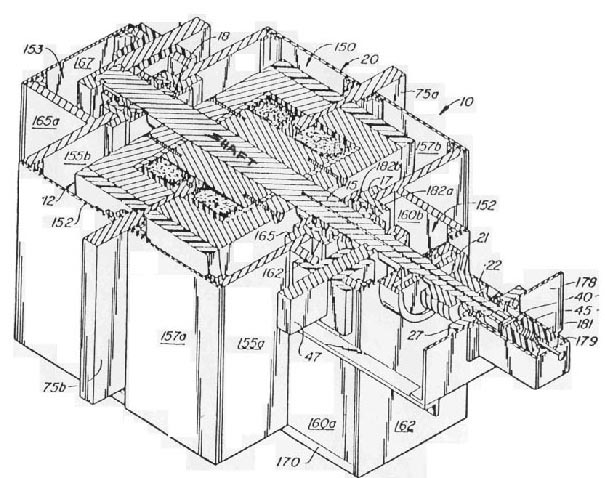
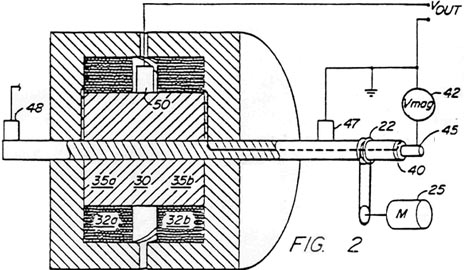
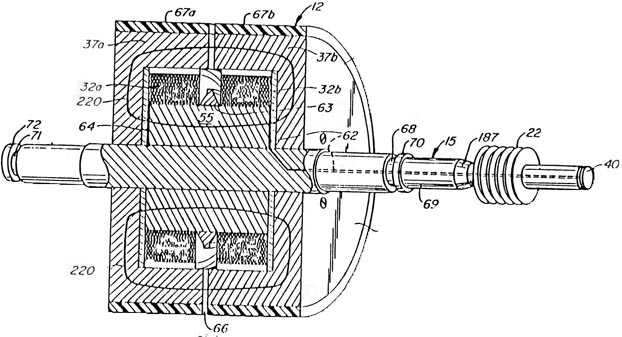
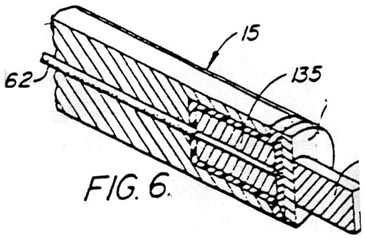
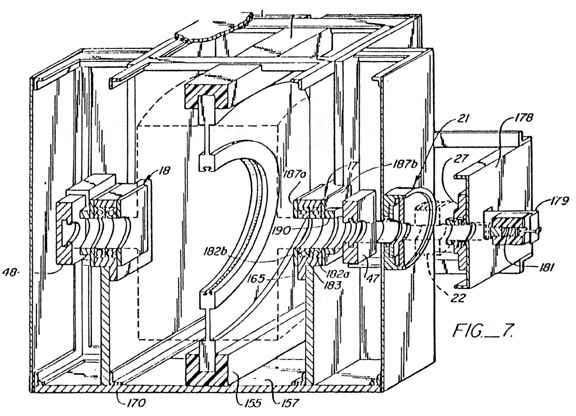
The Trombly-Kahn machine is a homopolar generator that uses a closed magnetic flux path and liquid-metal sliding contacts to achieve extremely low internal resistance (6-10 uOmega). A strong magnetic field (~=15 kG) is produced with only ~150 W of excitation power. The rotor spins at ~7200 rpm, delivering up to 45 kW of DC power at ~2.9 V and 15 kA, which the authors claim represents a power gain of 4.92x over the mechanical and field input.
Principles
- Homopolar (Faraday disk) generation
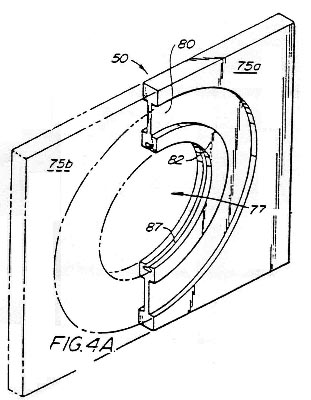
- Closed magnetic flux path
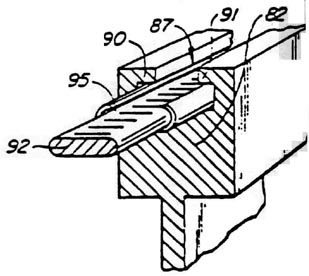
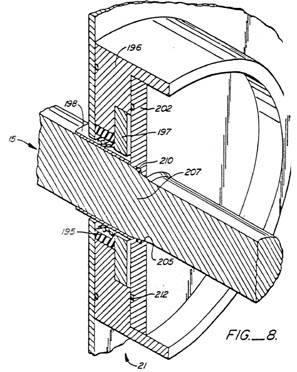
- Liquid-metal brush/commutator contacts
- High magnetic field strength with low excitation power
Scientific Domains
Materials
- Copper
- Iron
- Beryllium-copper (Be-Cu) shaft
- Liquid metal (e.g., mercury or alloy)
Mechanisms of Action
- Rotating conductive disk in a strong magnetic field induces a DC voltage
- Liquid-metal sliding contacts provide a near-zero resistance current path
- Closing the magnetic circuit concentrates flux, reducing required excitation power
Energy Sources
Applications
- Industrial power generation
- High-current DC supply for electro-processing
Claimed Performance
Power gain factor 4.92 (output 45.8 kW from input 9.3 kW); internal resistance 6-10 uOmega; voltage 2.9 V at 15 kA.
Experimental Evidence
Patent application lists measured parameters: rotor size, speed, magnetic field 15 kG, input motor power 10.8 kW, output 43.7-45.8 kW, internal resistance 6-10 uOmega.
Replication Status
No independent replication or peer-reviewed verification reported; claims remain unverified.
Limitations
- Lack of independent verification
- Extreme current handling and cooling requirements
- Potential wear of liquid-metal contacts
Red Flags
- Unverified overunity claim
- No peer-reviewed data or third-party testing
- Possible marketing or scam risk