Goal
Rapidly chill beverages on demand while preserving carbonation and reducing energy consumption.
Problem
Slow cooling times, high energy use of conventional refrigeration, and excessive foaming (slushing) when carbonated drinks are agitated.
Concept Summary
A cooling apparatus rotates a beverage container around twin axes in a cooling liquid, creating a Rankine vortex. Pulsed (stop-start) rotation collapses and reforms the vortex, enhancing forced convection and mixing without introducing nucleation sites, allowing the drink to reach low temperatures in seconds with significantly lower energy use.
Detailed Description
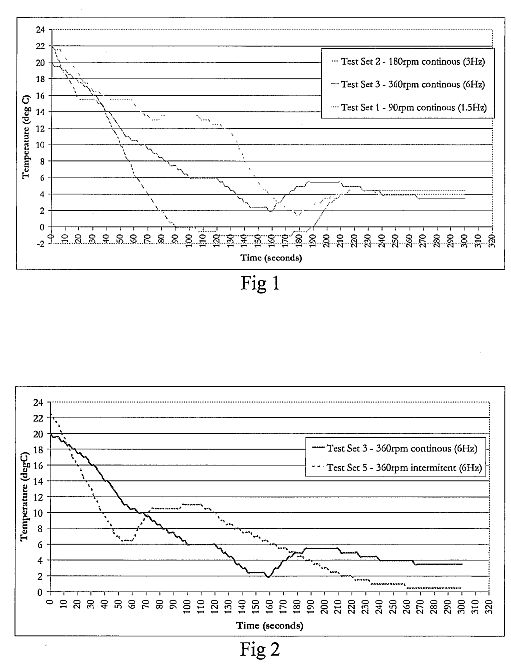
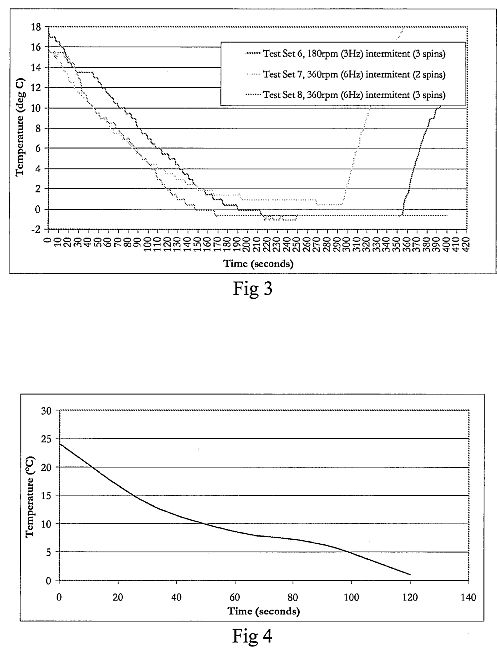
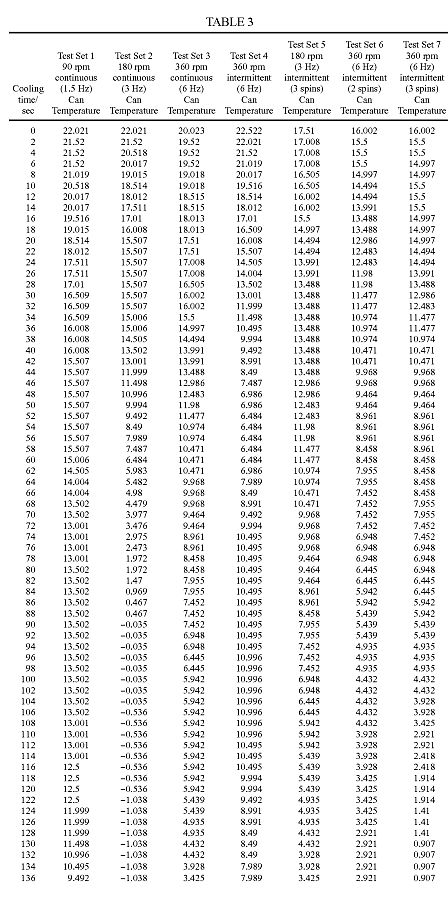
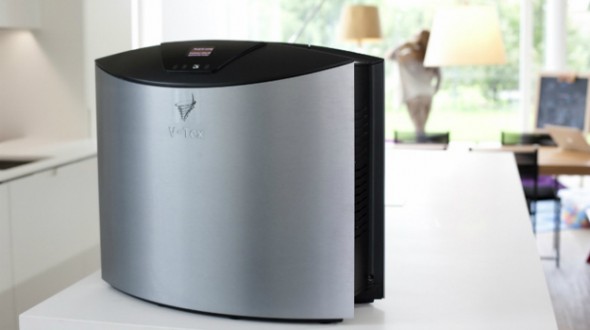
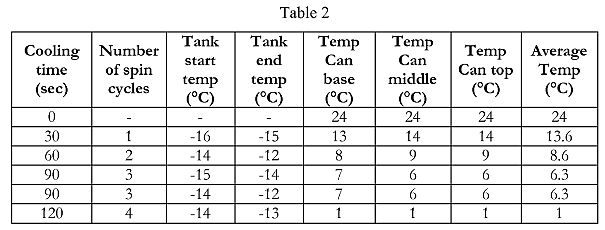
The system consists of a cavity that holds a can or bottle, a motor-driven turntable that can spin the container at 90-720 rpm (up to 12 Hz), and a supply of chilled cooling liquid (water or salt-water at -10 deg C to -16 deg C). The rotation is pulsed: a period of rotation is followed by a pause, causing the vortex to collapse and natural convection to mix the liquid. Twin-axis rotation prevents axial movement and maintains the container's orientation. Tests showed cooling from room temperature to ~=4 deg C in ~45 s, with >80 % less energy than conventional chillers. Prototypes were built by Regent and Pera Technology and two patents (WO2011012902 and a second related filing) were filed by Enviro-Cool (UK) Limited.
Principles
- Vortex dynamics (Rankine vortex)
- Forced and natural convection
- Pulsed rotational mixing
- Heat transfer via chilled liquid immersion
Scientific Domains
Materials
- Water
- Salt-water solution
- Aluminum can / glass bottle
- Metal cavity (steel/aluminum)
- Diaphragm pump
Mechanisms of Action
- Rotationally induces a forced vortex inside the beverage
- Pulsed stop-start sequence collapses the vortex, promoting mixing
- Immersion in chilled liquid extracts heat by convection
- Twin-axis rotation maintains container stability and prevents axial displacement
Energy Sources
Applications
- Vending machines with on-demand cooling
- Retail beverage chillers
- Event catering rapid-serve stations
Claimed Performance
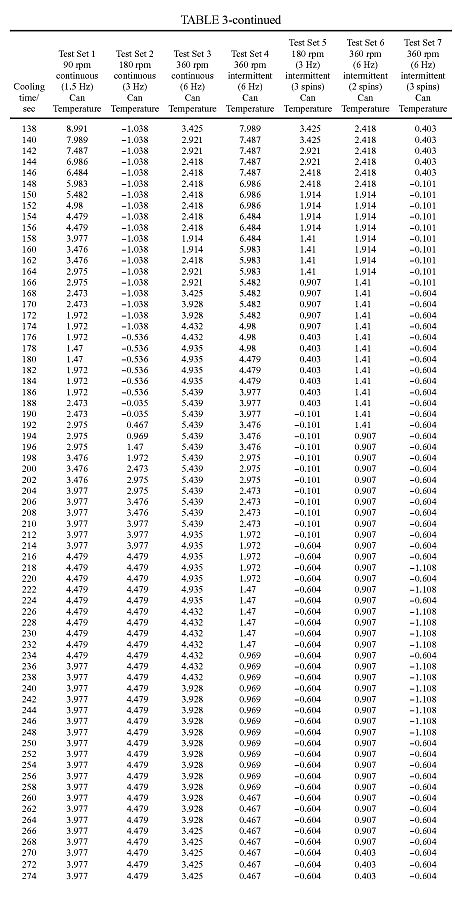
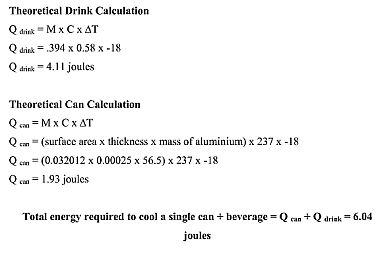
Cools drinks from ambient to 4 deg C in ~45 seconds; uses >80 % less energy than standard drink chillers; rotation speeds >=90 rpm (up to 720 rpm); cooling liquid temperature <=-10 deg C (preferably <=-16 deg C).
Experimental Evidence
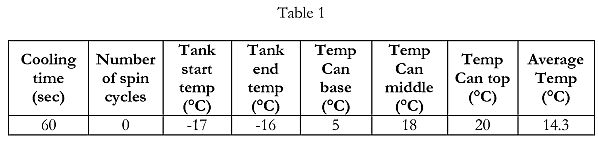
Tests performed on prototype units showed cooling rates sufficient to reach 4 deg C in 45 s and demonstrated that rotating at 360 rpm for 5 min does not cause excessive fizzing. The cooling liquid flow of 5 L/min and vortex collapse cycles (5-15 s rotation, 10-30 s pause) were reported to improve cooling efficiency.
Replication Status
Three prototypes built by Regent and Pera Technology; patents filed; no commercial scale production reported.
Limitations
- Requires chilled cooling liquid supply and refrigeration for the coolant
- Mechanical wear of rotating components
- Limited to containers that can be securely rotated
- Energy savings depend on efficiency of the cooling-liquid refrigeration system