Goal
Provide a clean, economic energy source as an alternative to fossil and nuclear power.
Problem
Energy scarcity and the need for low-cost, low-environmental-impact power generation; reproducibility issues of conventional cold-fusion claims.
Concept Summary
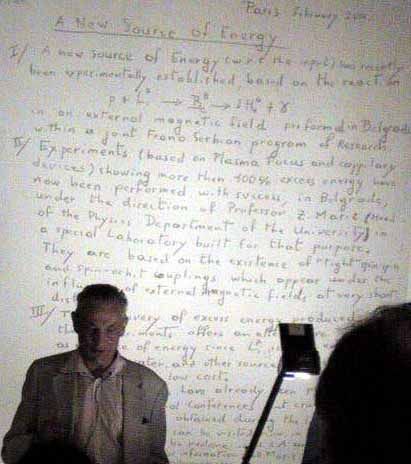
Vigier proposes a novel chemical-energy process based on spin-spin and spin-orbit couplings in palladium loaded with heavy water (deuterium) and lithium-7. The system allegedly creates capillary-structured media where accelerated water clusters induce micro-fusion events, releasing excess heat. The theory is linked to an aether model and superluminal interactions.
Principles
- spin-spin coupling
- spin-orbit coupling
- capillary chemistry
- aether/soliton model
- superluminal interactions
Scientific Domains
Materials
- palladium
- lithium-7
- heavy water (deuterium)
- tungsten-bronze crystal
- sulfuric acid
Mechanisms of Action
- Electrodynamic pressure from pulsed electrical discharge accelerates water clusters to hypervelocity
- Capillary-structured palladium absorbs heavy water, enabling localized fusion-like reactions
- Spin-coupled interactions between palladium lattice and Li-7 nuclei produce exothermic heat
Energy Sources
Applications
- Power generation
- Clean energy production
- Propulsion concepts
Experimental Evidence
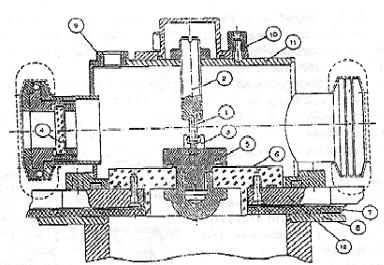
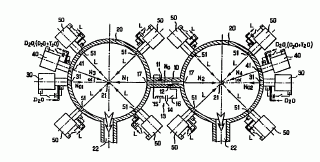
Micro-thermonuclear explosions reported as verified by the Russian team of Y. R. Kucherov, A. B. Karabut and I. B. Savvatimova; patent description details a device that recovers fusion energy from accelerated water clusters.
Limitations
- Lack of peer-reviewed quantitative data
- Reproducibility not demonstrated
- Reliance on controversial aether and superluminal theories
Red Flags
- Claims of superluminal interactions
- Association with cold-fusion and aether theories
- Absence of detailed experimental data