Goal
Provide a low-cost, rapidly deployable, accurate airdrop delivery system for supplies and equipment in military and humanitarian operations.
Problem
Current parachute-based airdrop methods are slow, costly, require specialized aircraft and rigging, and suffer from wind drift and foliage entanglement, limiting rapid resupply for troops and disaster relief.
Concept Summary
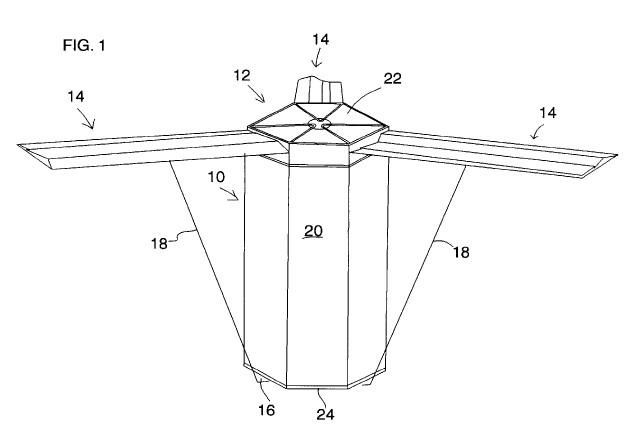
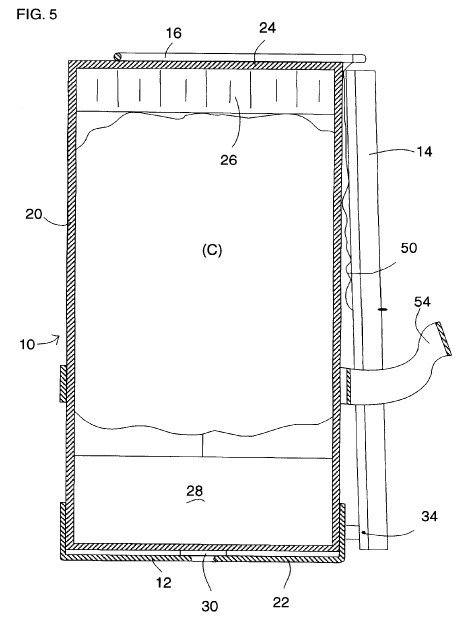
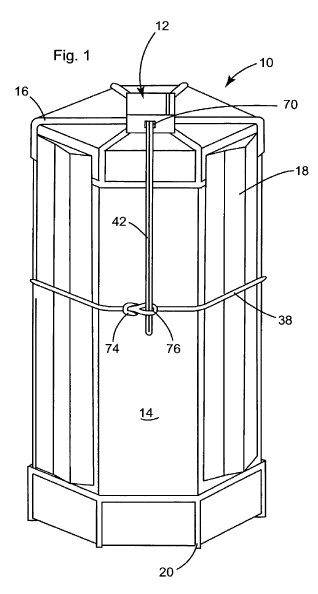
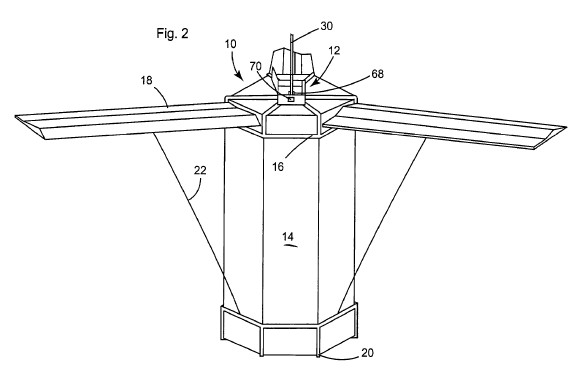
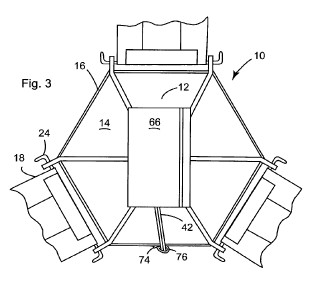
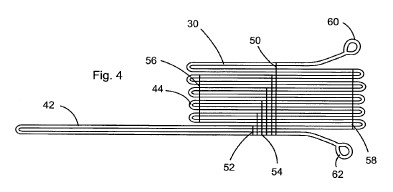
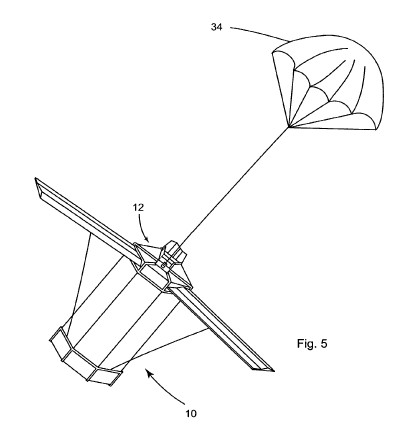
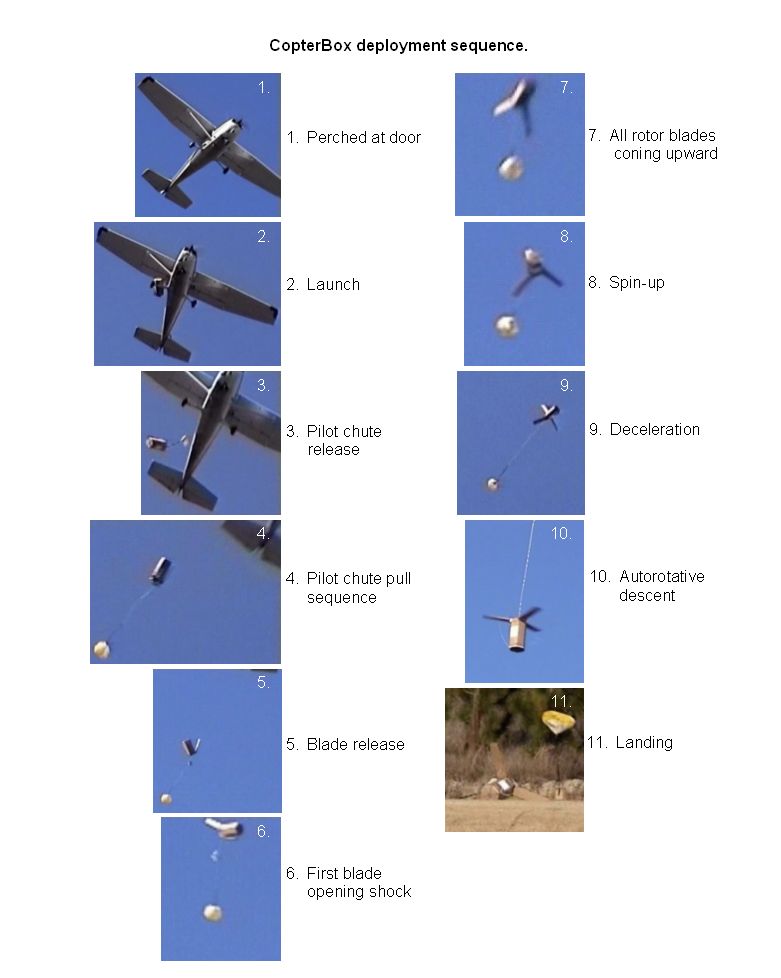
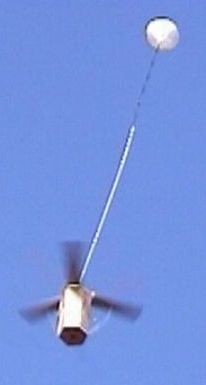
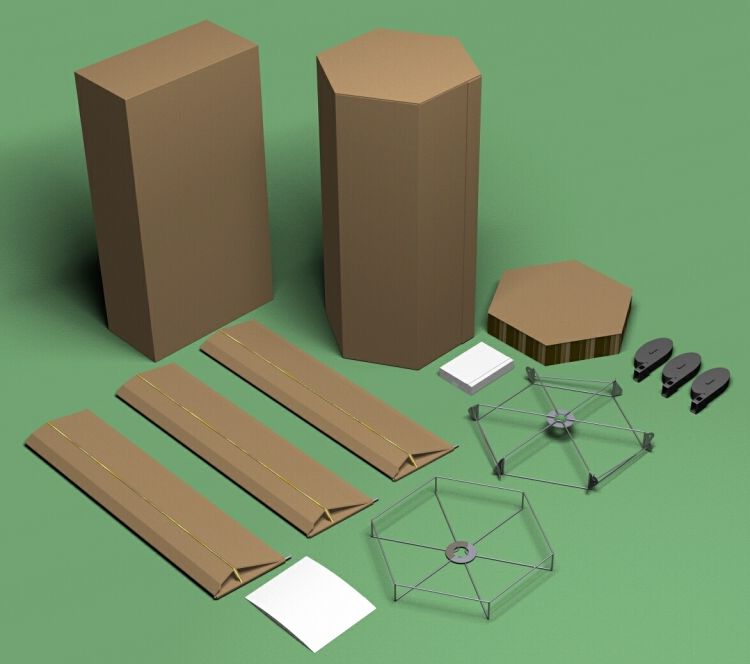
CopterBox is an expendable, autorotating airdrop container that uses a drogue chute to orient the unit, a break-away stitching delay to deploy high-strength corrugated paper rotor blades, and a honey-comb shock absorber. The rotor blades spin at ~400 rpm, allowing the box to autorotate down at ~34 ft/s with minimal wind drift, cutting through foliage and delivering a 60-100 lb payload accurately. The system costs about $300 per unit and can be assembled by a single soldier in minutes.
Principles
- Autorotation
- Break-away stitching delay
- Drogue chute orientation
- Low-drag cardboard fairing
- Honey-comb shock absorption
Scientific Domains
Materials
- High-strength corrugated paper (cardboard)
- High-strength corrugated plastic sheet
- Metal wire (rotor hub)
- Nylon components
- Paper honey-comb shock absorber
Mechanisms of Action
- Drogue chute deploys first to orient the box
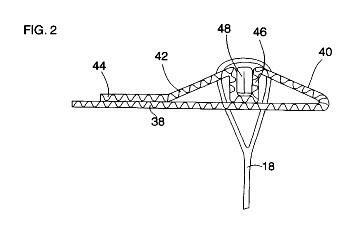
- Stitch-away system delays rotor blade deployment
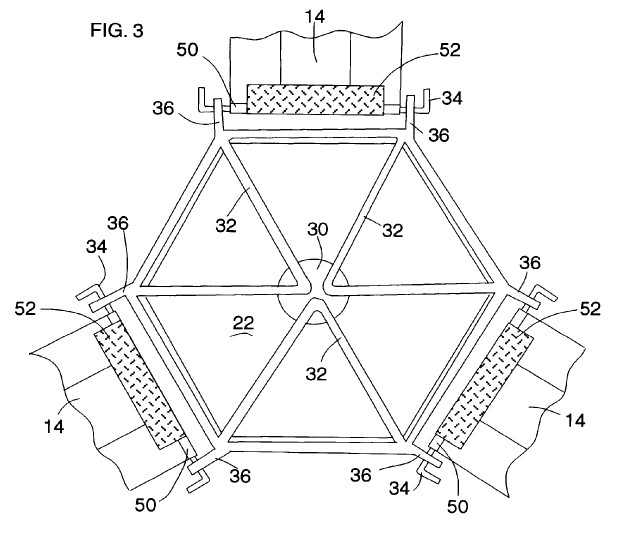
- Rotor blades spin, creating autorotation and cutting through foliage
- Honey-comb plug absorbs impact energy on touchdown
- Optional timer/altimeter triggers deployment at preset altitude
Energy Sources
Applications
- Military tactical resupply
- Humanitarian aid delivery
- Disaster relief logistics
- Forest Service smokejumper support
- Psychological warfare leaflet distribution
Claimed Performance
Payload 60-100 lb; descent speed ~34 ft/s; rotor speed ~400 rpm; delivery accuracy observed from 200-10 000 ft; cost $300 per unit; wind drift minimal; can be dropped from any aircraft or helicopter.
Experimental Evidence
Prototype testing showed minimal wind drift and accurate delivery from 200 to 10 000 ft. The system received a 98 % rating from the U.S. Army Natick Soldier Systems Center on Phase I SBIR efforts and was invited to Phase II. Demonstrations reported by DefenseReview.com and the author indicate successful autorotating descent and payload recovery.
Replication Status
Prototype demonstrated; no large-scale production or independent replication reported.
Limitations
- Payload limited to 60-100 lb
- Single-use (expendable) nature
- Performance dependent on wind and drop altitude
- Limited structural durability compared to reusable parachutes
Red Flags
- Claims of "superlative accuracy" are based on internal testing only; no independent peer-reviewed data.