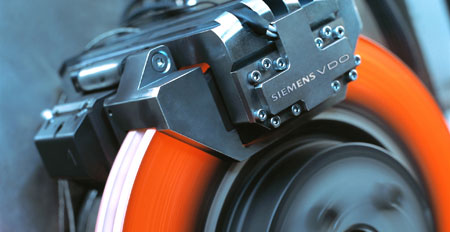
Goal
Provide a more efficient, faster-acting braking system that uses far less energy than conventional hydraulic brakes.
Problem
Hydraulic brakes require high actuation energy, have slower response times, need fluid lines and a master cylinder, and lack fine-grained electronic control.
Concept Summary
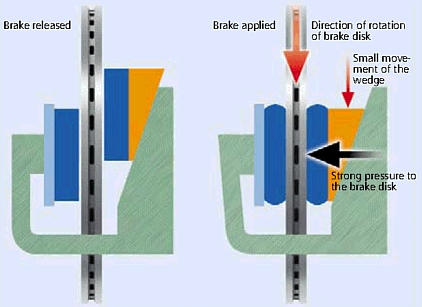
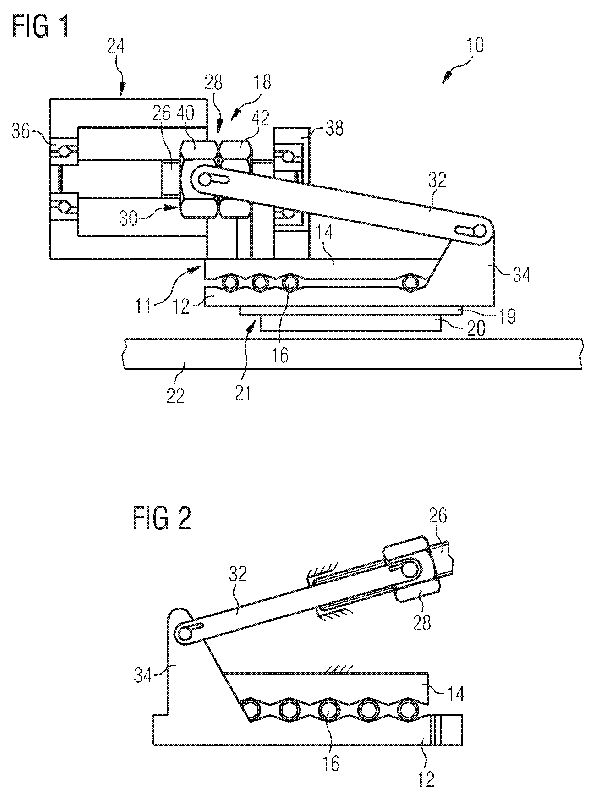
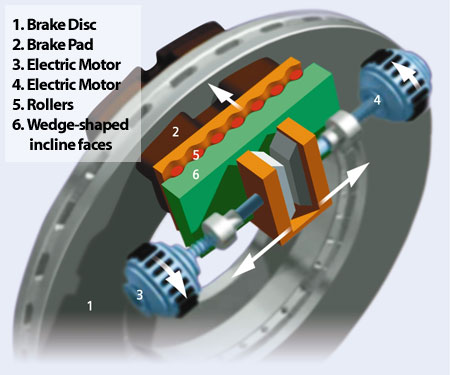
The Electronic Wedge Brake replaces the hydraulic actuation with a small electric motor that pushes a brake pad against a rotating disc via a series of interlocking triangular wedges. The kinetic energy of the rotating disc self-boosts the wedge position, increasing braking pressure automatically as vehicle speed rises. Sensors and a torque controller manage the pad position, providing brake-by-wire control, ABS-like anti-lock functionality, and electronic stability control without separate hydraulic components.
Detailed Description
Each wheel has a control unit containing a brake pad, a mechanical transfer system, two precision electric motors, and multiple sensors (wheel speed, wedge position, force). The motors move the pad over rollers on an inclined wedge surface; the wedge's geometry converts the disc's kinetic energy into additional braking force (self-energizing). The system runs on the vehicle's 12-V electrical network, can respond in ~100 ms, and claims to use only one-tenth the energy of hydraulic brakes while reducing stopping distance by more than 50 %. A prototype demonstrated these benefits at the International Motor Show in Frankfurt, and a major European automaker is a pilot customer.
Principles
- Electromagnetic actuation
- Self-energizing wedge mechanism
- Feedback control
- Brake-by-wire
- Torque sensing
Scientific Domains
Materials
- Metal brake disc
- Plastic brake pad
- Steel wedge
- Aluminum housing
Mechanisms of Action
- Electric motor drives brake pad laterally
- Wedge geometry converts disc rotation into additional pad pressure
- Sensors measure wheel speed and wedge position
- Control algorithm adjusts motor output to achieve desired braking torque
Energy Sources
Applications
- Passenger cars
- Heavy-duty trucks
- High-speed trains
- Electric and hybrid vehicles
Claimed Performance
Uses ~10 % of the actuation energy of hydraulic brakes; prototype required less than half the stopping distance of standard brakes; response time ~100 ms (vs 140-170 ms for conventional ABS).
Experimental Evidence
Prototype tests reported at Siemens press release and at the International Motor Show in Frankfurt showed the wedge brake achieving < 50 % stopping distance compared with standard brakes; a company official claimed a 10x energy reduction.
Replication Status
Prototype demonstrated; pilot testing with a major European automaker; no independent third-party replication reported.
Limitations
- Reliance on vehicle electrical power; failure of power supply could affect braking
- Complex sensor and control electronics increase system cost
- Long-term wear of wedge and pad not yet proven
- Integration with existing vehicle safety standards required