Goal
Provide a high-energy-density, low-cost, lightweight energy-storage device that can charge in minutes and replace conventional batteries in vehicles and grid storage.
Problem
Heavy, expensive, slow-charging chemical batteries (lead-acid, lithium-ion) that limit electric-vehicle range and increase system cost.
Concept Summary
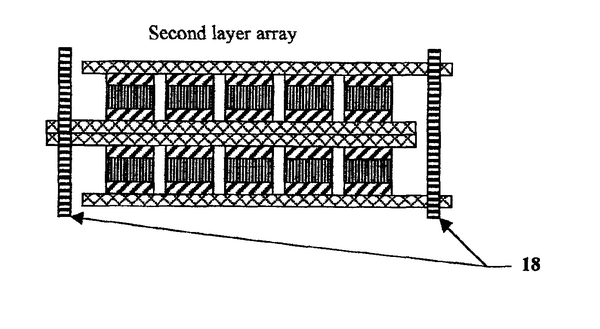
A solid-state ultracapacitor built as a parallel-plate capacitor whose dielectric is a ceramic barium-titanate material sandwiched between thousands of thin metal foils. The structure stores electrostatic energy at very high voltage, delivering high power density, fast charge/discharge, and long cycle life.
Principles
- Parallel-plate capacitor geometry
- High-dielectric-constant ceramic (barium titanate) as dielectric
- Solid-state electrostatic energy storage
Scientific Domains
Materials
- Barium titanate (BaTiO_3) ceramic
- Thin metal foils (aluminum or copper)
- Ceramic binder / encapsul material
Mechanisms of Action
- Electrostatic charge accumulation on metal plates
- Dielectric polarization of barium-titanate layers
Applications
- Low-speed electric vehicles
- Full-speed electric vehicles
- Hybrid-electric plug-in vehicles
- Military power systems
- Backup power
- Large-scale utility storage for intermittent renewables
Claimed Performance
Weight 400 lb, energy capacity 52 kWh, charge in minutes, up to 1 million charge cycles with no degradation, projected cost $3,200 (low-volume) dropping to $2,100 (high-volume).
Experimental Evidence
Tested up to a million cycles with no material degradation compared to lead-acid batteries (as reported by EEStor).
Limitations
- No independent third-party verification of performance claims
- Manufacturing of defect-free barium-titanate layers at scale
- Very high operating voltage may require special infrastructure
Red Flags
- Claims of >400-fold improvement over existing ultracapacitors without published data
- Potential over-unity implications raised by skeptics
- Lack of peer-reviewed or independently replicated test results