Goal
Capture and convert atmospheric electricity into usable electrical power without conventional mechanical or chemical energy sources.
Problem
Reliance on polluting energy sources and scarcity of conventional power-generation infrastructure.
Concept Summary
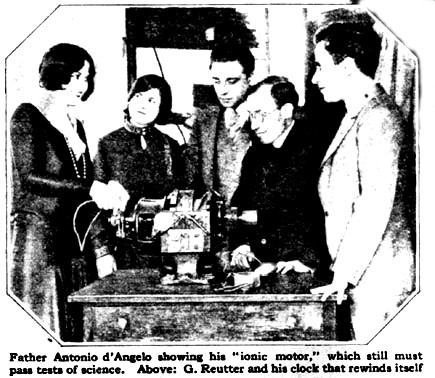
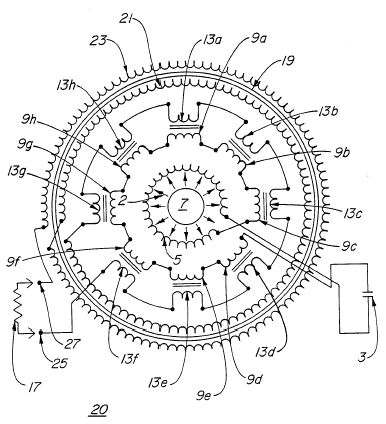
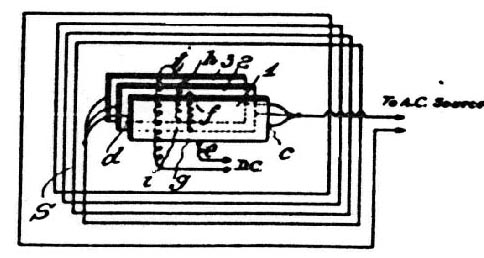
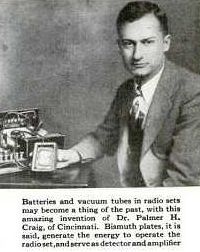
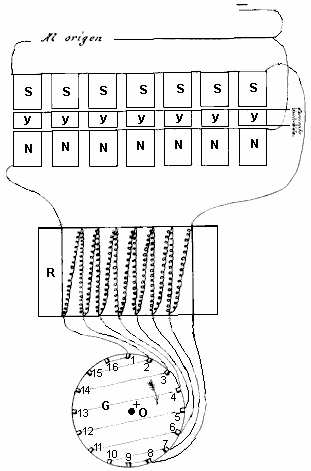
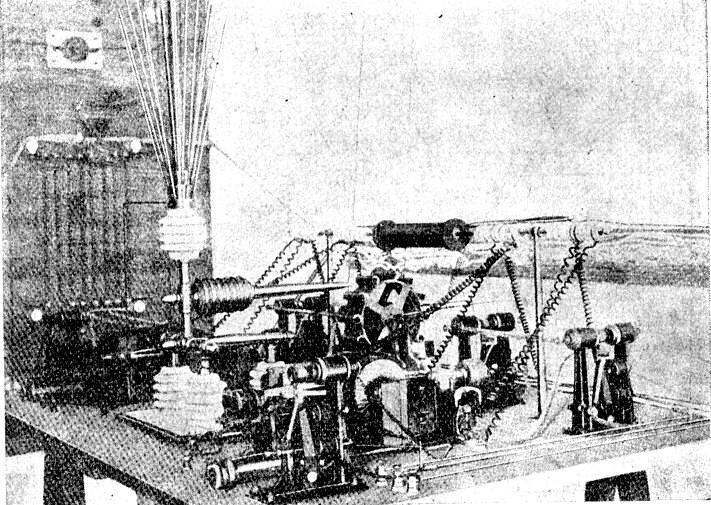
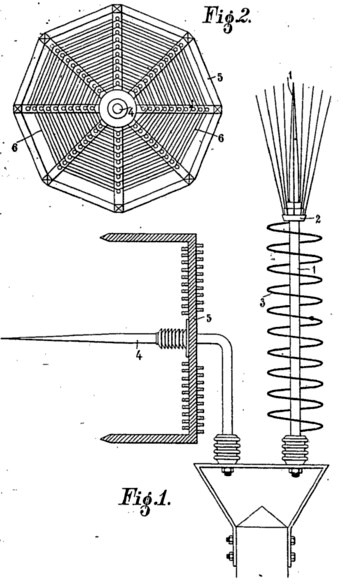
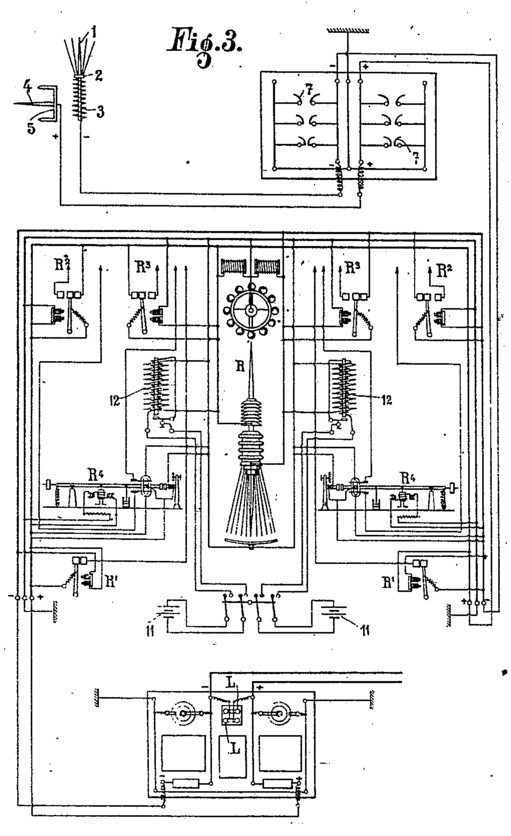
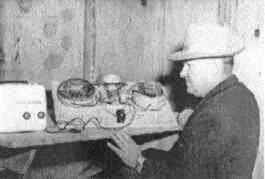
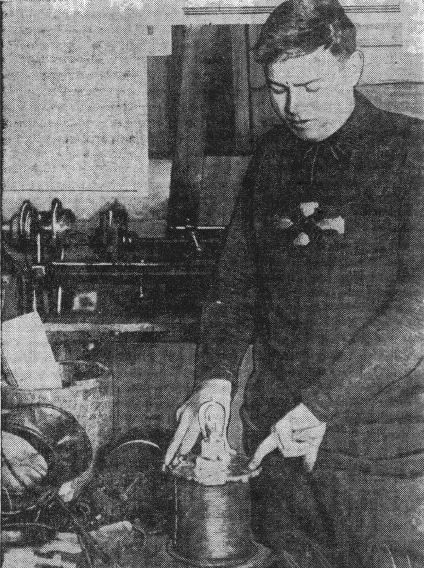
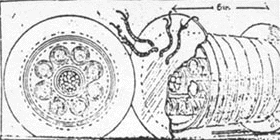
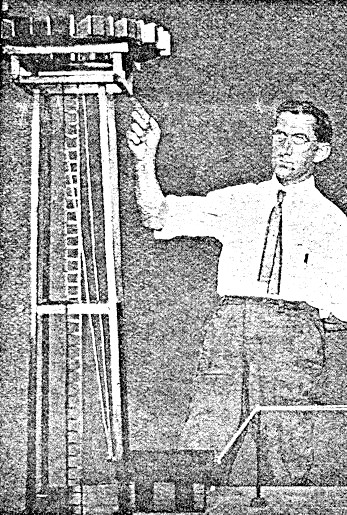
Early-20th-century inventors such as Clemente Figueras, Jules Guillot, Chauncy Britten and Lester Hendershot built devices that used antennas, fixed coils, magnets and mineral-filled rectifiers to harvest ambient atmospheric electric fields or the Earth's geomagnetic field and convert them into usable electricity or mechanical rotation. Reported outputs ranged from a few hundred watts to several kilowatts, and from modest lighting to 20-horsepower motors.
Principles
- Electromagnetic induction
- Atmospheric electricity capture
- Magnetostatic field utilization
- Rectification through mineral-filled tubes
- Resonant amplification
Scientific Domains
Materials
- Copper wire
- Steel rods
- Magnet steel
- Glass tubes
- Copper dust
- Coal
- Sulfur
- Mercury
- Tin
- Aluminum powder
- Mica
- Porcelain
- Bronze
Mechanisms of Action
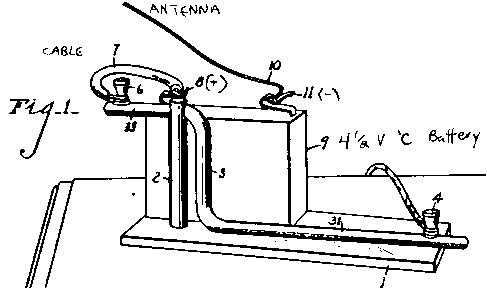
- Static antenna collection of atmospheric charge
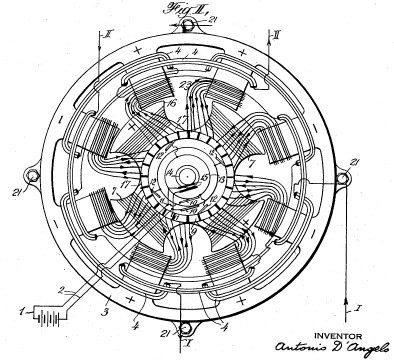
- Induction in stationary coils excited by discontinuous current
- Magnetic component addition via mineral-filled rectifier tubes
- Interaction with Earth's geomagnetic field to produce torque
Energy Sources
Applications
- Remote power generation
- Low-cost electricity for households
- Aviation power
Claimed Performance
Figueras generated 550 V and powered a 20-hp motor; Guillot produced 300 W (up to 3 kW with larger antenna); Hendershot lit a 6 W lamp for 26 h, ran two 110 W lamps and claimed a 60-hp motor operating for two weeks.
Experimental Evidence
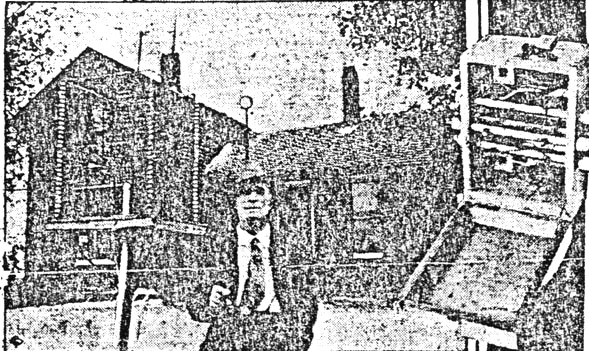
Contemporary newspaper reports, patent documents, and eyewitness accounts of demonstrations (e.g., New York Times, Los Angeles Times, Daily News).
Replication Status
No modern independent replication reported; only historical demonstrations are documented.
Limitations
- Lack of reproducible, peer-reviewed data
- Dependence on variable atmospheric conditions
- Unclear physical mechanism
- Potential legal/regulatory scrutiny
Red Flags
- Historical claims without modern validation
- Potential for fraud or exaggerated performance
- Absence of independent replication