Goal
Generate electrical power without fuel, claiming over-unity (output greater than input) to augment solar or wind installations.
Problem
Inefficiency and fuel dependence of conventional generators; need for supplemental power for renewable energy systems.
Concept Summary
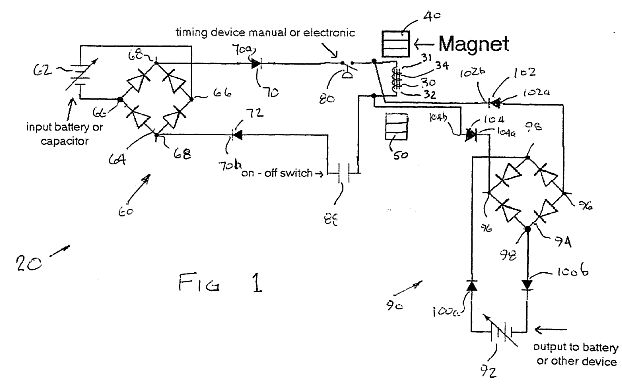
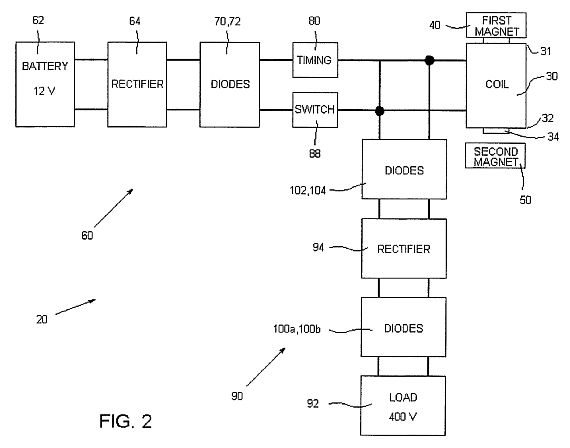
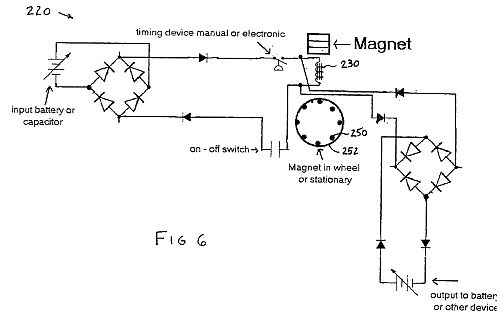
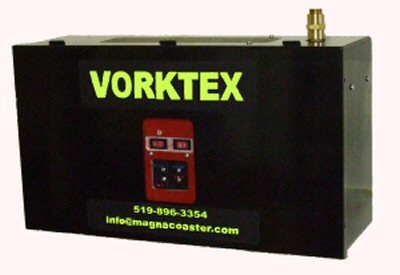
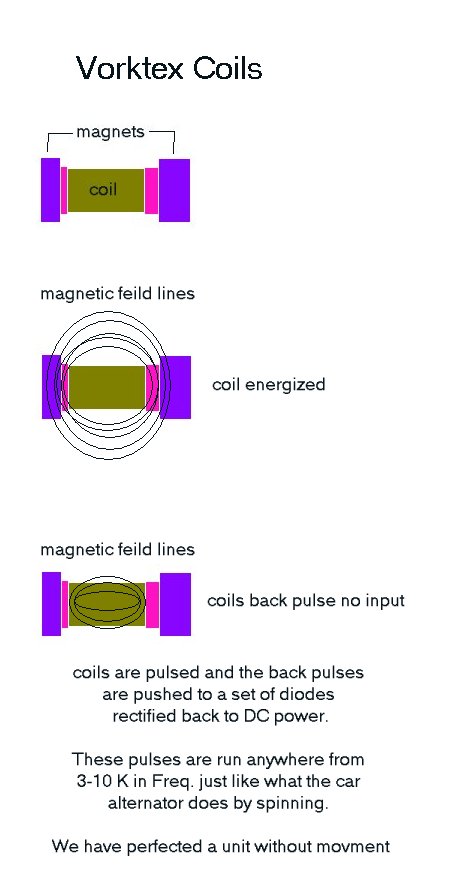
The Vorktex is a solid-state generator that uses high-powered permanent magnets and specially wound coils immersed in dielectric oil. The coils are pulsed at high frequency (3-10 kHz); the back-rush of energy is captured, rectified and stored in a battery or capacitor bank. The design claims no resistive heating in the coils and an overall over-unity output.
Principles
- High-frequency magnetic pulsing
- Electromagnetic induction
- Solid-state circuitry
- Dielectric oil cooling to prevent arcing
Scientific Domains
Materials
- Permanent magnets (likely NdFeB)
- Copper wire for coils
- Dielectric oil
- Lead-acid battery
- Proprietary electronic components
Mechanisms of Action
- Rapid switching of magnetic fields around coils
- Capture of back-rush voltage and rectification to DC
- Use of permanent magnets to provide a strong magnetic field
- Immersion of coils in oil to allow high voltage operation
Energy Sources
Applications
- Supplemental power for solar or wind installations
- Battery charging
- Portable high-current DC supply
Claimed Performance
Units advertised as 4 outputs of 12 V 100 A (~=4.8 kW) and larger models up to 12 kW; over-unity claim (output > input).
Experimental Evidence
Several demonstration videos have been posted; the company reports that "a few groups in the lab testing... have all confirmed the same as the others." No independent third-party data or peer-reviewed results are provided.
Replication Status
No confirmed shipments to customers; product has not been independently verified or replicated.
Limitations
- No independent verification of over-unity performance
- Units have not been shipped to customers despite years of promises
- Claims of "no heat loss" contradict known resistive losses in coils
- Reliance on proprietary circuitry without disclosed schematics
Red Flags
- Repeated delays and failure to ship products
- Lack of third-party testing or peer-reviewed data
- High claimed performance without quantitative evidence
- Potential for scam due to taking money for undelivered devices