Goal
Convert electrical energy into mechanical rotation (and potentially generate electricity) with high efficiency to address the energy crisis.
Problem
Reliance on conventional energy sources and the need for more efficient power generation.
Concept Summary
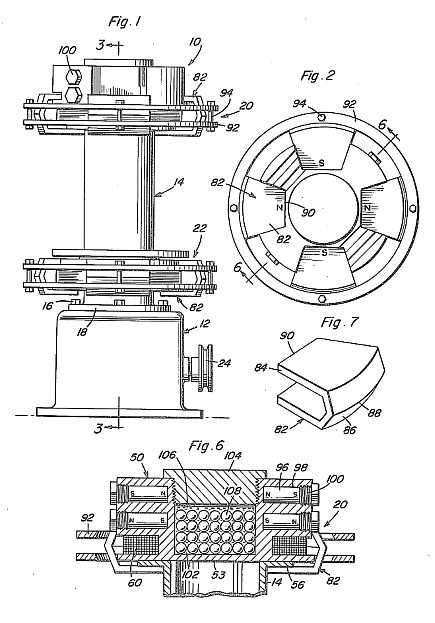
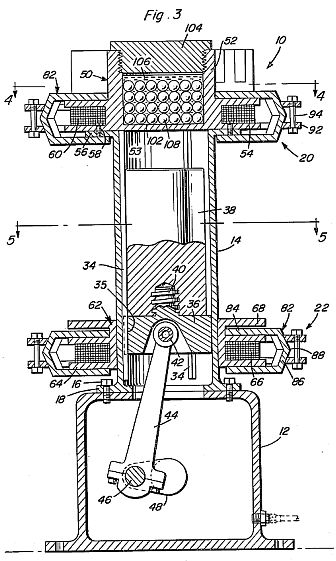
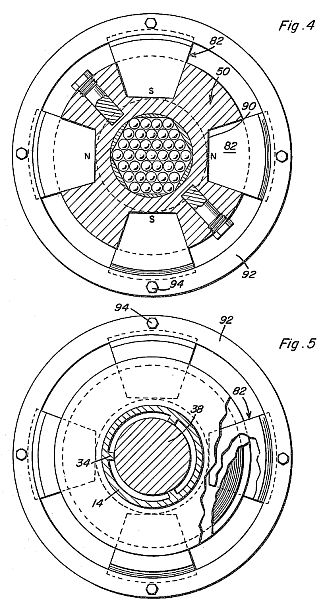
A reciprocating magnetic motor in which a permanent-magnet piston moves inside a cylinder between two electromagnetic assemblies. Polarity of the electromagnets is periodically reversed and field strength varied to pull and push the piston, producing continuous rotary output. The design incorporates sector-shaped permanent magnets, bar magnets, and magnetic spheroids in a damping fluid to reduce hysteresis and flux leakage.
Detailed Description
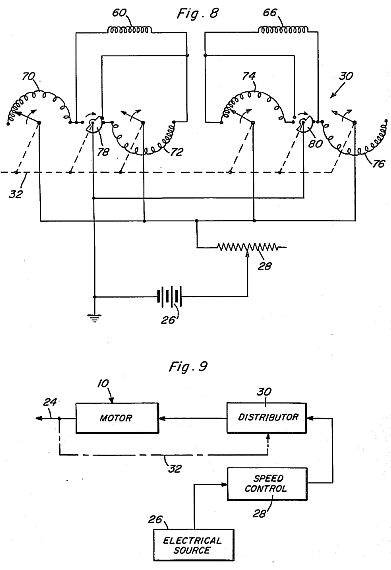
The motor consists of an aluminum cylinder housing a stainless-steel piston that carries an elongated permanent magnet. At each end of the cylinder an electromagnetic assembly with copper windings, sector-shaped permanent magnets, and axially spaced bar magnets creates a controllable magnetic field. A distributor and rheostat network, synchronized with the piston motion, reverses polarity and adjusts current magnitude, causing the piston to reciprocate. Magnetic spheroids suspended in a damping fluid within a cavity reduce hysteresis losses. The reciprocating motion is converted to rotary output via a crank and shaft, which can drive a pulley, generator, or other load. The system is powered initially by a 12-V battery and is claimed to become self-sustaining once running.
Principles
- magnetic attraction and repulsion
- polarity reversal
- magnetic flux concentration
- hysteresis loss mitigation
- flux leakage reduction
- electromagnetic control via distributor
Scientific Domains
Materials
- steel
- aluminum
- stainless steel
- copper windings
- permanent magnet (likely ferrite or rare-earth)
- soft iron spherical balls
- nickel plating
- chromium plating
- damping fluid (oil)
Mechanisms of Action
- Reciprocating piston driven by alternating magnetic fields
- Flux concentration using sector-shaped permanent magnets
- Hysteresis damping with magnetic spheroids in fluid
Energy Sources
Applications
- automotive propulsion
- home electricity generation
- industrial power drive
Claimed Performance
10-lb prototype produces 20-25 hp; a 200-lb version could power the entire city of Mattoon (~=19,800 residents).
Experimental Evidence
The inventor reports a 10-pound prototype delivering 20-25 horsepower after being started with a 12-volt battery.
Replication Status
Prototype built by inventor only; no independent replication reported.
Limitations
- Requires continuous electrical input; no net energy gain demonstrated
- Hysteresis and flux leakage still present despite mitigation measures
- No peer-reviewed data or independent testing
Red Flags
- Claims violate established conservation of energy
- Described as a new version of a perpetual-motion machine
- Lack of independent verification or peer-reviewed data