Goal
Harvest ambient thermal energy from ionic motion in solution and convert it into usable electricity.
Problem
Need for self-powered, renewable energy sources that can operate without external fuel or charging.
Concept Summary
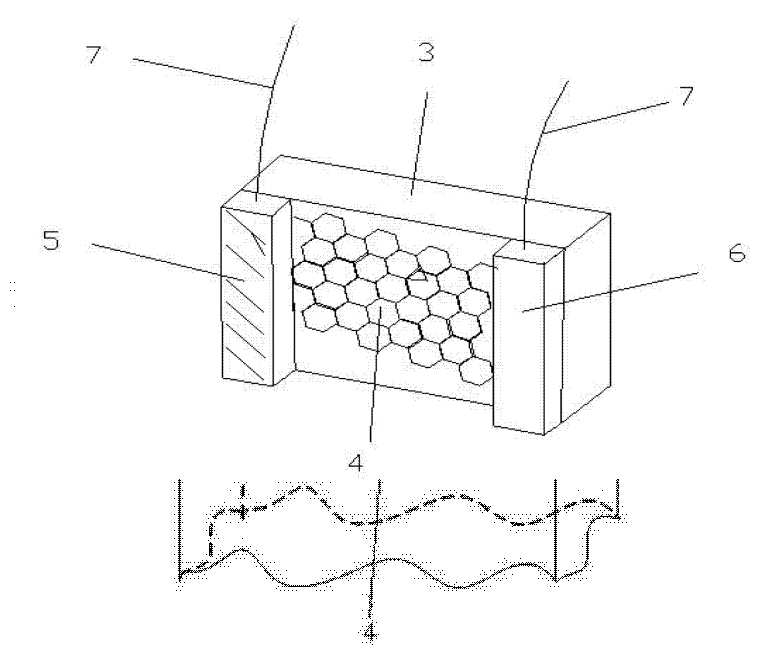
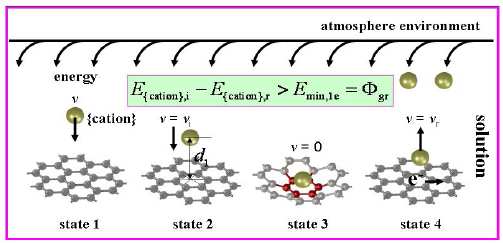
A graphene film with asymmetric electrodes is immersed in an ionic salt solution (e.g., CuCl_2). Thermal motion of ions collides with the graphene, displacing electrons that preferentially travel through the graphene due to its high electron mobility, generating a continuous voltage. Voltage magnitude increases with temperature, ion concentration, and can be boosted by ultrasound.
Principles
- ionic thermal motion
- work-function difference between electrodes
- asymmetric electrode configuration
- electron emission from graphene upon ion impact
Scientific Domains
Materials
- graphene (single-layer carbon film)
- silver (high work-function electrode)
- gold (low work-function electrode)
- copper chloride (CuCl_2) solution
- substrate (e.g., glass or polymer)
- adhesive sealing layer
Mechanisms of Action
- thermal ion collisions impart kinetic energy to electrons in graphene
- high electron mobility in graphene directs electrons through the circuit rather than the electrolyte
Energy Sources
Applications
- artificial organs (body-heat powered)
- portable electronics
- clean renewable energy
Claimed Performance
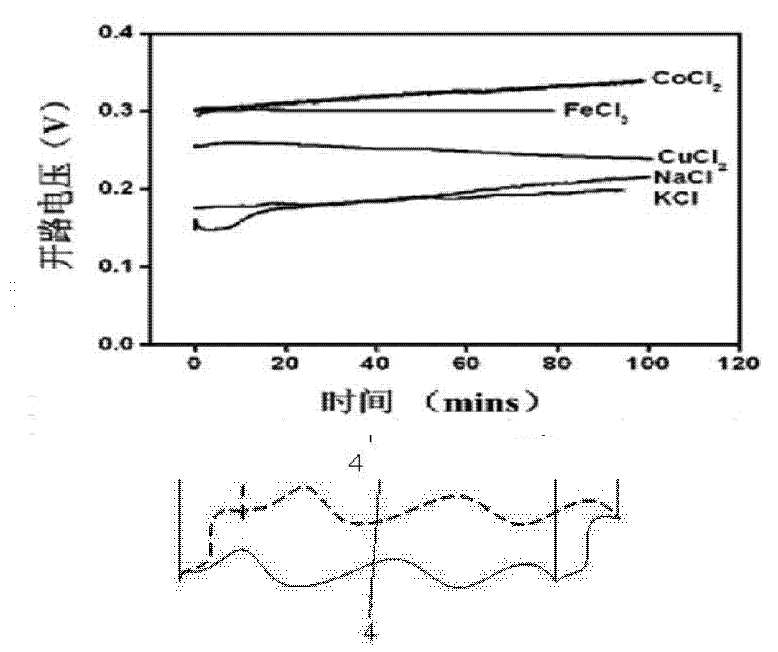
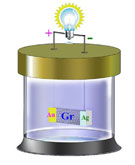
0.35 V output per device lasting >20 days; six devices in series produce >2 V to power a commercial LED; voltage rises with temperature, ion concentration, and ultrasound.
Experimental Evidence
Measured open-circuit voltage of ~0.35 V in saturated CuCl_2 solution for 20 days; LED lit using six devices in series; observed positive correlation between voltage, temperature, and ion concentration; voltage increase demonstrated with heating and ultrasound.
Limitations
- Low voltage per individual device
- Performance depends on ion concentration and temperature
- Potential chemical reactions not fully ruled out
- Scalability and power density not demonstrated
Red Flags
- Claims rely on limited experimental data and lack independent peer-reviewed replication
- Possibility of conventional electrochemical reactions contributing to observed voltage
- No disclosed long-term testing beyond 20 days