Goal
Provide an ultra-lightweight, high-strength structural material for aerospace, automotive and impact-protection applications.
Problem
Need for structural components with exceptional strength-to-weight ratios, internal ventilation for honeycomb cores, and enhanced energy-absorption for blast and impact mitigation.
Concept Summary
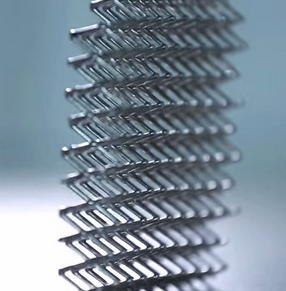
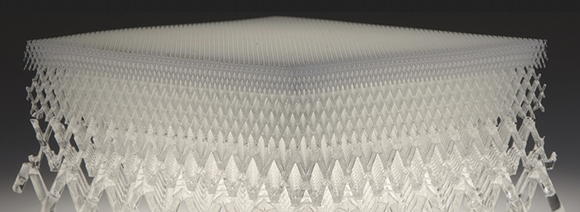
A metallic micro-lattice (micro-truss) structure that is up to 99.99 % air, offering record low density while retaining sufficient mechanical strength. The lattice can be coupled to honeycomb cores to create ventilated aero-structures, and its geometry can be graded to vary stiffness across a sheet. Variants can be filled with compressible fluid for additional energy-absorption capability.
Principles
- Cellular lattice architecture
- Graded material properties
- Ventilation through open-cell structure
- Energy dissipation via plastic deformation and fluid compression
Scientific Domains
Materials
- Metallic alloy (e.g., aluminum, nickel, titanium)
- Honeycomb core (typically aluminum)
Mechanisms of Action
- Load bearing through a network of micro-trusses
- Airflow enabled by the open-cell lattice
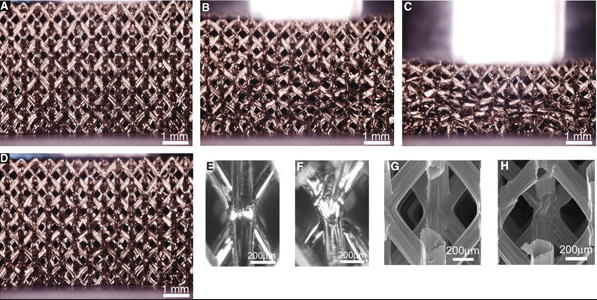
- Impact energy absorption by controlled buckling and fluid compression
Applications
- Aircraft structural panels
- Ventilated wing skins
- Impact protection for vehicles
- Blast mitigation in protective gear
Claimed Performance
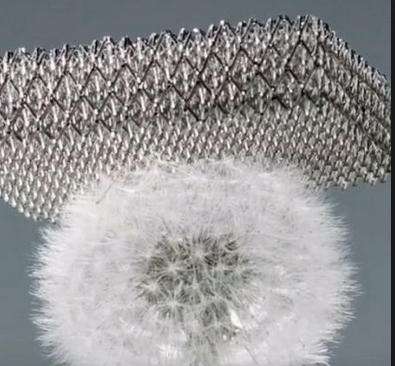
99.99 % air (lightest metallic structure ever made); strong enough to balance on a dandelion; capable of supporting aircraft-scale loads while providing ventilation and blast-mitigation.
Limitations
- Complex micro-fabrication processes
- Scale-up to large-area panels may be costly
- Potential fatigue under cyclic loading