Goal
Provide a safe, inexpensive fuel derived from ordinary water for welding, cutting, and powering engines, thereby reducing dependence on conventional fossil fuels.
Problem
High cost and environmental impact of oil-based fuels and conventional welding gases; need for alternative energy sources.
Concept Summary
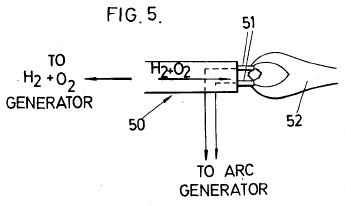
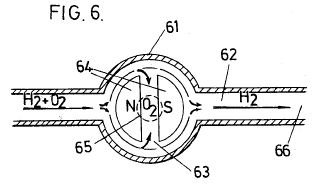
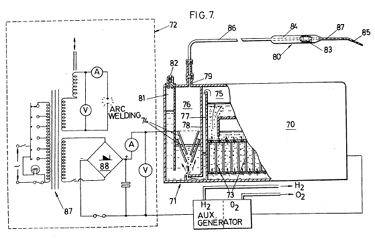
Brown's Gas is produced by a proprietary electrolysis process that mixes hydrogen and oxygen in the exact stoichiometric ratio found in water (2 H_2 : O_2). The resulting ionic gas mixture burns without exploding, implodes on ignition to create a vacuum, and reaches flame temperatures up to 6 000 deg C. The system is powered solely by DC electricity and water, and is marketed for welding, cutting, engine fuel, and waste-reduction applications.
Detailed Description
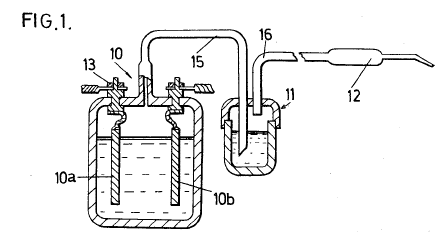
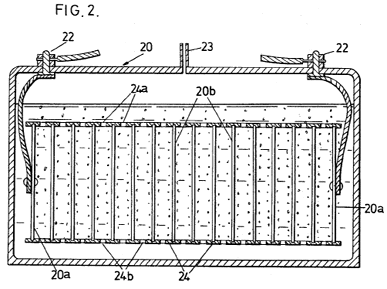
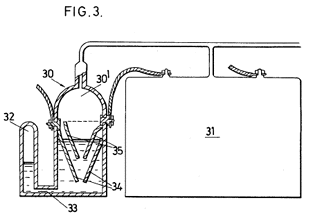
The invention uses a high-efficiency electrolysis cell to split tap water into hydrogen and oxygen while keeping the gases combined in a confined space. The gas mixture (Browns Gas) is stored at up to 100 psi. When ignited, the gas implodes, generating a near-vacuum that draws in additional water or liquid, allowing continuous operation without moving parts. The flame front propagates at ~3 km/s, far faster than oxy-acetylene, and can melt tungsten. Demonstrations include a welding torch 30x cheaper than conventional torches, a car reportedly traveling 1 000 mi on a gallon of water, and claims of waste-to-harmless-carbon conversion. Production units are sold by Browns Gas International Corp. and manufactured in China (NORINCO).
Principles
- Electrolysis of water
- Stoichiometric H_2/O_2 mixing (oxy-hydrogen)
- Ionic gas combustion
- Implosion-driven vacuum generation
- High-temperature flame chemistry
Scientific Domains
Materials
- Water
- Hydrogen
- Oxygen
- Ionic species (plasma)
- Tungsten (as a test material)
Mechanisms of Action
- DC electric current splits water into H_2 and O_2
- Gases are kept mixed in ionic form to prevent explosion
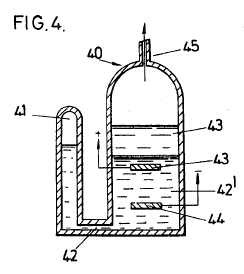
- Ignition causes rapid implosion, creating a vacuum and high-temperature flame
- Vacuum draws in additional water, sustaining the reaction
Energy Sources
Applications
- Welding and cutting
- Engine fuel for cars and aircraft
- Industrial heating
- Waste-to-harmless-carbon conversion
- Deep-sea breathing support
Claimed Performance
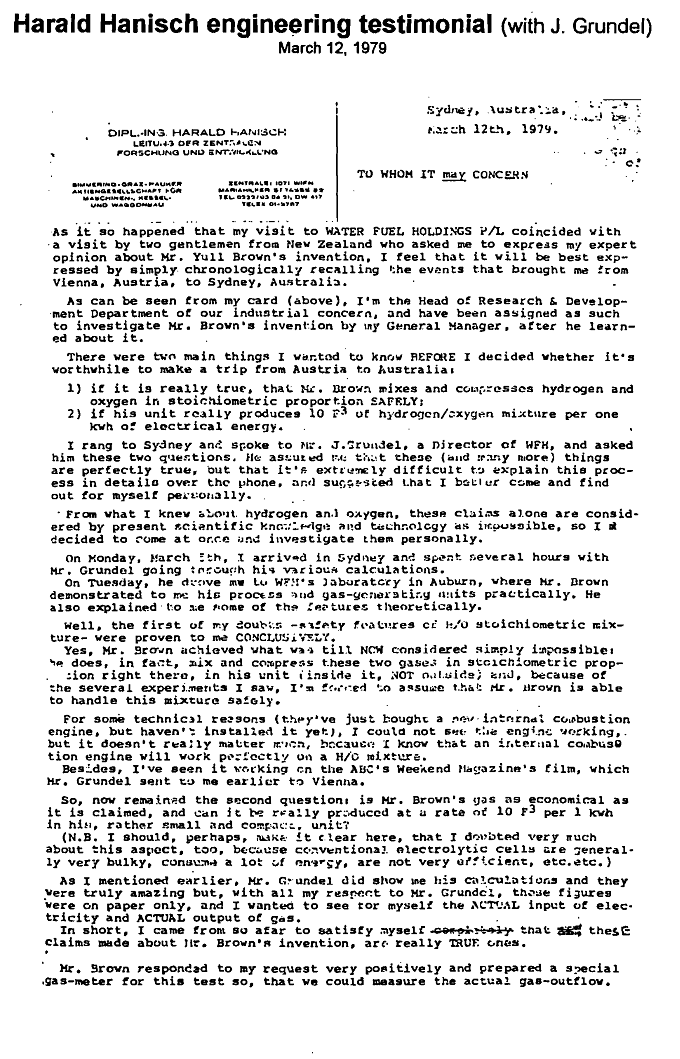
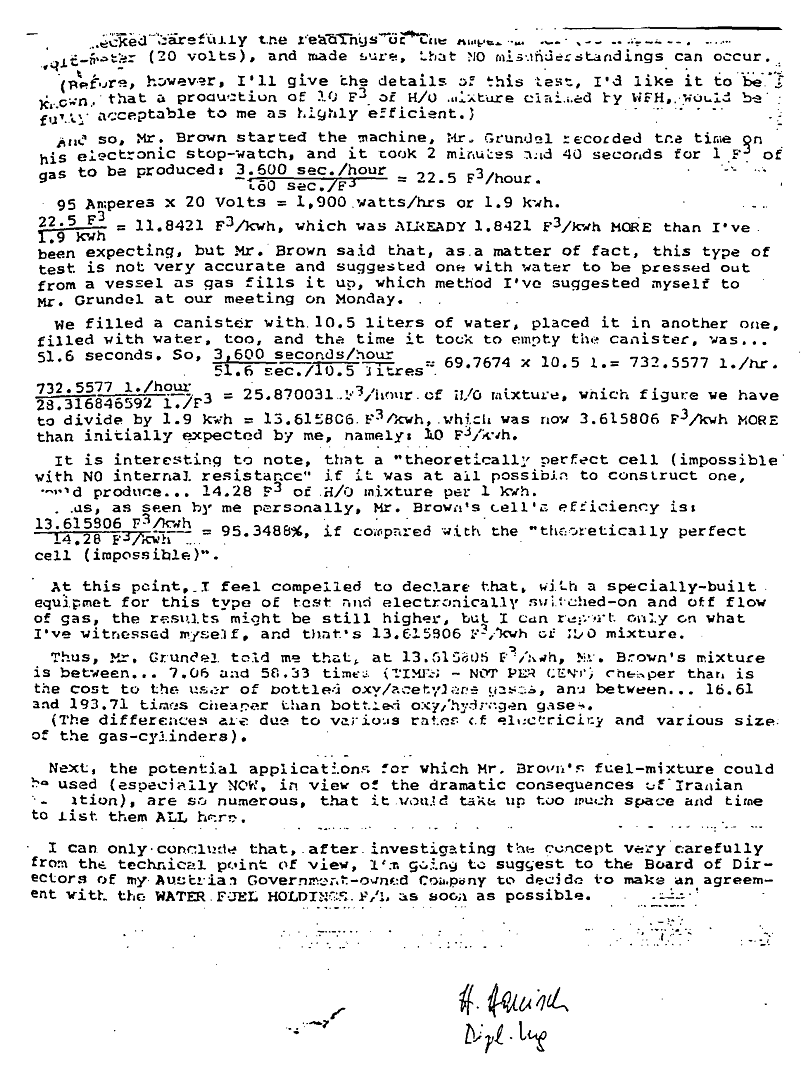
1 kWh of electricity yields 340 L of Browns Gas; flame temperature up to 6 000 deg C; welding torch 30x cheaper than oxy-acetylene; car allegedly runs 1 000 mi per gallon of water; gas burns at 3 km/s flame front speed.
Experimental Evidence
Press reports of a car running 1 000 mi on water (Hansard 1978); welding demonstrations achieving 6 000 deg C; flame speed measurement of 3 km/s; production of 340 L gas per kWh claimed by the inventor.
Limitations
- No independent peer-reviewed data
- Potential safety hazards of H_2/O_2 mixtures
- Unclear overall energy efficiency
- Regulatory hurdles for fuel approval
Red Flags
- Claims of free-energy or overunity without quantitative verification
- Alleged ability to destroy nuclear waste
- Lack of independent replication or peer-reviewed studies