Goal
Generate hydrogen and steam on-board a a vehicle to replace conventional liquid fuels and achieve zero-emission propulsion.
Problem
Hazardous storage, transport and handling of hydrogen and dependence on petroleum fuels for automotive applications.
Concept Summary
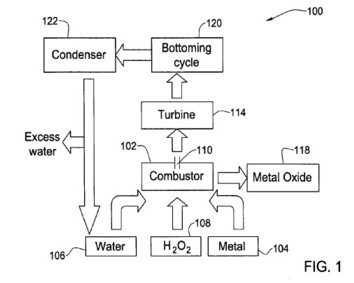
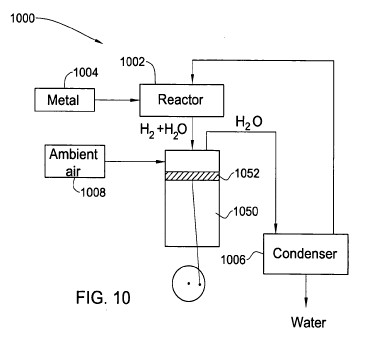
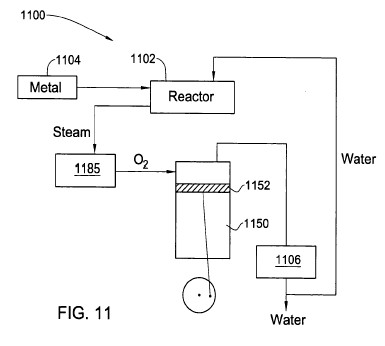
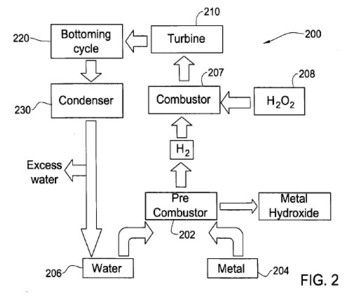
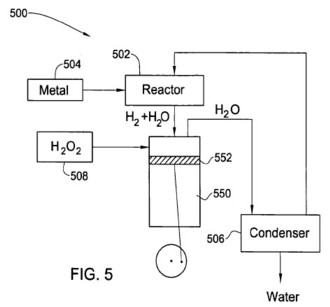
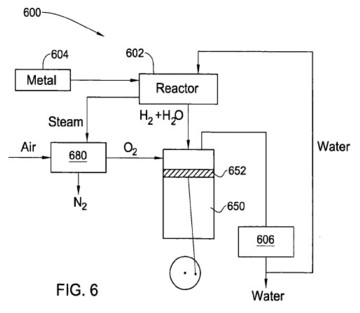
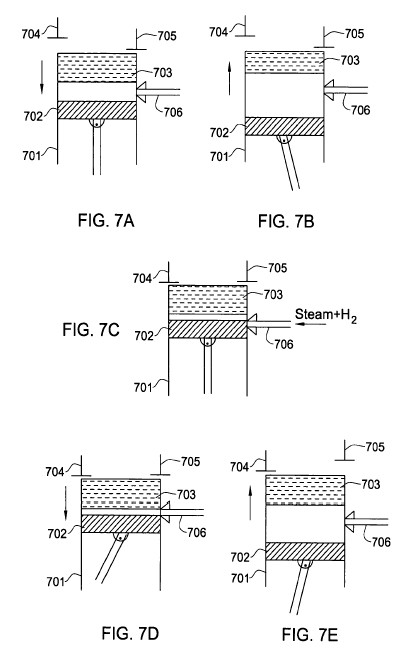
A long metal coil (magnesium or aluminum) is introduced into a heated water chamber (the Metal-Steam combustor). The metal reacts exothermically with water, producing hydrogen gas, steam, and metal oxide waste. The hydrogen- fed to the engine, while the metal oxide is collected for recycling. An optional condensed-phase oxidizer (hydrogen peroxide) can further oxidize the hydrogen, releasing additional heat.
Detailed Description
The system replaces the conventional fuel tank with a Metal-Steam combustor. During refuelling the metal wire is rolled into a coil and inserted into the combustor together with water; heating the tip to high temperature drives the reaction: 2 Mg + 2 H_2O -> 2 MgO + H_2 + heat (or analogous Al reaction). The generated hydrogen and steam are directed to the engine, providing propulsion. Spent metal oxide is vacuum-sucked out of the vehicle and taken to a fuel station for recycling. The design claims comparable range and operating cost to conventional cars, with an added coil weight of about 100 kg.
Principles
- Exothermic metal oxidation
- Water splitting via metal-water reaction
- Hydrogen oxidation by condensed-phase oxidizer (hydrogen peroxide)
- Direct-contact heat exchange
Scientific Domains
Materials
- Magnesium
- Aluminum
- Metal oxides (MgO, Al_2O_3)
- Water
- Hydrogen peroxide
Mechanisms of Action
- Metal + water -> metal oxide + hydrogen + heat
- Hydrogen + hydrogen peroxide -> water + heat
- Heat drives internal-combustion or turbine engine
Energy Sources
Applications
- Automotive propulsion
- Fuel-cell power supply
- Portable hydrogen generation
Claimed Performance
Vehicle range comparable to an equivalent conventional car; running cost equal to that of present-day gasoline cars; zero tail-pipe emissions.
Experimental Evidence
No quantitative test data provided; claims are based on interviews and patent description. Prototype not yet built.
Replication Status
Company is in an incubator program and seeking investors to develop a full-scale prototype; no independent replication reported.
Limitations
- Heavy metal coil (~100 kg) reduces vehicle payload
- Requires continuous supply of metal fuel
- Handling and recycling of metal oxide waste
- Use of hydrogen peroxide introduces safety considerations
- No demonstrated prototype or performance data
Red Flags
- Performance claims (range, cost) lack supporting data
- Reliance on future recycling infrastructure for metal oxides
- Potential safety hazards associated with hydrogen peroxide handling