Goal
Produce an economical, bio-active fertilizer and nutritional supplement from seawater and similar brines by co-precipitating organic carbon compounds with magnesium and calcium minerals.
Problem
Conventional seawater-based fertilizers contain excessive sodium chloride and lack the synergistic organic-mineral complex needed for optimal plant growth and health.
Concept Summary
Sea-Crop is a concentrated slurry obtained by raising the pH of seawater (or brine) to ~10.8-11.0 with NaOH and adding carbonate (Na2CO3) to precipitate magnesium and calcium hydroxides together with dissolved and particulate organic carbon. The resulting slurry, retaining entrained water, is applied to soil where it enhances microbial activity, root development, fruit size, shelf-life and reduces transplant loss.
Detailed Description
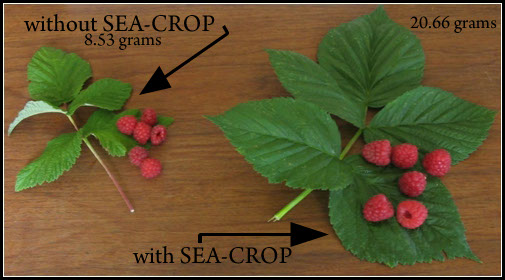
In the patented process (US7261912), seawater is fed into a reaction vessel where caustic soda (NaOH) is added until the hydroxyl ion concentration matches the magnesium ion concentration, achieving a pH of 10.75-11.0. Soda ash (Na2CO3) is added in stoichiometric proportion to calcium ions. The mixture is agitated, causing co-precipitation of magnesium hydroxide, calcium hydroxide, trace minerals, and both dissolved and particulate organic carbon. The precipitate is retained as a slurry (the "Sea-Crop" product) while the supernatant brine is discarded. The slurry is applied to crops, where it promotes micro-flora symbiosis, increases root mass, and improves fruit weight and shelf-life. Reported field observations include a 2.4-fold increase in raspberry berry weight (20.66 g vs 8.53 g) and at least a 50 % reduction in transplant loss for crucifers, melons and peppers.
Principles
- Alkaline precipitation (pH-controlled co-precipitation)
- Ionic/electrostatic bonding of organic matter to metal hydroxides
- Slurry application to soil for bio-active release
Scientific Domains
Materials
- Seawater (or brine)
- Sodium hydroxide (NaOH)
- Soda ash (Na2CO3)
- Magnesium ions
- Calcium ions
- Trace minerals
- Organic carbon compounds
Mechanisms of Action
- Co-precipitation of organic carbon with Mg^2^+/Ca^2^+ hydroxides
- Enhanced soil microbial activity via organic-mineral complexes
- Improved nutrient availability through slurry delivery
Applications
- Crop fertilization
- Horticultural production
- Animal nutrition
- Human nutritional supplements
Claimed Performance
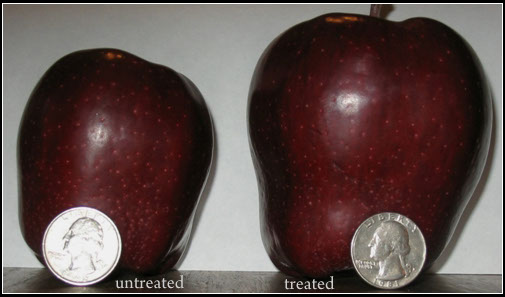
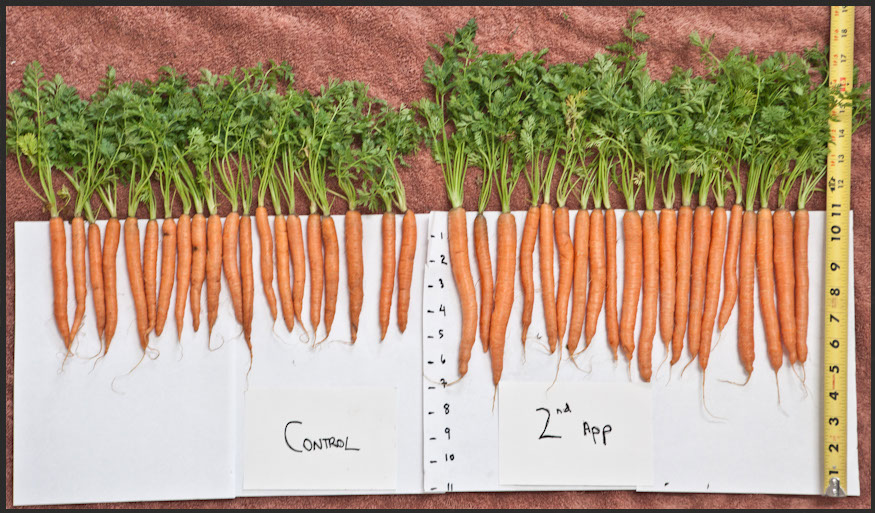
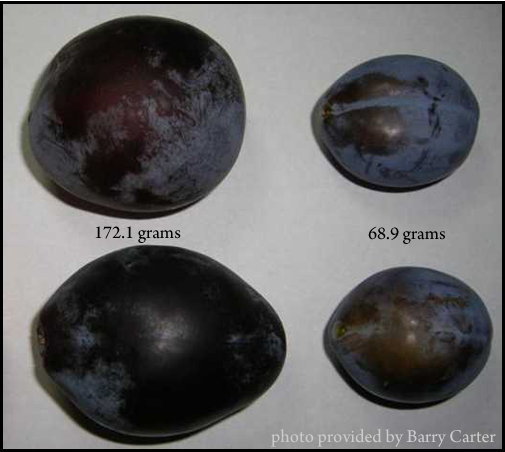
Raspberry berries from treated plants weighed 20.66 g vs 8.53 g for controls; transplant loss reduced by >=50 %; increased fruit size, weight and shelf-life reported across multiple crops.
Experimental Evidence
Field images and measurements of treated vs control raspberry plants; anecdotal observations of root growth, soil tilth, microbial population enhancement, and reduced transplant loss.
Replication Status
No independent replication reported; performance data presented only by the inventor/company.
Limitations
- Requires precise pH control and stoichiometric addition of NaOH and Na2CO3
- Performance data limited to company-provided field trials
- Potential scalability challenges for large-scale agricultural use
Red Flags
- Use of vague language such as "catalytic trigger that releases nature's energy"
- Lack of peer-reviewed or independent validation of claimed yield increases