Goal
Achieve near-complete combustion with minimal excess air while drastically reducing NOx and CO emissions and improving overall thermal efficiency.
Problem
High excess-air usage in conventional combustors wastes heat; typical NOx and CO emissions are environmentally harmful; larger, more expensive combustors are needed for high-power applications.
Concept Summary
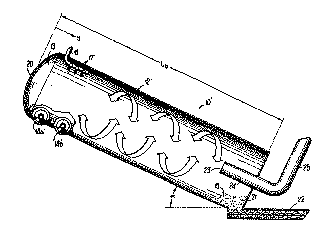
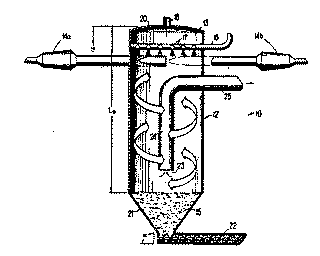
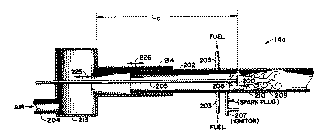
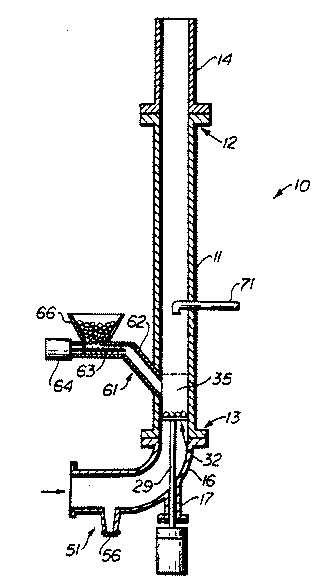
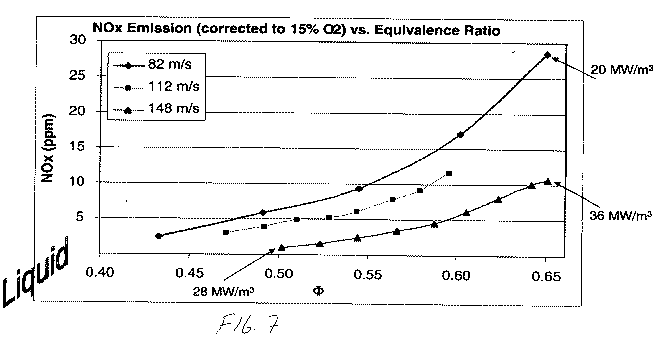
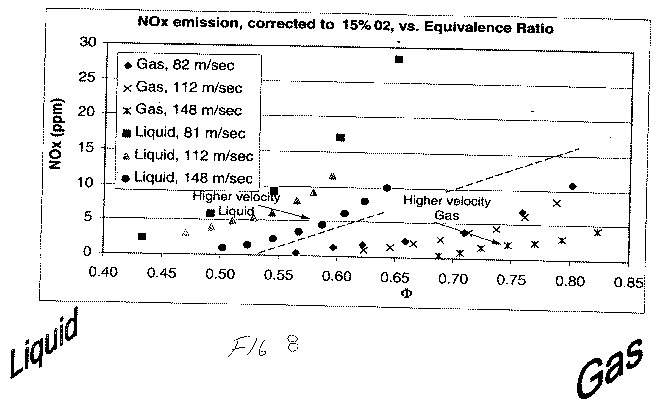
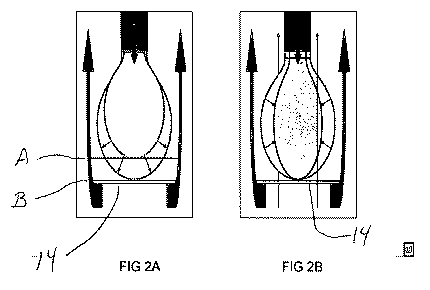
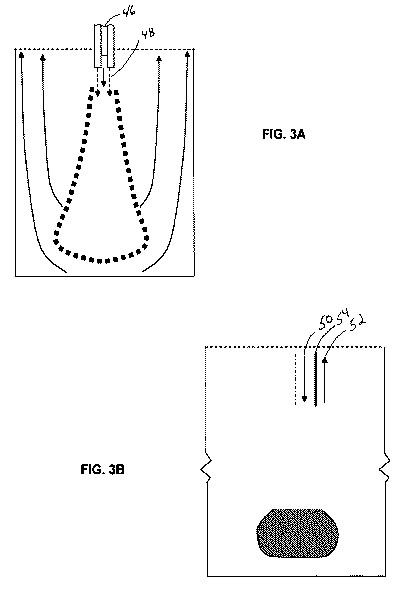
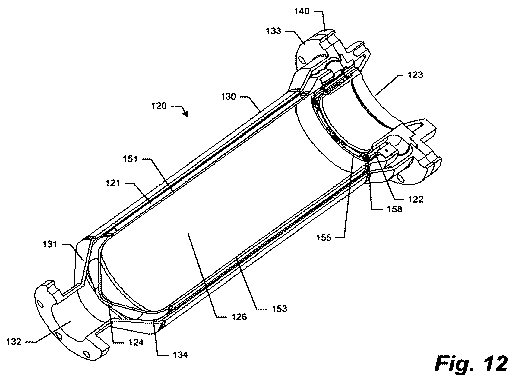
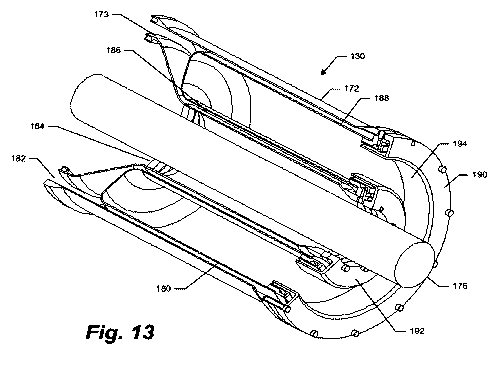
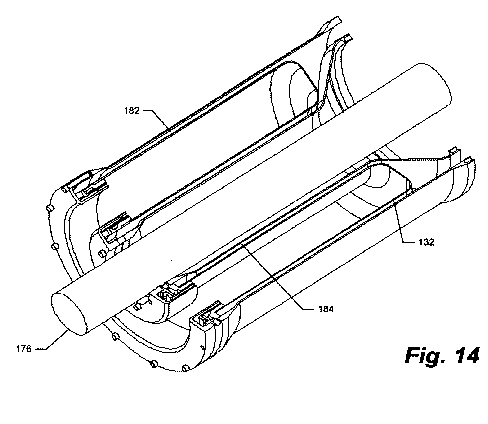
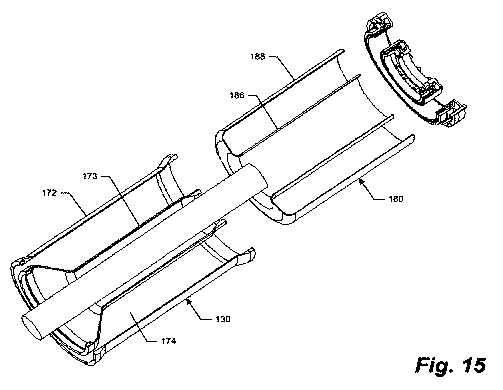
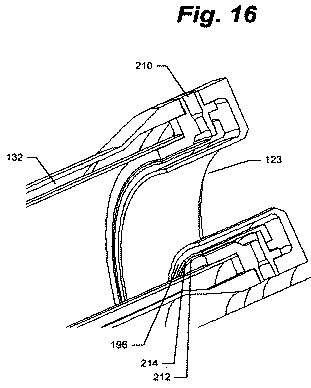
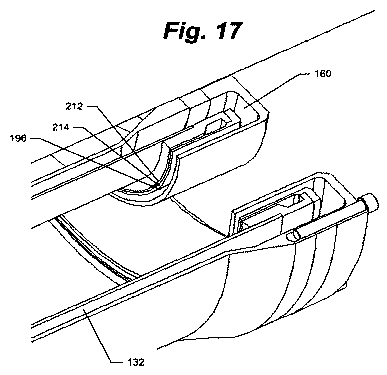
The combustor uses a resonant tube (~=70 Hz) based on the Rijke effect to create strong acoustic oscillations that enhance mixing of fuel and air, promote reverse flow of hot gases, and anchor the flame in a stagnation region. A porous metal grid inside the tube serves as the combustion zone, allowing virtually complete combustion with little or no excess air and producing very low NOx (<1 ppm) and CO (<10 ppm) emissions.
Detailed Description
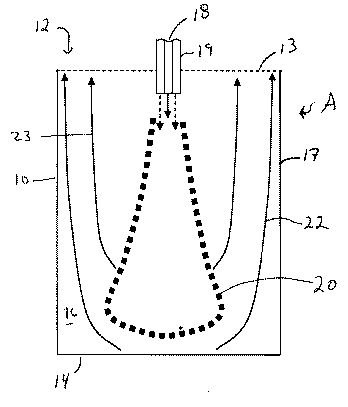
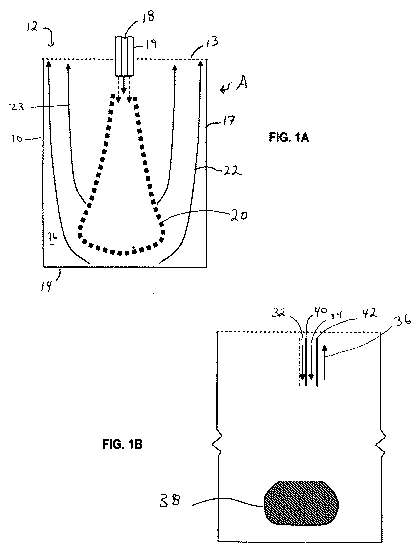
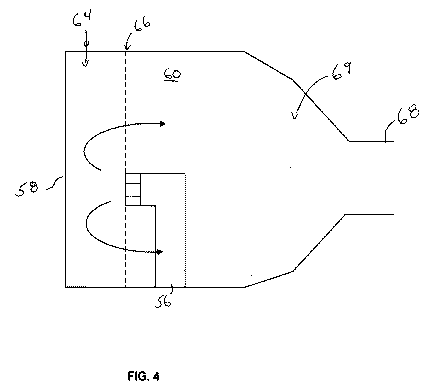
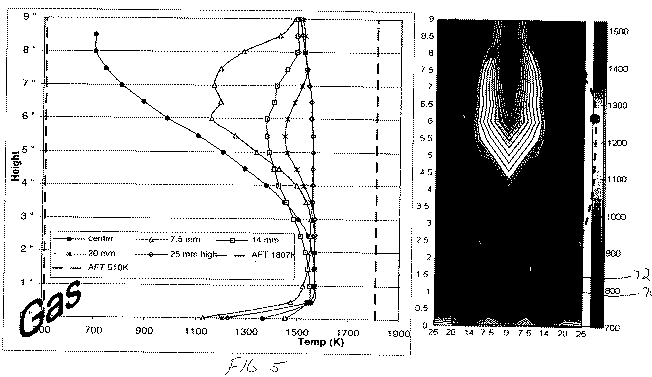
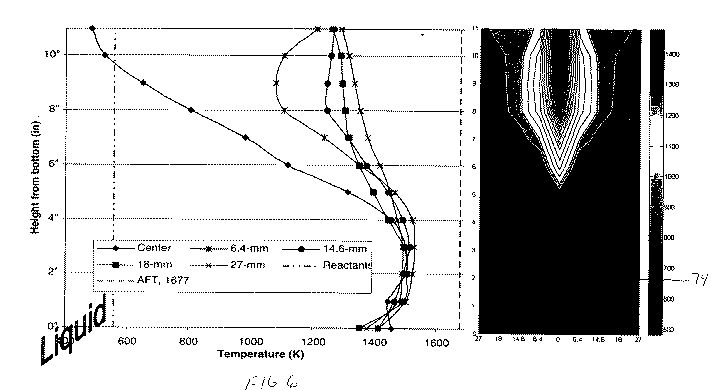
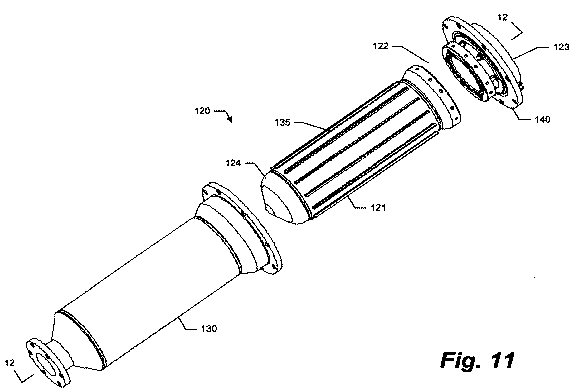
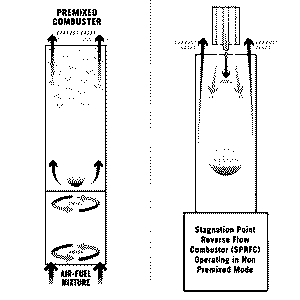
A 9-ft long, 5.5-in-diameter metal tube is tuned to a 70 Hz acoustic mode. Fuel is introduced onto a porous metal grid while cold air is pumped in from below. The acoustic oscillations cause the gas to pulsate, improving fuel-air mixing and heat transfer to the tube walls. The design forces a reverse flow of hot combustion products that mixes with incoming reactants, creating a stagnation region that anchors the flame. Because the combustion occurs at lower peak temperatures and with excellent mixing, excess air is minimized (0-7 % excess) while achieving 92-97 % combustion efficiency. The system can be scaled from small water-heater units to large gas-turbine combustors.
Principles
- Acoustic resonance (Rijke effect)
- Reverse flow of hot gases
- Stagnation-point flame anchoring
- Enhanced mixing via pulsation
- Low-temperature combustion
Scientific Domains
Materials
- Steel tube
- Porous metal grid (e.g., stainless steel or ceramic-coated metal)
- Metal manifold and ports
Mechanisms of Action
- Acoustic oscillations create periodic pressure waves that improve fuel-air mixing
- Reverse flow of hot combustion products ignites incoming reactants
- Stagnation region provides low-velocity zone for flame anchoring
- Porous metal grid increases heat transfer surface area
Energy Sources
Applications
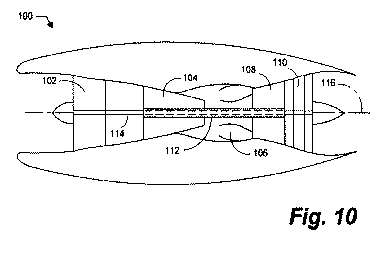
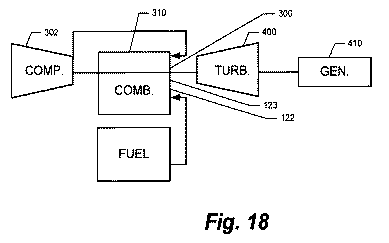
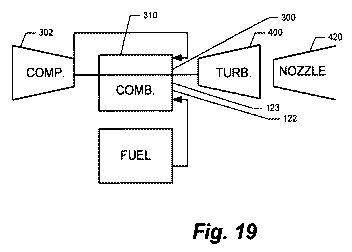
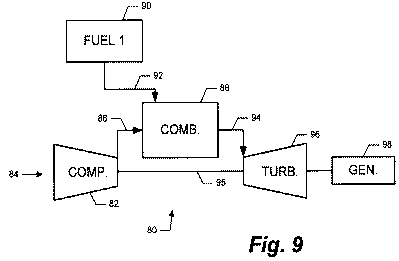
- Power-generation gas turbines
- Aircraft engines
- Industrial boilers
- Residential water heaters
Claimed Performance
92 % combustion efficiency with zero excess air; >97 % efficiency with 6-7 % excess air; NOx emissions <1 ppm, CO emissions <10 ppm; smaller, lower-cost combustor compared with conventional designs.
Experimental Evidence
Prototype 9-ft tube operating at 70 Hz demonstrated the stated efficiencies and emissions reductions; Georgia Tech reported the device "burns fuel with almost zero emissions."
Replication Status
Prototype demonstrated; patent pending; no commercial scaling reported.
Limitations
- Requires precise acoustic tuning to maintain 70 Hz resonance
- Material durability at high temperatures not fully demonstrated
- Scaling to very large turbines may present engineering challenges