Goal
Generate usable mechanical energy and thrust by inducing anisotropy in the gravitational field of a material.
Problem
Lack of efficient, low-fuel propulsion and energy sources for spacecraft and aircraft.
Concept Summary
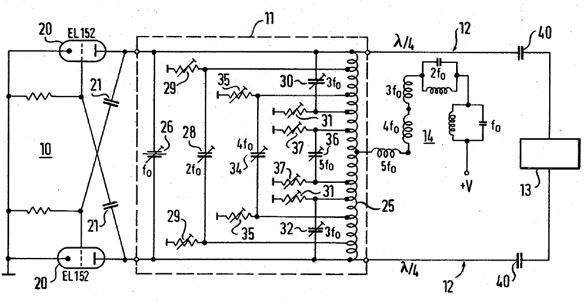
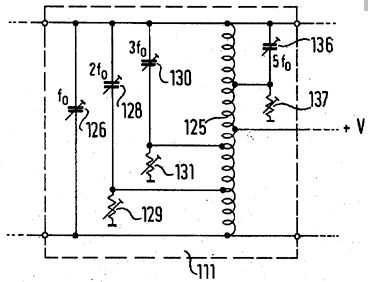
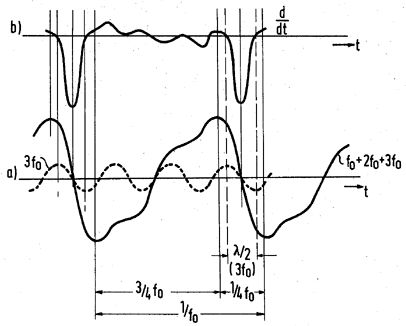
Matter is temporarily made anisotropic with respect to the gravitational field by feeding short pulses of a non-electromagnetic "trigger energy" (derived from electromagnetic moving fields) into an activator substance. The induced anisotropy creates a kineto-baric force that can accelerate the activated matter, producing impulse and mechanical energy that allegedly exceeds the input energy by several orders of magnitude. Repeated activation steps (up to 10^10) accumulate large impulses in an open system.
Principles
- Gravitational anisotropy
- Kineto-baric force
- Y-systems (center-of-gravity-free reaction pairs)
- Baric tension exchange
Scientific Domains
Materials
- Activator substance (unspecified solid)
- Metal ballast
- Transformer core
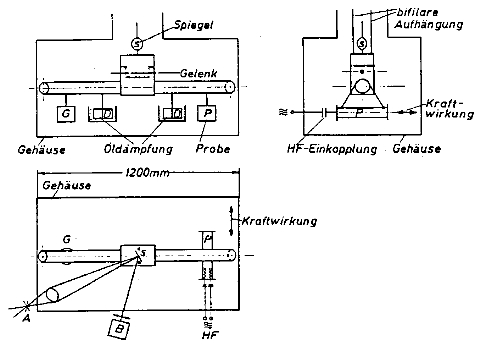
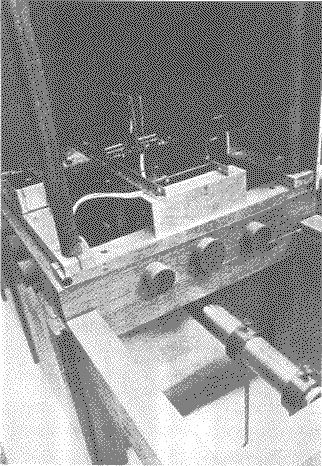
- Bifilar torsion-balance components
Mechanisms of Action
- Inducing anisotropy in a bulk material
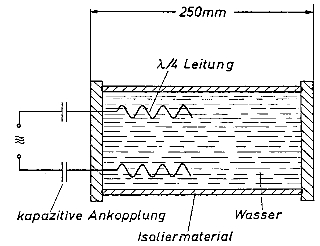
- Feeding trigger-energy pulses
- Sequential activation steps
- Impulse generation via decay of anisotropic state
Energy Sources
Applications
- Satellite orbit raising
- Spacecraft thrust without reaction mass
- Jet-propulsion assistance
- Interplanetary travel
Claimed Performance
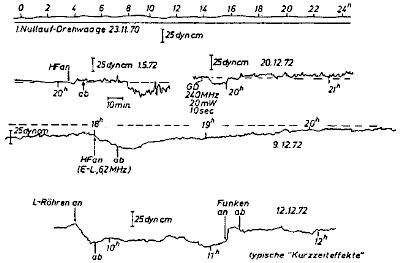
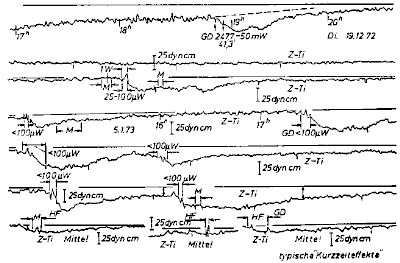
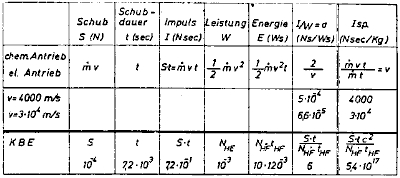
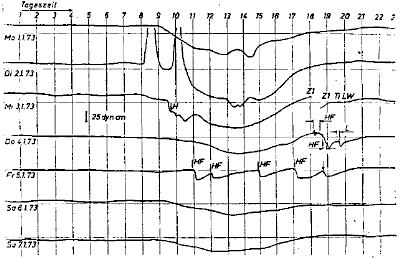
Stored impulses of 10^4-10^5 dyne-sec observed; useful effect of 6 N*s per W*s of energy; occasional impulses >=10^6 dyne-sec with force components up to 100 dyne (~=1 pond); impulse-to-energy ratio claimed to surpass conventional propulsion by several powers of ten.
Experimental Evidence
"Stored impulses of 10^4 to 10^5 dyne-sec had been observed with a useful effect of 6 Newton-sec per Watt-sec of energy. On some occasions 10^6 and more dyne-sec with force components of 100 dyne to over one pond were observed."
Replication Status
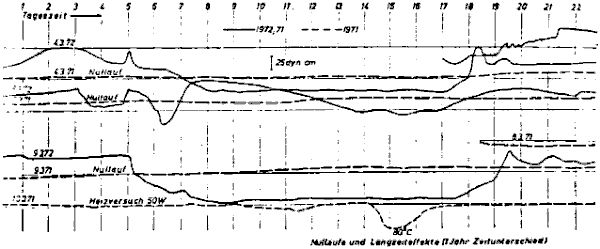
Reproducibility reported as difficult; many parameters not yet recognized; experiments performed with custom bifilar torsion balances that are not commercially available.
Limitations
- Poor reproducibility and lack of clear parameter set
- Specialized balances required, not commercially available
- Vague description of the activator material
- Potential human-interaction "come-in" effect not understood
Red Flags
- Extraordinary energy-gain claims without peer-reviewed data
- No independent replication reported
- Key materials and quantitative procedures are unspecified
- Language reminiscent of pseudoscientific claims