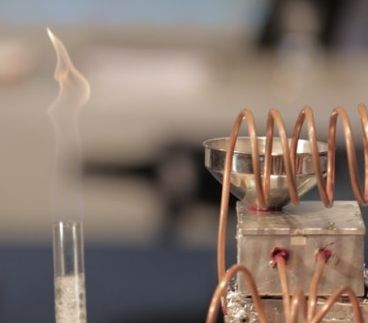
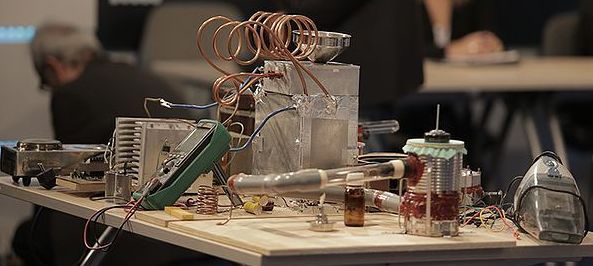
Goal
Produce hydrogen (and oxygen) from ordinary water using high-frequency electromagnetic pulses, with the claim of near-zero net energy consumption and direct electricity generation.
Problem
High energy demand and cost of conventional water electrolysis; difficulty of hydrogen storage and transport.
Concept Summary
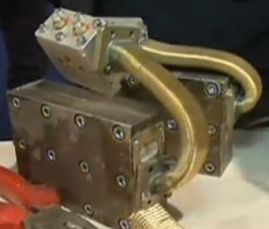
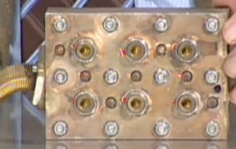
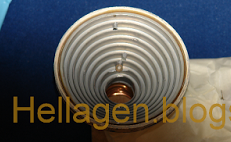
A metal alloy board is irradiated with terahertz-scale, high-frequency electromagnetic pulses generated by a set of semitonic oscillators and frequency-mixing circuitry. The pulses are said to "coordinate" water molecules, causing them to dissociate into hydrogen and oxygen. The alloy board is gradually consumed, acting as an electromagnetic torch that supplies the energy needed for the reaction. The produced hydrogen can be used directly as fuel or converted to electricity, with claimed efficiencies up to 30 % and a very low cost per kWh.
Detailed Description
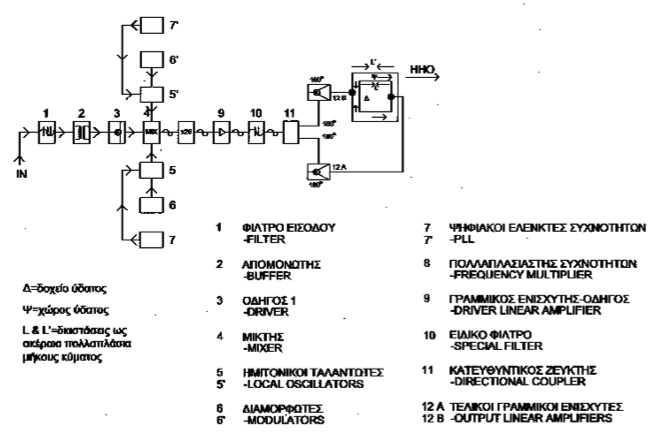
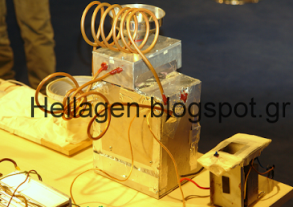
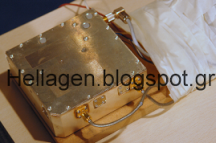
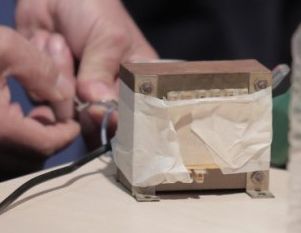
The invention uses a three-phase pulse multiplication scheme to achieve terahertz frequencies. An electronic circuit comprising an isolator, mixer, directional coupler, multiplier, configurators, digital frequency controllers and linear amplifiers shapes and combines primary frequencies from semitonic oscillators. The resulting coordinated frequencies are applied to a metal alloy board immersed in water; the board degrades while emitting electromagnetic energy that breaks water molecules. The gases are separated by sorting guides; hydrogen is routed to an energy-generation mechanism (e.g., fuel cell or combustion engine). Patent GR1007830 describes the method and device in detail.
Principles
- High-frequency electromagnetic coordination
- Pulse multiplication and frequency mixing
- Resonant-like excitation of water molecules
- Electro-thermal decomposition of metal alloy
Scientific Domains
Materials
- Metal alloy (unspecified composition)
- Water (tap or sea)
- Electronic components (oscillators, mixers, amplifiers)
Mechanisms of Action
- Terahertz-scale EM pulses induce molecular bond breakage
- Metal alloy board supplies chemical/thermal energy while acting as an EM torch
- Gas separation by physical sorting guides
Energy Sources
Applications
- Hydrogen fuel generation
- On-site electricity production
- Portable hydrogen supply
Claimed Performance
1 kg alloy yields 1600 Nm^3 H_2 (~=5600 kWh chemical-thermal energy). With a 30 % efficient generator, 1680 kWh electricity can be produced, costing ~0.03 anot/kWh (vs. 0.19 anot/kWh from the grid).
Experimental Evidence
The article references demonstration videos, a patent (GR1007830), and a LinkedIn post, but provides no quantitative experimental data or peer-reviewed studies.
Limitations
- Requires consumption of metal alloy (cost and supply issue)
- No independent verification of claimed efficiencies
- Unclear physical mechanism for terahertz-induced water splitting
- Potential safety concerns with high-frequency EM fields
Red Flags
- Overunity/near-zero energy consumption claims
- Lack of peer-reviewed data or independent replication
- Vague description of key material (alloy) and its energy source