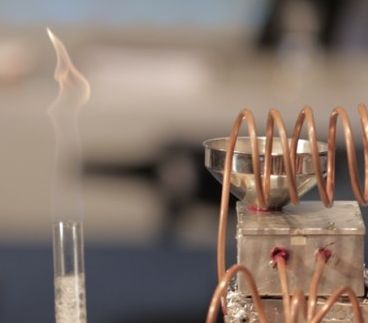
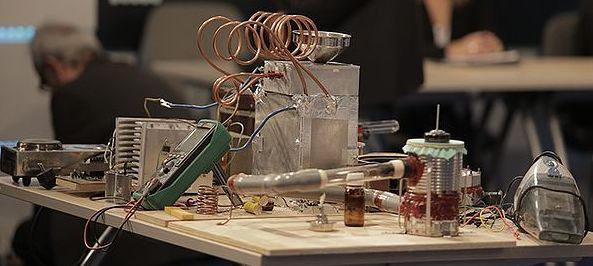
Goal
Generate hydrogen (and oxygen) from ordinary water using high-frequency electromagnetic pulses, with the aim of reducing or eliminating external energy input for hydrogen production.
Problem
High energy consumption and cost of conventional water electrolysis for hydrogen fuel production.
Concept Summary
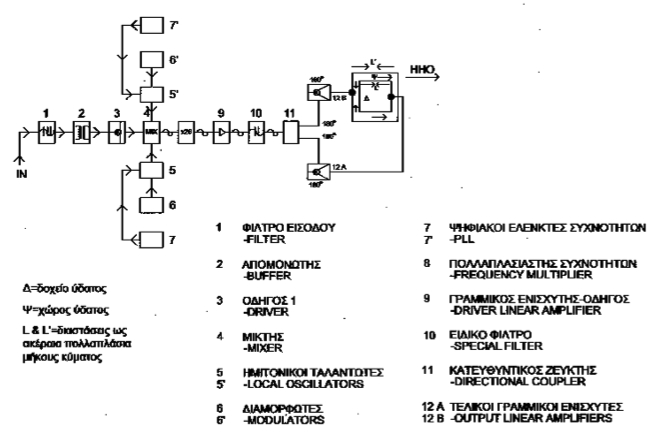
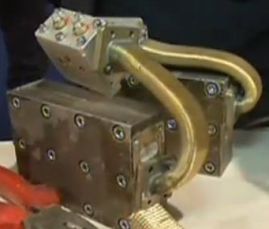
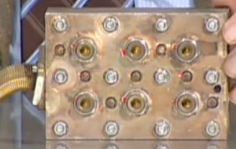
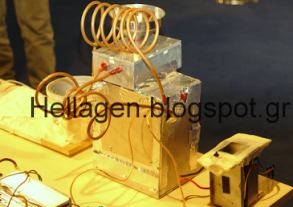
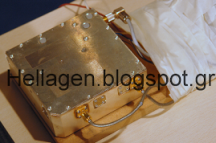
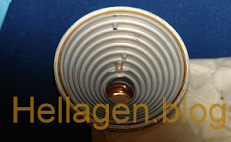
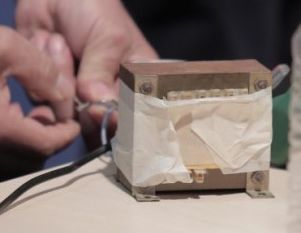
The invention uses a metal alloy board that acts as an electromagnetic torch and is exposed to terahertz-scale, high-frequency electromagnetic pulses generated by a combination of semitronic oscillators, mixers, multipliers and digital controllers. The coordinated pulses are claimed to "break" water molecules directly, producing hydrogen and oxygen gases. The metal alloy is gradually consumed, providing part of the energy needed for the reaction, while the generated hydrogen can be used as a fuel or for direct electricity generation.
Principles
- High-frequency (THz) electromagnetic pulses
- Frequency mixing and coordination
- Electromagnetic torch (metal alloy consumption)
- Molecular vibration-induced bond breaking
Scientific Domains
Materials
- Metal alloy (consumed board)
- Water (tap or sea)
- Hydrogen gas (product)
- Oxygen gas (product)
Mechanisms of Action
- THz pulses induce coordinated vibration of water molecules
- Combined frequencies from oscillators and mixers break O-H bonds
- Metal alloy board supplies thermal/chemical energy as it is consumed
Energy Sources
Applications
- Hydrogen fuel generation
- Direct electricity generation from water
- Portable power systems
Claimed Performance
Produces 1 600 Nm^3 of hydrogen per kilogram of alloy, corresponding to 5 600 kWh chemical-thermal energy. With a 30 % efficient generator, 1 680 kWh of electricity can be generated, costing ~=0.03 anot/kWh (vs. 0.19 anot/kWh from the grid).
Experimental Evidence
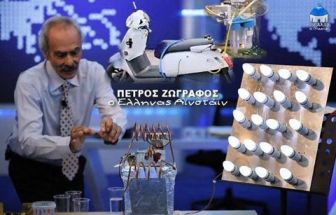
Demonstration videos and patent description are provided; no independent peer-reviewed data or quantitative test results are presented.
Limitations
- Requires consumption of metal alloy board
- Generation of terahertz-scale pulses is technologically demanding
- No independent verification of claimed efficiency
Red Flags
- Overunity/energy-free claims
- Lack of peer-reviewed experimental data
- Potential pseudoscientific terminology